



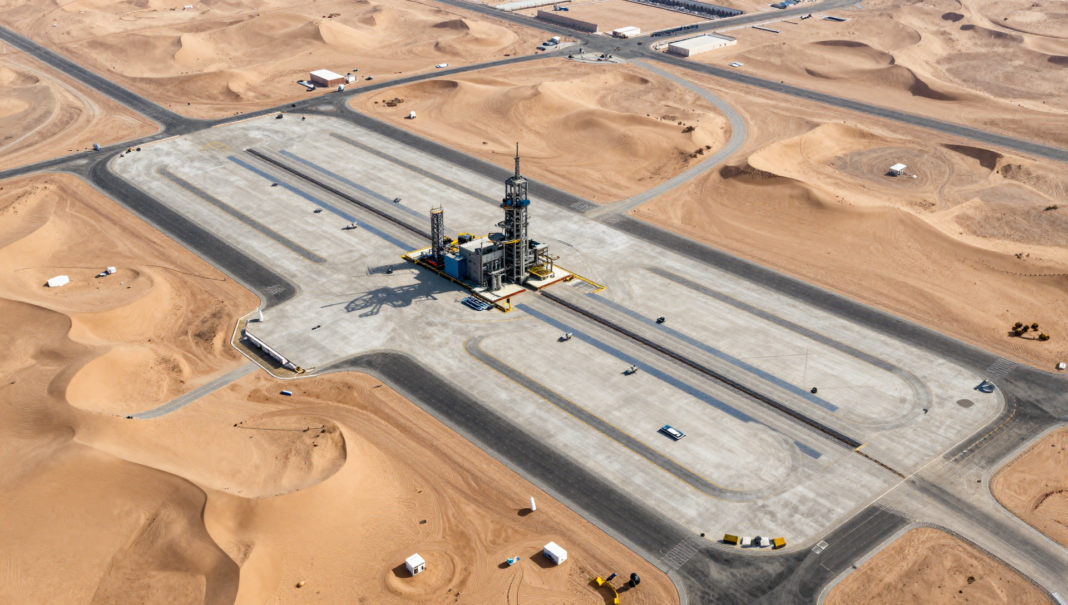
Oman space deal marks a major step in the country’s expanding space ambitions. It also reflects growing cooperation between Oman and France in advanced aerospace projects. In addition, the agreement supports plans to build a regional space hub.
Etlaq, Oman’s spaceport operator, has signed an agreement with French company Latitude. Both sides aim to conduct an experimental rocket launch in 2027. The deal sets a framework for long-term cooperation in space operations.
The signing took place during a state visit by Sultan Haitham bin Tarik to France. During high-level talks, both countries discussed wider economic and technology partnerships. As a result, space collaboration became a key focus area.
Under the agreement, Etlaq and Latitude will coordinate launch preparations. They will also work on ground infrastructure and regulatory requirements. Furthermore, both teams will develop operational systems for the mission.
Plans currently target a late 2027 launch window. The mission could become one of the first orbital launch attempts from the Arabian Peninsula. Therefore, the project carries strong regional significance.
Officials at Etlaq highlighted Oman’s geographic advantages for space activity. Its location near the equator allows access to multiple orbital paths. These include low Earth orbit and sun-synchronous orbit trajectories.
Additionally, the site supports a range of mission profiles. It can accommodate mid-inclination launches from a single facility. This flexibility strengthens its appeal to international partners.
Etlaq chief executive Azzan Kais Al Said said the partnership boosts national capabilities. He also said international confidence in Oman’s space sector continues to rise. Moreover, he stressed that the project supports long-term strategic goals.
On the French side, Latitude representatives welcomed the agreement. Olivier Zarrouati, chairman of the strategic committee, emphasized shared ambition. He noted that space has become a key area of global competition.
He also added that cooperation supports independent launch capabilities for both countries. In his view, international partnerships remain essential for technological progress.
The agreement also lays the groundwork for future expansion. Latitude may increase its presence in Oman after the 2027 mission. This depends on the success of early launch activities.
Industry analysts said global demand for commercial spaceports continues to grow. Many countries now invest in sovereign launch capabilities. As a result, Oman enters a rapidly expanding sector.
Furthermore, experts believe the project could attract additional partners. It may also support future investment in aerospace infrastructure. Consequently, Oman could strengthen its position in the global space economy.
Overall, the agreement represents an important early milestone. It combines technology cooperation with strategic geographic advantages. Therefore, both sides expect steady progress toward the planned 2027 launch.