



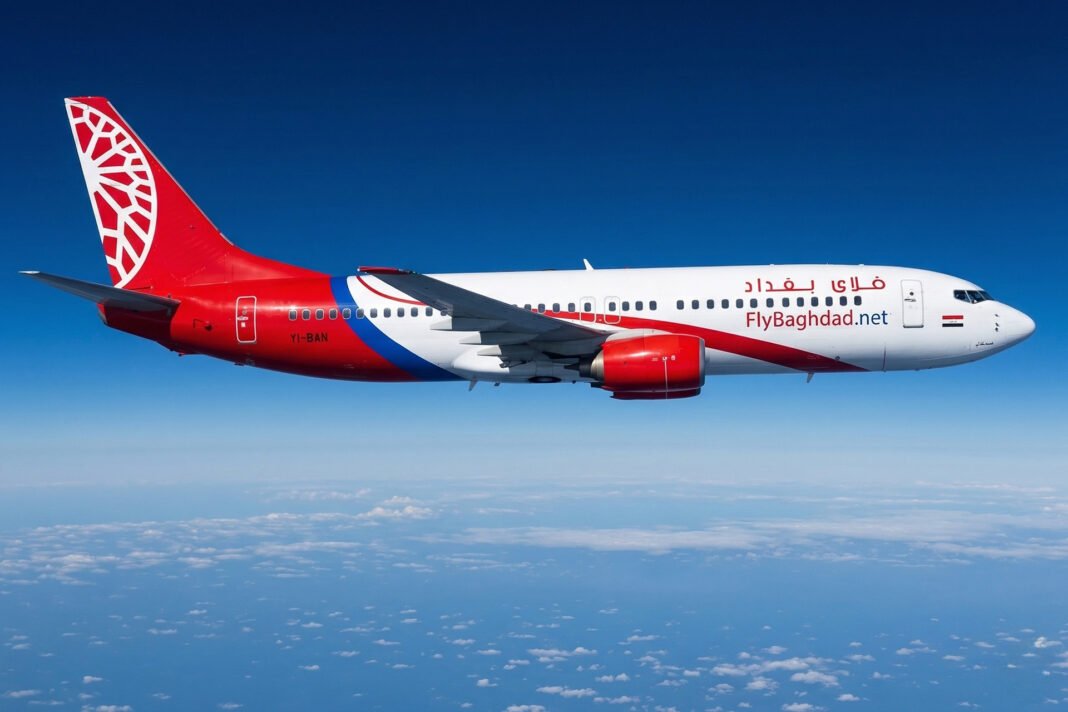
Fly Baghdad plans to resume flights before the end of 2026 after major changes reshaped the Iraqi airline.
The carrier wants to rebuild its operations and regain passenger confidence after years of serious challenges. Its immediate focus includes maintenance, staffing, compliance, and renewed international partnerships.
The airline also plans to reconnect Iraq with several important regional destinations. Its initial expansion strategy targets Gulf countries, India, Turkey, Egypt, and Jordan.
The latest developments follow the removal of Fly Baghdad from a US sanctions list. That decision could give the carrier greater access to international aviation services.
The airline can now pursue banking relationships with fewer restrictions. It can also seek insurance, aircraft leasing, maintenance services, and international supplier agreements. However, the company still faces several major obstacles. Its aircraft remained grounded during the regional conflict earlier this year.
Iraqi authorities reopened the country’s airspace in July. That development created an opportunity for the airline to restart operations. Fly Baghdad currently has four aircraft in its fleet. The fleet includes three Boeing 737 aircraft and one Bombardier CRJ-200.
The airline now needs to complete maintenance work before returning to commercial service. Therefore, management has made aircraft recovery a central priority.
The company also wants to rebuild relationships with its employees. Management considers workforce confidence essential for the airline’s recovery. The airline experienced significant staffing changes during its restructuring. Around 450 employees left the company during the process.
That figure represented almost 70 percent of its previous workforce. The departures affected managers, directors, supervisors, and administrative employees.
Management says the restructuring aimed to create a different operating culture. It also focused on transparency, stronger internal controls, and improved management practices.
The airline faced major difficulties before the latest developments. European authorities previously restricted its operations because of safety concerns.
US authorities later imposed sanctions on the company. Those sanctions created additional challenges for financial and aviation-related activities.
The airline’s current leadership believes restructuring helped address those problems. Consequently, management now sees the sanctions removal as an important milestone.
Fly Baghdad also wants to restore relationships with manufacturers and aviation suppliers. These relationships will prove important as the company prepares its aircraft.
Maintenance represents one of the immediate priorities for the carrier. The airline must ensure its aircraft meet operational and safety requirements before flying again.
Management hopes to begin commercial operations before the end of this year. However, the exact timing will depend on maintenance and operational preparations.
The initial route strategy focuses heavily on the Gulf region. GCC destinations could provide important passenger traffic for the Iraqi carrier.
India also represents an important potential market. Turkey, Egypt, and Jordan could provide additional regional opportunities.
The airline expects its network strategy to develop gradually. Management wants to restore operations first before pursuing broader international expansion.
A return to European routes could follow later. Company leadership believes European operations may become possible within the next year.
However, such a return would depend on regulatory approvals and safety requirements. The airline therefore faces a longer process beyond its immediate restart.
Fly Baghdad’s recovery also comes as Iraq’s aviation sector seeks further growth. Improved air connectivity could support tourism, business travel, and regional commerce.
The reopening of Iraqi airspace provides another important opportunity. Airlines can now evaluate routes that remained unavailable during the closure.
The company expects the remaining months of 2026 to focus on rebuilding. Maintenance, operational recovery, and employee confidence will remain key priorities.
Fly Baghdad also needs to rebuild trust among passengers and business partners. Management believes transparency will play an important role in that process. The airline’s leadership views the sanctions removal as a starting point. It does not consider the development the end of its challenges.
Instead, the company now faces the task of translating regulatory progress into commercial operations. That process will require investment, planning, and strong execution.
Fly Baghdad aims to return to the skies with a smaller but more focused operation. Its management hopes that approach will create a stronger foundation for future growth. The airline’s comeback could also strengthen Iraq’s connections with nearby markets. Furthermore, new regional routes could create more travel choices for Iraqi passengers.
For now, the focus remains firmly on restarting flights. Management wants to complete the necessary work and begin serving passengers again soon. The planned comeback represents a major test for the airline. Success will depend on operational readiness, regulatory compliance, financial access, and customer confidence.