



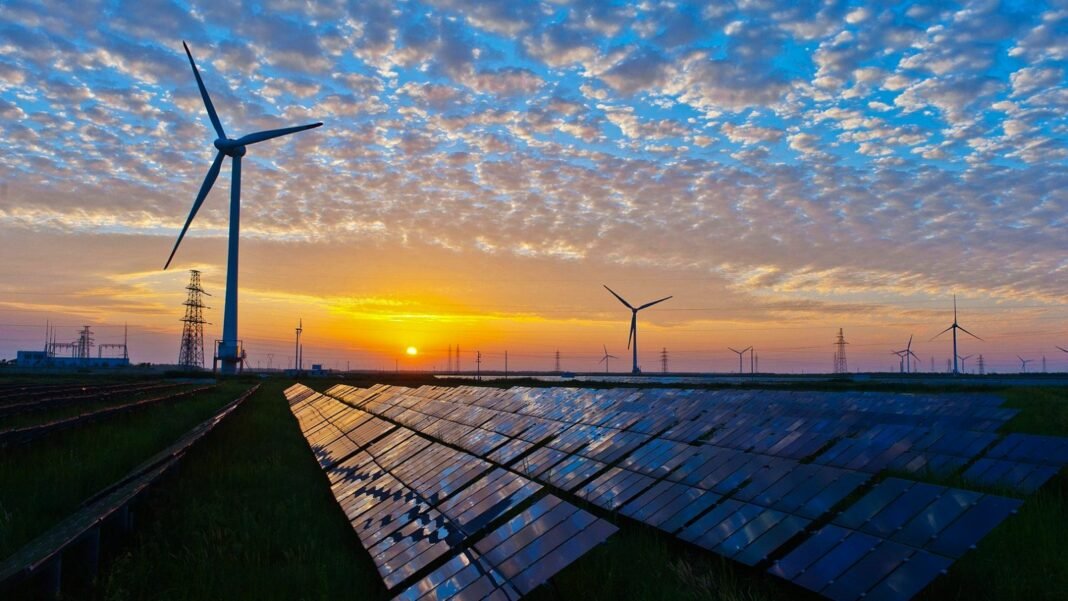
Saudi renewables face growing challenges as regional conflict disrupts supply chains and tighter financing slows project development. However, experts still see a path toward Saudi Arabia’s ambitious 2030 energy goals.
Saudi Arabia currently depends heavily on hydrocarbons for electricity generation. Renewable sources account for only a small portion of the kingdom’s overall power supply.
The government wants green energy to provide half of national electricity by 2030. Reaching that goal will require a rapid expansion of solar and wind generation.
Experts believe the target remains possible because Saudi Arabia has significant renewable resources. The kingdom also has large areas suitable for major energy projects.
Furthermore, strong government support continues to encourage investment in clean energy. These advantages give Saudi Arabia a strong foundation for renewable development.
However, the pace of construction needs to increase substantially. The kingdom may need to add more than 20 gigawatts annually to meet its targets.
That pace would place Saudi Arabia among the world’s fastest-growing renewable markets. Therefore, developers must overcome several challenges during the next four years.
Saudi renewable capacity has expanded rapidly since 2020. Capacity effectively doubled each year before reaching about 12.3 gigawatts last year.
However, that figure remains below one-tenth of the kingdom’s 2030 target. Saudi Arabia aims to reach approximately 130 gigawatts of renewable capacity.
Developers have several large projects already under construction or nearing construction. Those projects could significantly increase capacity during the coming years.
Some industry experts expect renewable capacity to rise sharply again this year. Nevertheless, they question whether the current pace will fully meet the 2030 target.
Supply-chain problems represent one of the biggest immediate risks. Regional conflict has complicated equipment deliveries and disrupted transportation routes.
Renewable projects require large quantities of specialized equipment. Delays involving components can therefore affect construction schedules and project costs.
The situation could worsen if shipping disruptions continue around key regional waterways. The Strait of Hormuz and Red Sea remain important transportation routes.
Consequently, developers face uncertainty over delivery times and equipment availability. Competition for renewable technology and skilled workers also remains intense.
Saudi Arabia must compete with other countries for equipment and technical expertise. Global demand for renewable infrastructure continues rising rapidly.
International renewable capacity could increase by thousands of gigawatts before 2030. Therefore, competition for equipment and specialized expertise may intensify.
Financing represents another major challenge for Saudi projects. Bank lending growth has slowed amid tighter liquidity conditions across the kingdom.
Renewable developments often require significant amounts of upfront capital. Higher borrowing costs can therefore make large projects more expensive.
International investors also play an important role in financing Saudi renewable developments. Foreign sources provide a substantial share of funding for these projects.
Long-term government power agreements have helped attract investors. These contracts provide predictable revenue over extended periods.
Saudi Arabia also offers strong renewable resources and growing electricity demand. Those factors can improve the financial appeal of clean energy projects.
However, higher financing costs can still affect project economics. Developers may therefore need additional time to secure funding.
Some projects have already taken longer to reach financial close. Industry analysts describe these delays as temporary rather than a major setback.
Nevertheless, prolonged funding problems could eventually affect construction schedules. Projects that remain unfunded for extended periods may face further delays.
Current expectations suggest Saudi Arabia could reach around 100 gigawatts of renewable capacity by 2030. The kingdom could then reach 130 gigawatts during the following years.
That outlook would still represent significant progress for the country’s energy transition. It would also reduce reliance on hydrocarbons for domestic electricity generation.
Saudi renewables therefore remain central to the kingdom’s long-term economic strategy. The government continues to view clean energy as an important growth sector.
Solar power offers particularly strong potential because of Saudi Arabia’s abundant sunlight. Wind projects can also contribute to the country’s future electricity mix.
Moreover, expanding renewable generation could support industrial development and new technologies. It could also help Saudi Arabia strengthen its position in emerging energy markets.
For now, developers must manage supply disruptions and rising financing costs. These pressures could determine how quickly planned projects reach completion.
The next few months will therefore remain important for Saudi Arabia’s renewable ambitions. Faster financing and smoother equipment deliveries could support the construction pipeline.
Conversely, prolonged regional disruption could slow progress toward the country’s 2030 objectives. However, the long-term project pipeline remains substantial.
Saudi renewables still have strong growth potential despite the current challenges. Continued investment could help the kingdom significantly expand its clean energy capacity.
Ultimately, Saudi Arabia’s renewable transition remains achievable but requires faster execution. Supply chains, financing and project delivery will determine how quickly progress continues.