



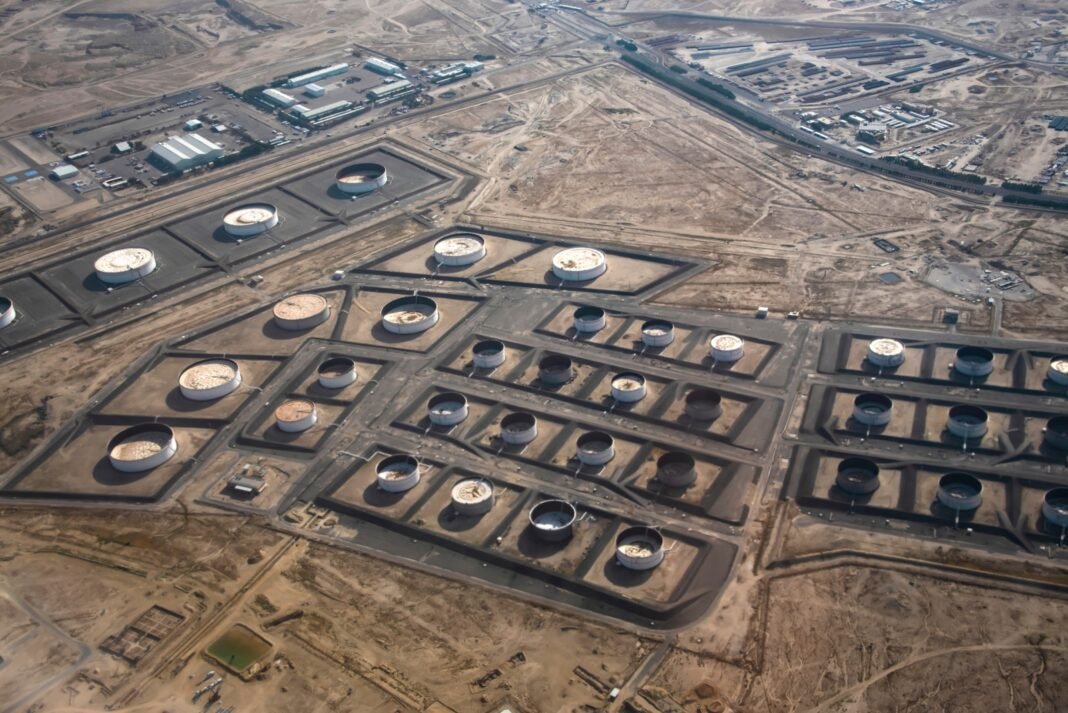
Kuwait oil output currently stands near 2 million barrels per day. That level represents about 75 percent of the country’s pre-war production. Meanwhile, more oil tankers have started using the Strait of Hormuz again. The development could support Kuwait’s crude exports and broader energy operations.
Kuwait previously produced around 2.6 million barrels each day. Production fell after the conflict with Iran began in late February. However, improving tanker movements have helped ease some transportation concerns. Consequently, Kuwait can continue serving customers despite ongoing risks around the waterway.
Kuwait Petroleum Corporation Chief Executive Sheikh Nawaf Saud Al-Sabah discussed the latest developments. He said more vessels now travel through the Strait of Hormuz. According to him, market participants recognize the waterway’s importance. Therefore, tanker traffic has gradually increased despite continued navigation concerns.
The Strait remains a vital route for Kuwait’s international oil shipments. However, threats to maritime movement continue to create uncertainty for energy exporters. Even so, tanker operators have increasingly resumed voyages through the strategic waterway. This gradual recovery provides important support for Kuwait’s crude distribution network.
KPC continues meeting its crude supply commitments to customers. At the same time, Kuwait’s refineries remain fully operational. That stability allows the country to maintain domestic processing activities. Furthermore, functioning refineries support Kuwait’s ability to manage changing export conditions.
Kuwait also continues advancing several planned energy projects. Meanwhile, authorities are making progress on alternative pipeline plans. Routes through Saudi Arabia and the United Arab Emirates remain under consideration. These options could provide additional flexibility if maritime disruptions continue.
The Kuwait National Petroleum Company is also examining further alternatives. Such efforts aim to strengthen the country’s energy transportation network. Moreover, alternative routes could reduce reliance on a single maritime passage. Therefore, pipeline diversification remains an important part of Kuwait’s long-term planning.
Kuwait has production capacity of approximately 3 million barrels per day. Current production remains well below that maximum capacity. The difference highlights the effects of recent operational and transportation challenges. Nevertheless, authorities continue working to preserve supply reliability and customer commitments.
Kuwait oil output remains closely linked to tanker availability and export access. Sufficient tanker capacity remains essential for moving crude to international buyers. At the same time, the Strait of Hormuz remains central to regional energy shipments. Any sustained disruption could therefore affect Kuwait’s export operations.
The gradual return of tankers provides some relief for Kuwait’s oil industry. However, maritime security remains an important concern for energy companies. Operators must continue assessing risks before sending vessels through the Strait. Consequently, transportation conditions will remain important for Kuwait’s production and export plans.
Kuwait also faces a wider challenge in balancing production with transportation capacity. The country has significant production potential beyond its current output level. However, available shipping capacity must support crude distribution. Therefore, tanker availability remains a key consideration for future production increases.
Meanwhile, maintaining refinery operations gives Kuwait greater stability. Fully functioning facilities allow the country to continue processing crude domestically. They also help support fuel supplies and broader energy requirements. As a result, refinery reliability remains important during periods of transportation uncertainty.
The government’s pipeline plans could provide another layer of protection. Alternative routes through neighboring Gulf states could create additional export options. However, each route requires careful planning, investment, and operational coordination. For now, authorities continue evaluating the most practical solutions.
Kuwait oil output could gradually recover if transportation conditions continue improving. Rising tanker movements would give producers greater confidence in export logistics. In addition, stronger shipping access could support higher production levels. Still, authorities must consider maritime risks before increasing operations significantly.
Overall, Kuwait continues managing its oil sector amid challenging regional conditions. Production remains around 2 million barrels per day for now. Meanwhile, tanker traffic through Hormuz has shown signs of improvement. The country is also pursuing alternatives to strengthen its energy infrastructure and export resilience.

