



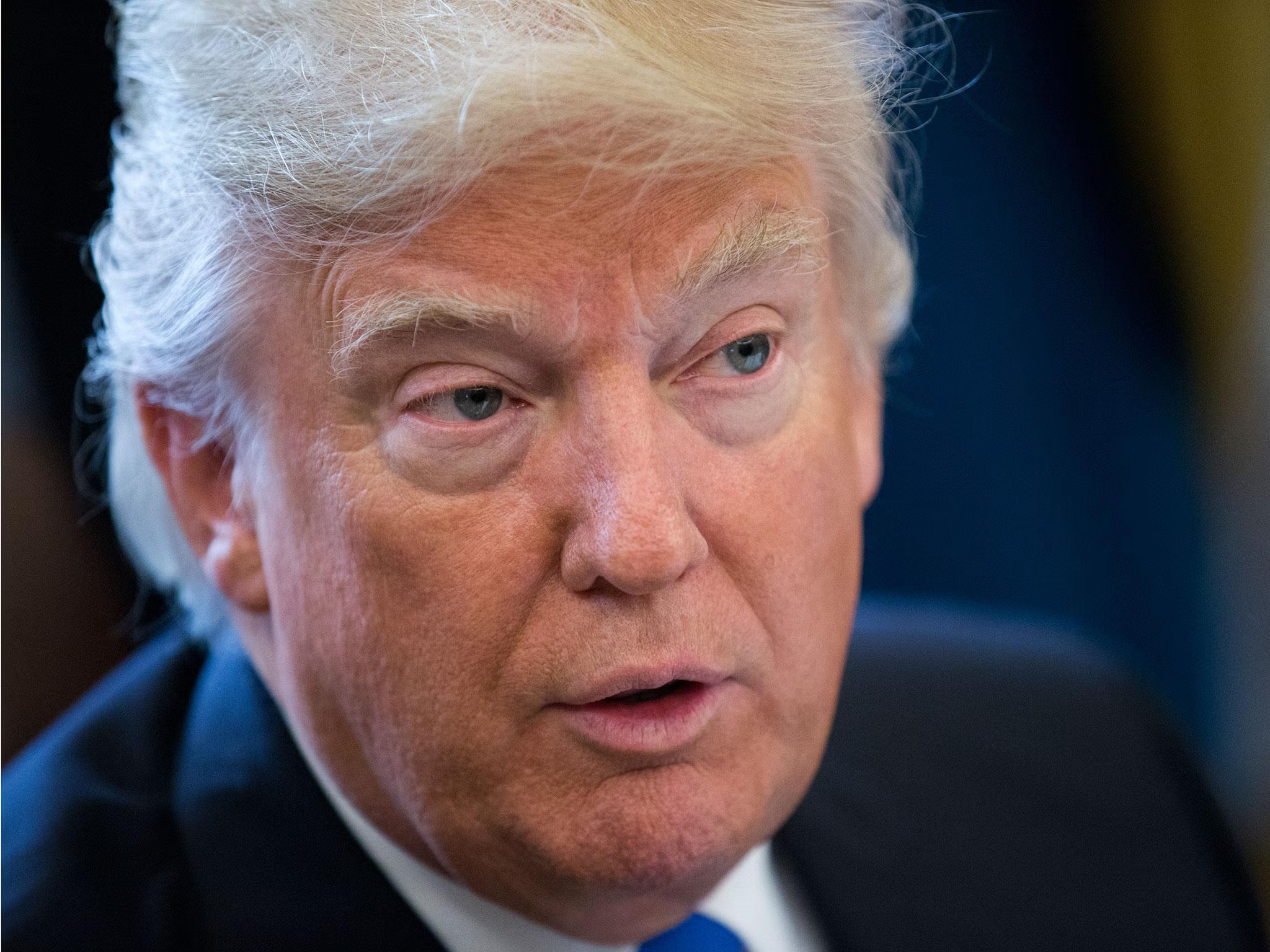
The Trump Iran warning has increased pressure on countries maintaining business ties with Tehran. The warning also pushed fresh concerns across energy markets.
US President Donald Trump threatened economic consequences for countries supporting Iran. He said governments and companies must stop providing financial or commercial support.
Trump specifically mentioned financial institutions, businesses, airports and government entities. He also warned against activities involving Iranian oil and financial networks.
The warning comes during continued tensions between Washington and Tehran. Meanwhile, uncertainty around the Strait of Hormuz continues affecting global energy markets.
Oil prices increased for a fifth consecutive session on Thursday. Brent crude rose 0.2 percent to about $91.82 per barrel.
US West Texas Intermediate crude remained around $84.41 per barrel. Both major benchmarks have gained more than four percent during five sessions.
They have also climbed more than 40 percent since the beginning of 2026. Therefore, continued regional tensions could keep energy markets under pressure.
Trump described his planned economic measures as an extremely severe campaign against Iran. However, he did not provide detailed information about potential measures.
His comments focused on countries and businesses that could support Iran economically. Consequently, companies with Iranian commercial exposure may face greater uncertainty.
The warning also follows a major decision by the United Arab Emirates. The UAE suspended trade, commercial exchanges and financial transactions with Iran.
Officials cited escalating regional tensions as the reason for the decision. The move highlights the growing economic impact of the regional conflict.
The Strait of Hormuz remains central to the latest developments. The strategic waterway handles a significant share of global energy shipments.
Iranian officials have also linked reopening the waterway to broader political conditions. Iran has demanded changes involving the US blockade and frozen Iranian assets.
Those demands have added another obstacle to restoring normal maritime traffic. Meanwhile, negotiations between regional parties remain uncertain.
Earlier discussions between Iran and Oman focused on creating a navigation route. However, the proposed arrangement has not reached final implementation.
Shipping activity through the Strait of Hormuz has remained extremely limited. Only nine vessels crossed the waterway on Wednesday.
That figure matched the previous day’s reported traffic level. Therefore, energy traders continue monitoring shipping movements for signs of improvement.
Reduced maritime traffic can create additional pressure on oil supply chains. It can also increase transportation costs and insurance expenses.
Consequently, prolonged disruption could affect energy prices across international markets. Consumers and businesses could also face higher costs if prices remain elevated.
Regional financial markets have also reacted to the latest tensions. Abu Dhabi’s main stock index declined during Thursday trading.
The index fell 0.9 percent as several major companies recorded losses. First Abu Dhabi Bank and ADNOC Gas both weighed on the market.
Dubai’s benchmark index also moved lower during the session. The index declined 0.3 percent amid weakness among several major stocks.
Emirates NBD and Spinneys contributed to the decline in Dubai. Meanwhile, Saudi Arabia’s benchmark index recorded a modest 0.1 percent gain.
The different market performances show how investors continue assessing regional risks. Energy exposure and geopolitical developments remain important factors for Gulf markets.
The Trump Iran warning could further complicate trade decisions across the region. Companies may now reassess operations involving Iranian businesses and financial institutions.
However, the potential economic impact will depend on future US actions. Further details could determine which countries and sectors face additional pressure.
Oil markets will also remain sensitive to developments around the Strait of Hormuz. Any improvement in shipping activity could reduce some supply concerns.
Conversely, further disruptions could push crude prices higher. Traders will therefore continue watching regional developments closely.
The situation also creates challenges for Gulf economies and energy companies. Higher oil prices can support producers while increasing costs for other industries.
At the same time, restricted shipping can disrupt broader trade flows. Businesses could therefore face higher transportation and insurance expenses.
Overall, the Trump Iran warning has added another layer of uncertainty to global energy markets. Meanwhile, limited Hormuz traffic continues keeping traders focused on supply risks.
The coming days could provide clearer signals about Washington’s next steps. Until then, oil markets and Gulf investors will likely remain highly sensitive to regional developments.