



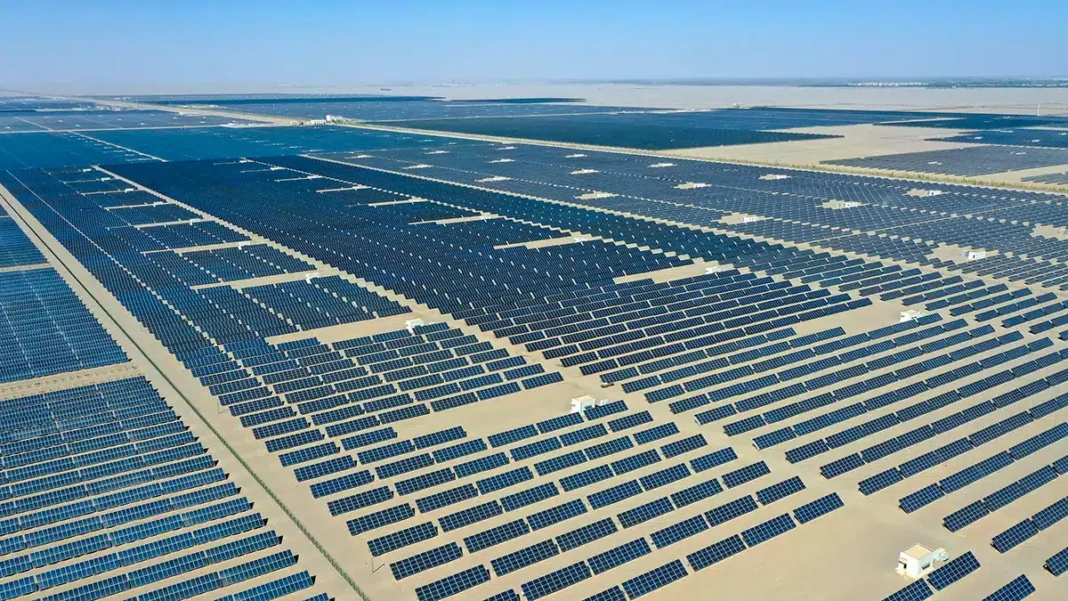
Saudi Renewables have reached 63.8 gigawatts across 53 projects, marking strong growth in clean energy development. The Kingdom continues expanding renewable power capacity under its wider energy strategy. Operating capacity has also increased significantly since 2020. It now stands at 19.3 GW in 2026, according to the latest tracker. That figure represents more than 63 times the operating capacity recorded in 2020. Meanwhile, Saudi Arabia continues working toward its long-term renewable energy targets.
The Kingdom aims to reach between 100 GW and 130 GW of renewable capacity by 2030. It also targets net-zero emissions by 2060. These goals support Saudi Arabia’s broader economic and energy transformation plans. The strategy includes adding cleaner power sources to the national electricity system. It also supports new technologies that can improve emissions management. Furthermore, officials expect the renewable pipeline to expand as more projects receive announcements.
Solar energy currently accounts for most of the tracked renewable capacity. Solar projects represent 81 percent of the total pipeline. Wind projects account for the remaining 19 percent. This balance shows the major role of solar power in Saudi Arabia’s transition. At the same time, wind projects continue expanding across several regions. Developers are pursuing projects in areas with strong renewable energy potential. As a result, the national portfolio continues to diversify across different technologies.
Project development has reached several stages across the current pipeline. Around 30 percent of capacity has already entered operation. Another 37 percent remains under development. Meanwhile, about 32 percent has reached the tender stage. This distribution shows activity across the full project cycle. It also indicates continued movement from planning toward construction and operation. Together, these projects cover multiple regions across the Kingdom.
Renewable projects now span Riyadh, Makkah, and Madinah regions. Developers are also working across Al-Qassim, Hail, and Aseer. Other locations include Jazan, the Eastern Province, and Al-Jouf. Projects also extend into Najran and the Northern Borders. This geographic spread supports broader access to renewable generation. It can also help distribute new power capacity across the country. Additionally, regional development could support local infrastructure and economic activity.
Project costs also remain a major feature of the renewable expansion. Reported levelized energy costs vary across the tracked projects. Shuaibah 1 records a cost of 1.04 cents per kilowatt-hour. Layla records a higher cost of 2.98 cents per kilowatt-hour. Several major solar projects show costs between 1.09 and 1.36 cents. Najran solar stands at about 1.09 cents per kilowatt-hour. These figures highlight the competitive economics of several large renewable developments.
The tracker lists eight projects scheduled for commissioning during 2026. Together, those projects represent 7.7 GW of expected capacity. Six projects already appear as installed facilities. Alghat wind provides 600 MW in the Riyadh region. Haden solar adds 2 GW in Makkah. Khushaybi solar contributes another 1.5 GW in Al-Qassim. Muwayh solar adds 2 GW in Makkah.
Additional 2026 projects include Tabarjal solar and Waad Al Shammal wind. Tabarjal solar has a capacity of 400 MW in Al-Jouf. Waad Al Shammal wind provides 500 MW in the Northern Borders. Two other projects remain under development. Henakiyah 2 solar will add 400 MW in Madinah. Rabigh 2 solar will provide another 300 MW in Makkah. These projects could further increase operating capacity during the current year.
Saudi Renewables are therefore becoming a larger part of the Kingdom’s electricity plans. The rapid increase since 2020 highlights the pace of recent development. New solar and wind projects continue moving through different stages. At the same time, national targets are creating a larger project pipeline. More announcements could follow as Saudi Arabia advances its 2030 goals. The growing pipeline also reflects rising attention on cleaner power generation.
The renewable expansion forms part of a broader effort to transform Saudi Arabia’s energy system. The Kingdom is increasing generation capacity while adding lower-carbon technologies. Renewable projects can also support future industrial and infrastructure development. Moreover, large-scale facilities can create opportunities for local supply chains and technical services. Continued progress will depend on project execution, investment, and grid integration. For now, the latest figures show a rapidly expanding renewable energy sector across Saudi Arabia.