



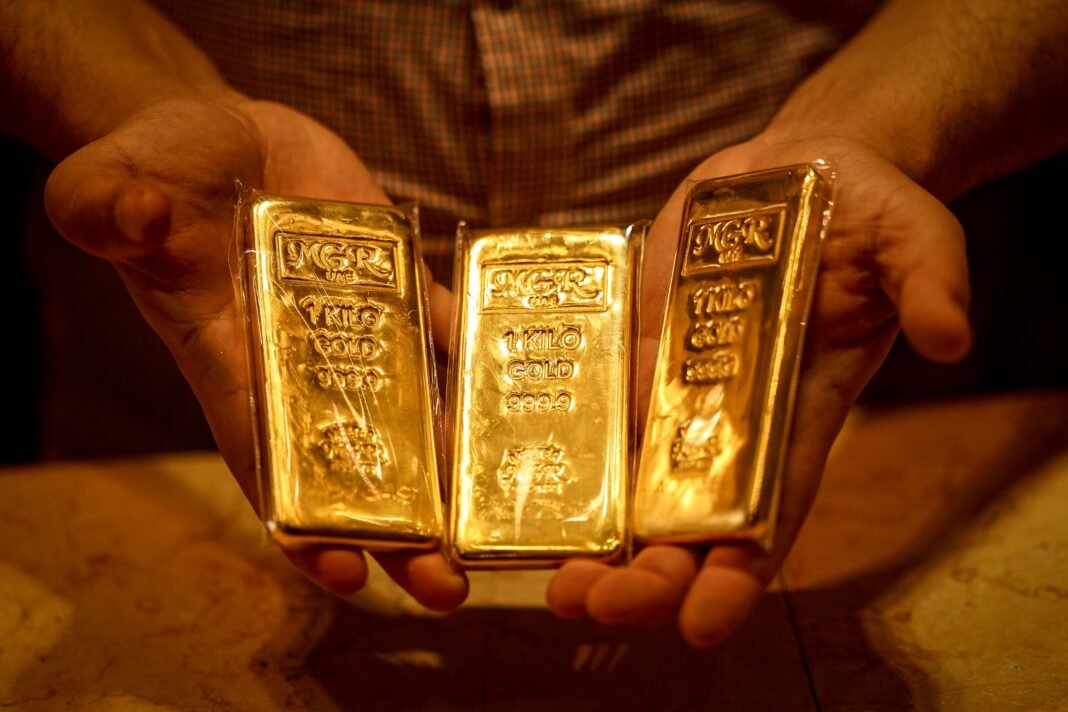
Dubai gold prices remained below Dh500 per gram for a second straight day. The market continued to face pressure from weaker global bullion prices. At Tuesday’s opening, 24K gold traded at Dh497.25 per gram in Dubai. The move followed a decline below the Dh500 level during the previous evening.
Other gold categories also recorded lower prices during the morning session. The 22K rate stood at Dh460.50 per gram. Meanwhile, 21K gold traded at Dh441.50 per gram. The 18K price reached Dh378.50, while 14K gold traded at Dh295.25 per gram.
Global markets also showed weakness during early trading. Gold declined 0.2% to about $4,127.60 per ounce. Silver also fell during the same period. The metal dropped 1.27% to around $60.56 per ounce. These moves added pressure to local bullion prices.
Several factors are currently affecting precious metals. Rising bond yields have increased the cost of holding assets without income. At the same time, the US dollar has gained strength against major currencies. Technical selling has also increased after gold broke an important support level.
Market strategist Ole Hansen said interest rates remain a major concern. He noted that US 10-year real yields reached their highest level in about 18 years. The yield approached 2.85% during recent trading. Meanwhile, markets have increased expectations for additional US interest rate increases.
Higher interest rates can create challenges for gold demand. Gold does not provide regular interest payments to investors. Therefore, higher yields can make interest-bearing assets more attractive. However, several investors continue to view gold as protection during financial uncertainty.
Investor demand through gold-backed exchange-traded funds remains important. Market participants are watching these flows for signs of changing sentiment. Investors may respond differently as borrowing costs remain elevated. Some could focus more on financial risks than short-term interest rates.
Furthermore, higher borrowing costs can create wider economic pressures. Governments may face larger debt-servicing expenses as interest rates remain high. Corporate borrowers can also face greater refinancing challenges. These pressures could eventually support demand for defensive assets.
However, financial stress can also create temporary pressure on gold. Recent movements in US corporate credit markets show some warning signs. Lower-rated companies face greater refinancing risks when borrowing costs rise. Credit spreads have also widened across parts of the corporate bond market.
The gap between high-yield corporate bonds and US Treasury securities has increased. That spread recently reached its highest level since April. Such movements can indicate growing caution among investors. Consequently, market conditions could continue influencing gold prices in the near term.
For Dubai investors and consumers, the latest decline keeps gold below a key price level. Dubai gold prices could remain sensitive to international market movements. Currency changes, bond yields, and interest-rate expectations may influence the next move. Therefore, traders will continue watching global economic signals closely.

