



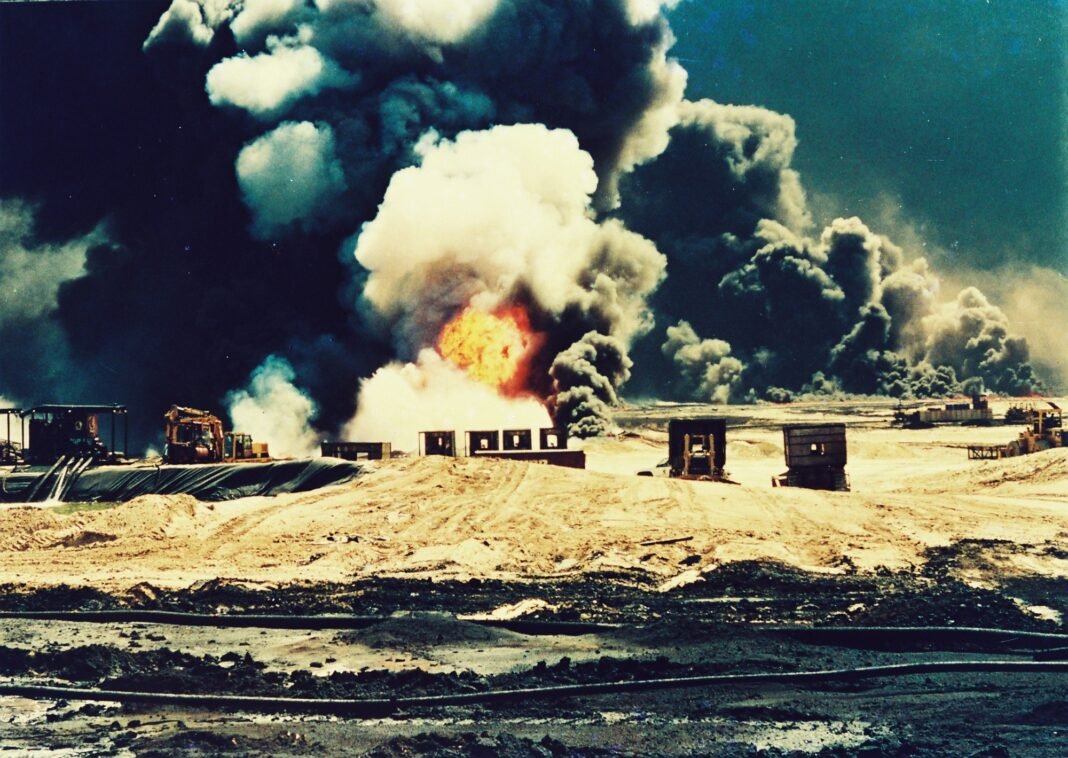
Well extinguishment in Kuwait marks 34 years since Iraqi forces set fire to the last of 737 oil wells in February 1991. The event honors Kuwaiti teams and international partners.
The final well, in Burgan field in Al-Ahmadi, firefighters put out during a ceremony attended by the late Amir Sheikh Jaber Al-Ahmad Al-Jaber Al-Sabah. Iraqi forces had ignited wells across major oil areas.
Fires created oil lakes, massive smoke, explosions at collection centers, and widespread damage to vegetation, buildings, and marine and terrestrial life.
The blazes halted oil production and caused daily losses of 4 to 6 million barrels of crude. Economic losses reached USD 120 million daily. Toxic smoke and rain affected Bahrain, Saudi Arabia, Qatar, Iran, Oman, and Central Asia.
Despite limited experience, Kuwaiti firefighters extinguished 41 wells and earned global recognition. More than 10,000 personnel from 27 foreign teams joined the effort. Teams deployed over 5,800 specialized vehicles and equipment.
After liberation, Kuwait launched recovery efforts for the oil sector. Authorities assessed damage, repaired infrastructure, restored production, and conducted environmental studies with international experts.
Global conferences and workshops examined the fires’ long-term effects and promoted collaboration. They also shared strategies for environmental protection across nations.
Today, the anniversary reminds Kuwaitis of resilience and citizen dedication. It also highlights the importance of each well in the country’s oil infrastructure.
The event inspires Kuwait to maintain high safety standards. Firefighting teams continue improving preparedness, ensuring that every well operates with minimal environmental risk.
Lessons from past well fires guide Kuwait’s safety and emergency planning strategies. Officials use these lessons to protect the nation’s energy sector and environment.
Moreover, Kuwait invests in advanced firefighting equipment and training. Teams can now respond quickly to emergencies and prevent similar disasters in the future.
In addition, environmental authorities monitor air, water, and soil quality near oil fields. These programs help mitigate risks and provide early warnings for potential hazards.
Furthermore, the government collaborates with international partners to exchange best practices. By sharing knowledge, Kuwait strengthens its firefighting capacity and enhances regional preparedness for oil-related emergencies.

