



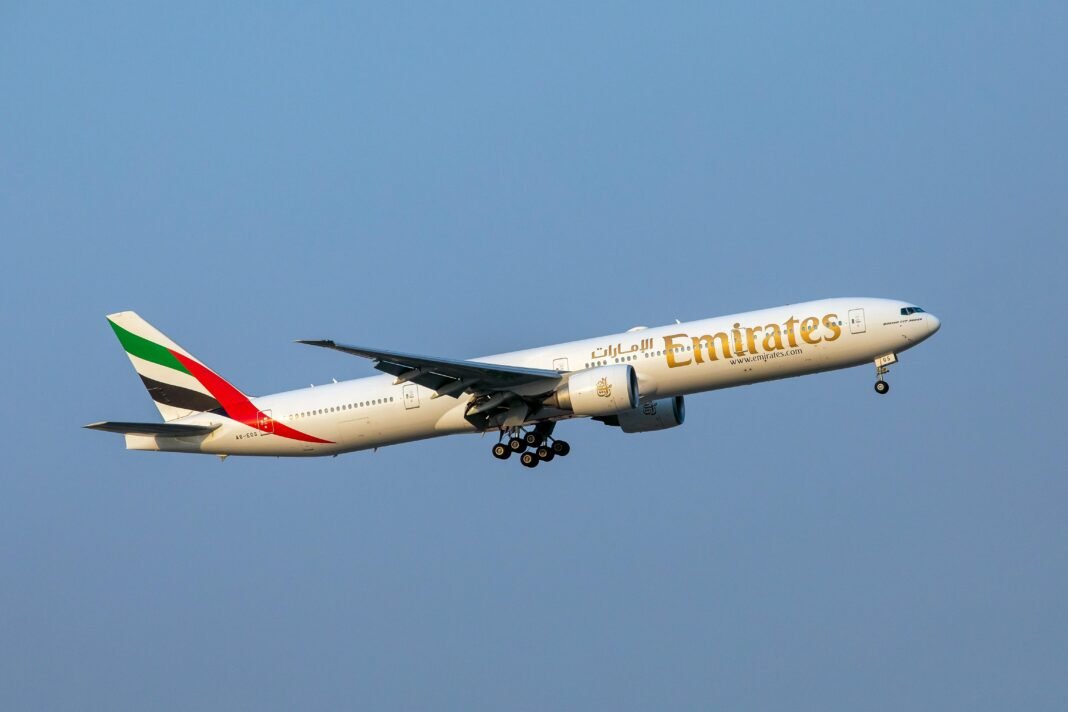
Emirates will strengthen its A350 service on the Baghdad route as the airline prepares to operate only Airbus A350 aircraft on all flights to the Iraqi capital from January 1, 2026.This decision expands the A350 service that began earlier this year and further reinforces Emirates’ plan to modernise regional operations. Moreover, it signals a deliberate effort to align the route with the airline’s wider fleet strategy.
The airline confirmed that all seven weekly flights between Dubai and Baghdad will shift to the Airbus A350. Currently, Emirates uses a Boeing 777 on four weekly rotations, yet executives chose to streamline the route to improve consistency and enhance passenger comfort. Furthermore, the shift helps the carrier deliver a unified onboard product, which supports stronger customer satisfaction across the entire Baghdad schedule. The updated fleet choice aligns with strong demand and the airline’s wider regional strategy.
Leaders at Emirates emphasise that the A350 brings a notable upgrade. The aircraft offers 32 lie-flat Business Class seats in a 1-2-1 layout. It also includes 21 Premium Economy seats in a 2-3-2 layout, and additionally offers a balanced cabin design that supports smoother passenger movement. Economy Class holds 259 seats in a 3-3-3 configuration. This layout creates wider aisles and ensures smoother movement for passengers during flights.
Furthermore, Emirates also highlights the cabin’s quieter environment. The aircraft uses advanced airflow systems that reduce noise levels. The improved lighting technology supports better rest on board and reduces the effects of jet lag. The airline continues to focus on elevating customer experiences with its ice entertainment system, which remains available on the A350.
The airline first introduced the A350 on the Baghdad route in August. That deployment marked the start of a broader transition. Emirates now aims to apply the A350 service across all Baghdad operations to maintain uniformity. The move reflects steady demand in the Iraqi market and continued regional engagement.
Aviation analysts note that Emirates continues to expand strategic routes despite global fleet renewal challenges. In addition, the airline holds the position of the world’s largest international carrier and continues to prioritise growth in key Middle East destinations. Moreover, the shift to the A350 supports sustainability efforts, since the aircraft uses fuel-efficient technology.
Industry observers expect the Baghdad upgrade to encourage other carriers to improve their products in competitive regional markets. Emirates plans to keep monitoring customer trends and may adjust schedules as travel volumes evolve. The airline believes the unified A350 service will strengthen reliability and support long-term market stability.
As 2026 approaches, Emirates will promote the operational shift through its network. The airline views the full A350 service as a milestone that supports its Fly Better commitment and enhances its presence in Iraq.

