



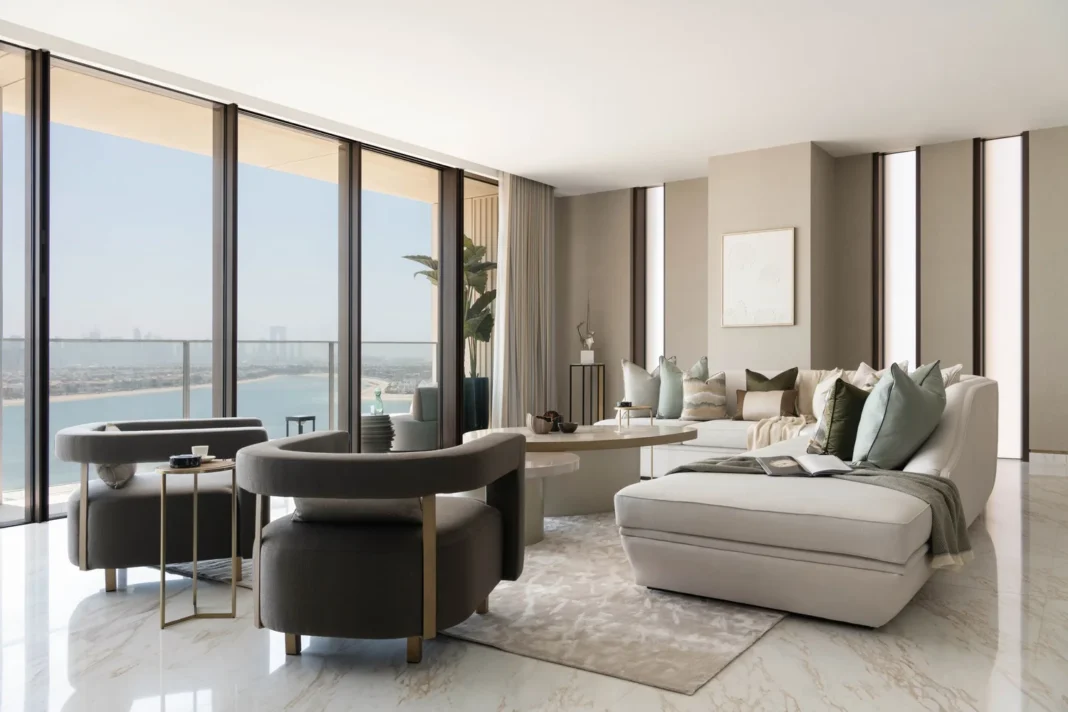
Dubai branded residences continued expanding during the first half of 2026 despite slower transaction activity. Developers added thousands of new units across the emirate during the period. At the same time, luxury buyers continued paying significant premiums for branded properties. Dubai branded residences now represent a larger and more competitive part of the property market.
The sector added 5,184 units during the first six months of 2026. That increase lifted total inventory to 64,744 units across 183 developments. At the end of 2025, the market had 59,560 units across 175 developments. Therefore, the sector grew by 8.7 percent within six months.
However, transaction activity weakened compared with the unusually strong performance recorded during the same period last year. Dubai registered 4,648 branded residence transactions during the first half. Those transactions generated a combined value of Dh22.21 billion. Transaction volume declined 21 percent compared with the first half of 2025. Meanwhile, total sales value dropped 47 percent during the same period.
The larger decline in sales value reflected changes in the types of properties changing hands. Smaller homes represented a greater share of transactions during the period. Lower-priced properties also accounted for more activity. Additionally, non-prime developments gained a larger share of the market. However, the market looked more stable when compared with the second half of 2025.
Off-plan homes continued to dominate Dubai’s branded property sector. These properties represented 82 percent of total transaction volume. They also accounted for 78 percent of overall sales value. Under-construction developments generated 3,790 transactions during the first half. International buyers and flexible construction-linked payment plans helped support this activity.
Of the 64,744 branded units currently in Dubai, 42,826 remain under construction. That figure represents about 66 percent of the total supply. Meanwhile, ready developments account for 21,918 units. The large construction pipeline indicates that supply will continue growing over the coming years.
Market activity also remained concentrated among a small group of major communities. The five leading communities generated approximately 59 percent of branded residence transactions. Mercedes-Benz Places in Binghatti City alone recorded 1,216 transactions. That figure represented about 26 percent of total branded residence sales. It also accounted for around 32 percent of transactions involving under-construction properties.
Prices continued to highlight the strength of Dubai’s branded property segment. Branded residences averaged $997 per square foot during the first half. Comparable non-branded properties averaged about $641 per square foot. Therefore, branded homes carried a premium of approximately 56 percent. That premium significantly exceeded the typical global range of 30 to 35 percent.
However, industry executives warned that strong premiums may face greater tests in the future. As more projects enter the market, competition between developers will likely intensify. Consequently, a famous brand alone may no longer guarantee strong pricing. Buyers could increasingly focus on construction quality, delivery standards, services, and long-term management.
The luxury segment continued attracting major transactions despite the broader slowdown. Five deals reached at least Dh200 million during the first half. The largest transaction reached Dh422 million at Aman Residences Dubai. Another Aman residence sold for Dh356 million. Jumeirah Asora Bay Ocean Mansions recorded a Dh350 million transaction.
Meanwhile, The Alba Residences recorded a Dh226 million sale. Bugatti Residences also recorded a major Dh200 million transaction. These deals represent a small portion of the wider market. Nevertheless, they demonstrate continued demand for limited ultra-luxury properties.
Dubai’s main branded residential hubs also showed varying levels of activity. Downtown Dubai had the highest number of branded developments with 23 projects. Business Bay followed with 21 developments. Palm Jumeirah ranked next with 18 branded residential projects.
Meydan led the market by transaction volume during the first half. The area recorded 1,378 transactions worth Dh3.03 billion. Downtown Dubai followed with 405 transactions worth Dh3.41 billion. Dubai Creek Harbour recorded 355 transactions worth Dh1.04 billion.
The sector has also changed considerably since 2020. The number of branded residential developments has increased from 50 to 183. That represents more than a threefold increase within several years. Meanwhile, developers have increasingly adopted hotel-managed and service-focused residential models.
Nearly half of current developments now include residential units managed by hotel operators. This model reflects growing demand for hospitality-style services within private residences. Buyers increasingly seek amenities, professional management, and premium lifestyle experiences alongside their homes.
Several major developments could further expand the market in the coming years. Aman Residences Dubai represents one significant upcoming waterfront project. The development will rise on Dubai Peninsula in Jumeirah 2. Another major project, Janu Dubai, will combine a hotel with branded residences in DIFC.
Both developments currently target completion during the fourth quarter of 2029. Their arrival will add further choice for luxury property buyers. At the same time, additional supply could increase competition between developers and operators.
Overall, Dubai branded residences remain a strong segment despite slower transaction volumes. The market continues attracting wealthy buyers and international investors. However, growing supply could make competition increasingly important. Buyers may therefore pay closer attention to individual projects instead of brands alone.
Dubai branded residences have entered a more mature phase of development. Strong pricing remains evident, but future performance will depend on execution. Developers will need to deliver quality, services, and long-term value to maintain premium prices.