

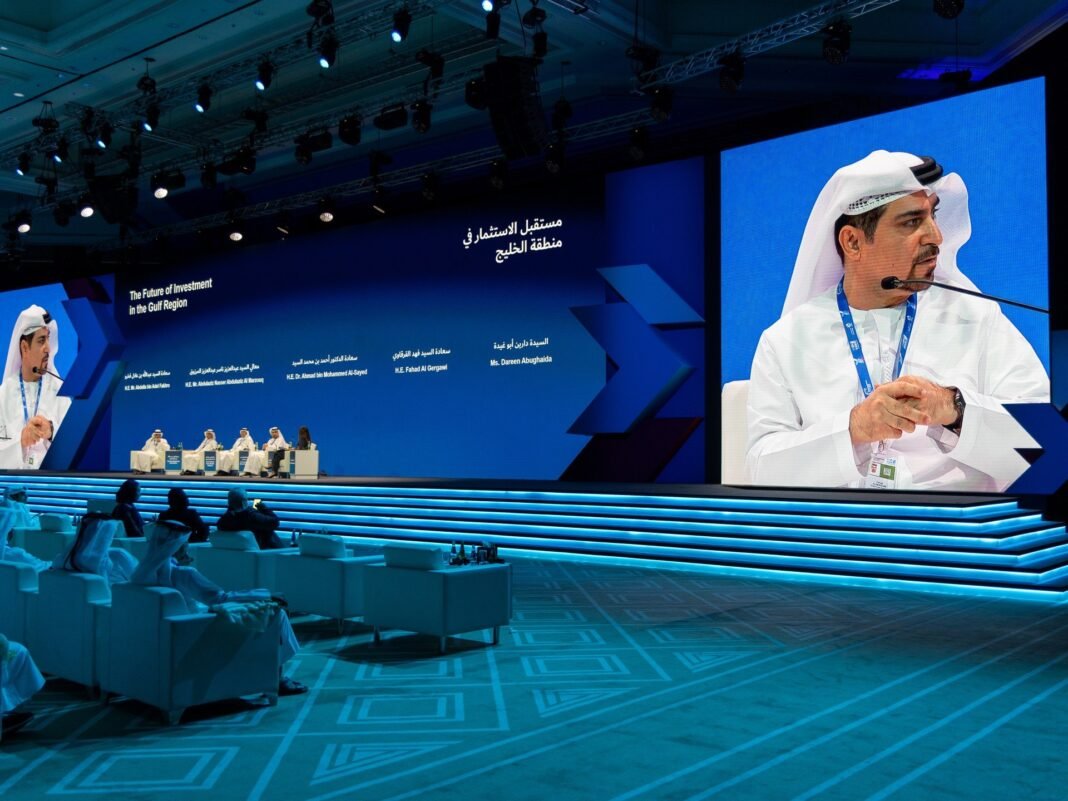
The stock of foreign direct investment in Gulf Cooperation Council states has passed $792 billion, of which more than $171 billion is investment between GCC members, Secretary-General Jasem Mohamed Albudaiwi told the World Investment Forum in Doha on Sunday, Al Jazeera reported.
Albudaiwi put the bloc’s combined GDP at $2.4 trillion and its foreign trade at more than $1.8 trillion, with sovereign assets above $5 trillion and average income per person of $38,000, according to the report.
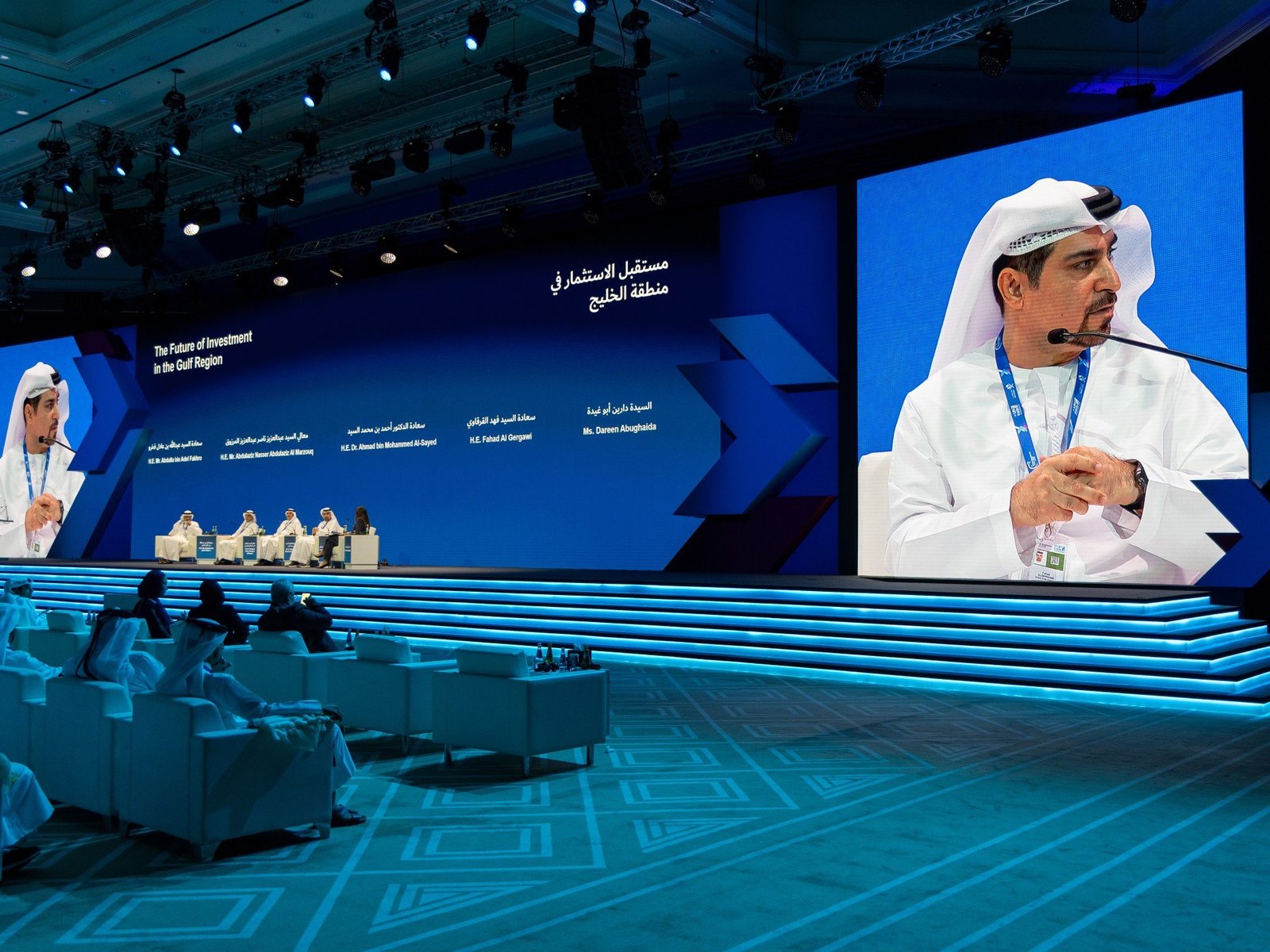
He spoke at a session on the future of investment in the Gulf, where ministers from Qatar, Kuwait and Bahrain and a senior UAE trade official set out proposals to deepen economic integration among the six states.
Fahad Al Gergawi, an undersecretary at the UAE trade ministry, proposed a unified Gulf logistics corridor for exports and investment, in cooperation with UN Trade and Development (UNCTAD), Al Jazeera said.
Under the proposal, goods would enter the region through one GCC port of entry and leave through another, with food manufacturing among the sectors it would support.
Dr. Ahmed bin Mohammed Al Sayed, Qatar’s Minister of State for Foreign Trade Affairs, said Gulf states should move beyond traditional supply chains and build integrated regional value chains, assigning stages of production to each country according to its competitive advantage, The Peninsula reported.
He said the private sector would play a central role in joint projects in manufacturing, data centers and hyperscale computing.
Abdulaziz Nasser Al Marzouq, Kuwait’s Minister of State for Economic Affairs and Investment, called for the Gulf to develop data centers and hyperscale computing facilities, using its energy resources to attract artificial intelligence projects.
Al Marzouq described the idea as turning the Gulf into a global “silicon desert” and said investment should be judged on quality and value rather than size alone.
Abdulla bin Adel Fakhro, Bahrain’s Minister of Industry and Commerce, said Bahrain has identified 12 industrial sectors by studying which imported products could be made locally.
Bahrain is preparing investment profiles that set out the capital required, possible local partners and project sites, and is exploring purchase agreements to secure future demand, Fakhro said.
He urged other GCC states to adopt the model to avoid duplicated investment, and said the bloc needs more free trade agreements because it accounts for less than 1% of the world’s population.
David Petraeus, chairman of the KKR Global Institute and head of KKR Middle East, told the session he expects Gulf states to invest heavily in resilience, defense and alternatives to contested shipping routes such as the Bab Al Mandab Strait, and said KKR would play a major role in those investments.
The ninth World Investment Forum is hosted by Qatar in partnership with UNCTAD.