



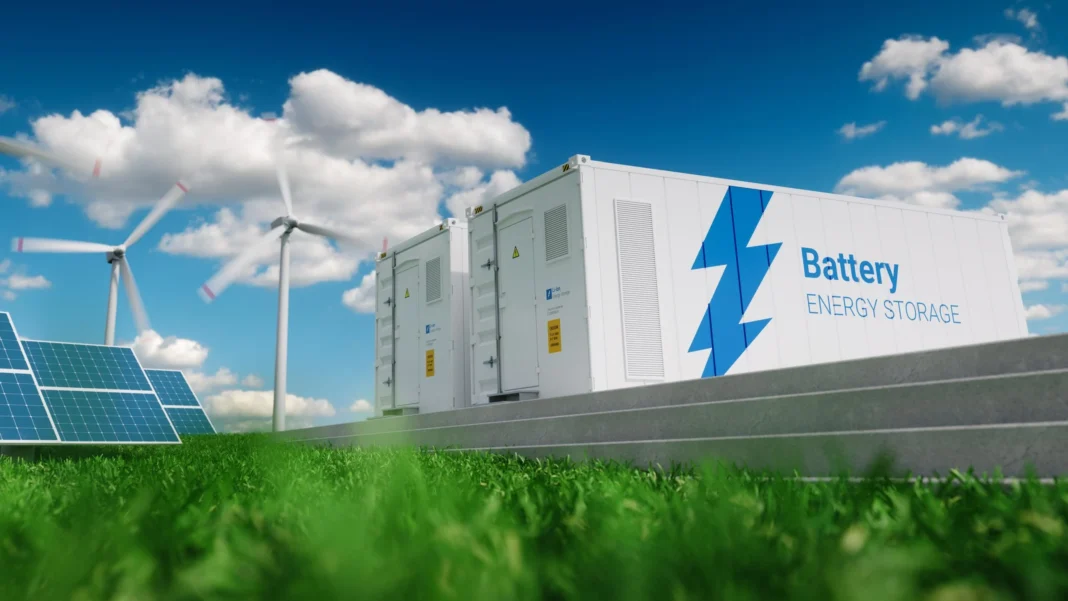
The battery storage investment is reshaping Oman’s energy strategy as the country accelerates modernization efforts. Authorities aim to strengthen the national grid while supporting renewable energy growth. As a result, large-scale battery projects now sit at the center of future planning.
Oman Electricity Transmission Company plans significant capital spending over the coming years. The company will allocate a large share of its budget to battery energy storage systems. This move reflects a clear shift toward flexible and resilient energy infrastructure. Officials expect these systems to improve reliability across the grid.
The total investment program for 2026 to 2030 exceeds one billion Omani rials. Within this plan, hundreds of millions will fund battery storage projects. These investments will help balance electricity supply and demand more efficiently. Consequently, the grid will handle fluctuations from renewable energy sources more effectively.
Battery systems play a critical role in managing modern energy networks. They store surplus electricity during periods of low demand. Later, they release stored energy when consumption rises. This approach ensures stable power delivery throughout the day.
The battery storage investment supports Oman’s long-term development goals. The country continues to expand solar and wind energy capacity. However, renewable sources often produce variable output. Therefore, advanced storage solutions help maintain consistent electricity flow.
Regulators have also introduced supportive policies to accelerate these projects. They approved faster cost recovery timelines for battery assets. This change encourages investment and speeds up implementation. As a result, energy companies can deploy new technologies more quickly.
In addition, analysts note that the company is evolving beyond traditional operations. Previously, it focused mainly on transmitting electricity across the network. Now, it integrates advanced systems that enhance flexibility and efficiency. This transformation reflects broader changes across global energy markets.
The battery storage investment also strengthens long-distance grid connections. Oman continues to expand links between northern and southern regions. These connections improve energy distribution across large distances. However, they also introduce challenges related to stability and timing.
Battery systems address these challenges by balancing supply across time. They ensure that electricity remains available when needed most. This capability becomes increasingly important as renewable energy grows. Therefore, storage solutions act as a stabilizing force within the grid.
Furthermore, officials emphasize the role of innovation in future energy planning. They continue to explore demand management and smart grid technologies. These efforts aim to create a more efficient and sustainable energy system.
The battery storage investment highlights Oman’s commitment to energy transformation. The country continues to align infrastructure with long-term sustainability goals. As projects move forward, the national grid will become more adaptable and reliable.
Experts expect continued growth in energy storage deployment. Market conditions and policy support will likely drive further expansion. Consequently, Oman positions itself as a regional leader in modern energy solutions.