

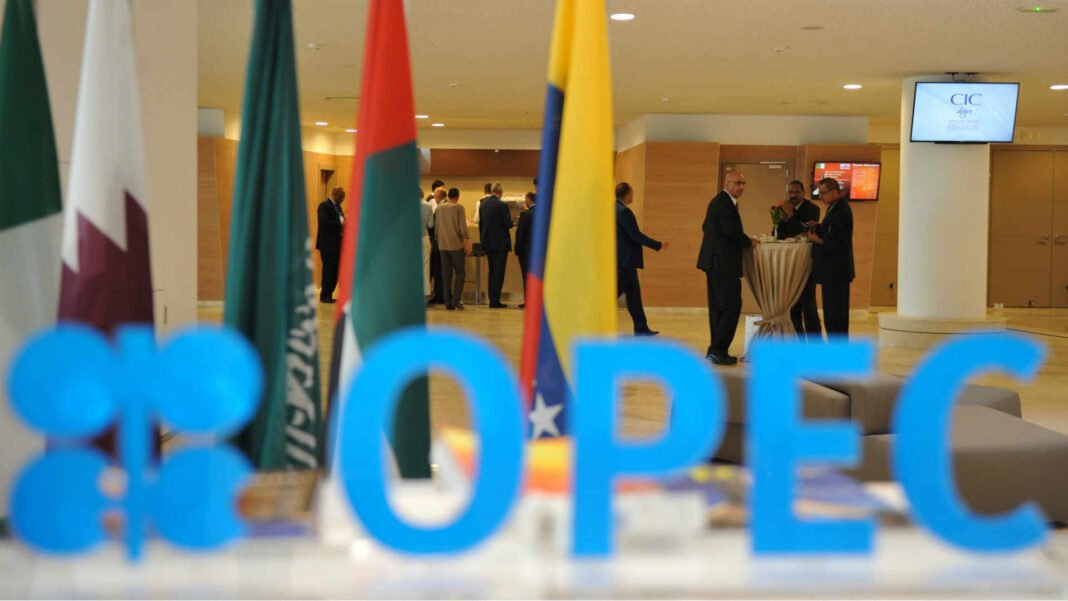
OPEC+ Output will increase in August after seven major producers agreed to raise crude production while continuing efforts to support market stability. The latest decision reflects confidence in current market conditions while maintaining flexibility for future adjustments. Furthermore, participating countries stressed their commitment to balancing supply with global demand.
The agreement followed a virtual meeting involving Saudi Arabia, Russia, Iraq, Kuwait, Kazakhstan, Algeria, and Oman. These producers previously introduced additional voluntary production adjustments during 2023 to support oil prices and market balance. They have continued reviewing global energy conditions before making further production decisions.
The group approved a combined production increase of 188,000 barrels per day beginning in August 2026. Officials said the adjustment represents the next phase of gradually easing earlier voluntary production reductions. However, they emphasized that future decisions will depend on changing market conditions.
Saudi Arabia and Russia will each increase production by 62,000 barrels per day. These two countries will contribute the largest share of the combined production increase. Their decision reflects continued cooperation within the broader OPEC+ alliance.
Iraq will raise production by 26,000 barrels per day during August. Meanwhile, Kuwait will add 16,000 barrels per day to its output. Kazakhstan will contribute an additional 10,000 barrels per day under the revised production schedule.
Algeria will increase production by 6,000 barrels per day. Oman will also raise output by 5,000 barrels per day. Together, these adjustments complete the agreed production increase among the participating countries.
Following the changes, Saudi Arabia’s production target will reach approximately 10.416 million barrels per day. Russia’s production level will increase to nearly 9.887 million barrels per day. Iraq’s revised production target will stand at about 4.405 million barrels per day.
Kuwait’s production will rise to approximately 2.660 million barrels per day. Kazakhstan’s target will reach around 1.618 million barrels per day. Algeria will produce roughly 1.001 million barrels per day, while Oman’s production will total about 836,000 barrels per day.
Officials explained that the production increases remain flexible rather than permanent. The participating countries can modify future production levels if market conditions require additional action. Therefore, they retain the ability to increase, pause, or reverse production adjustments whenever necessary.
The producers reaffirmed their commitment to maintaining stability across global oil markets. They also pledged to continue coordinating production policies through regular consultations. This approach allows members to respond quickly to changing demand and supply conditions.
Another priority involves addressing previous overproduction among participating countries. Officials confirmed their intention to continue compensating for excess output recorded since January 2024. These efforts aim to strengthen compliance with existing production agreements while supporting long-term market balance.
The participating countries also reaffirmed their commitment to the Declaration of Cooperation. In addition, they pledged continued support for voluntary production adjustments monitored by the Joint Ministerial Monitoring Committee. This oversight helps ensure members follow agreed production targets.
Regular monthly meetings will continue throughout the year. During these sessions, officials will evaluate global market developments, production compliance, and compensation progress. Their next meeting is scheduled for early August, when members will review the latest market data before considering further action.
Oil prices traded slightly lower following the announcement. Brent crude declined to around $71.73 per barrel during trading. Meanwhile, US crude traded near $68.44 per barrel. Despite these modest declines, producers maintained confidence in their market management strategy.
OPEC+ Output remains an important factor shaping global energy markets. The alliance continues balancing production with changing economic conditions and energy demand. Looking ahead, member countries will closely monitor market developments before implementing future adjustments. OPEC+ Output will remain central to efforts aimed at supporting stability while ensuring adequate global oil supplies.