



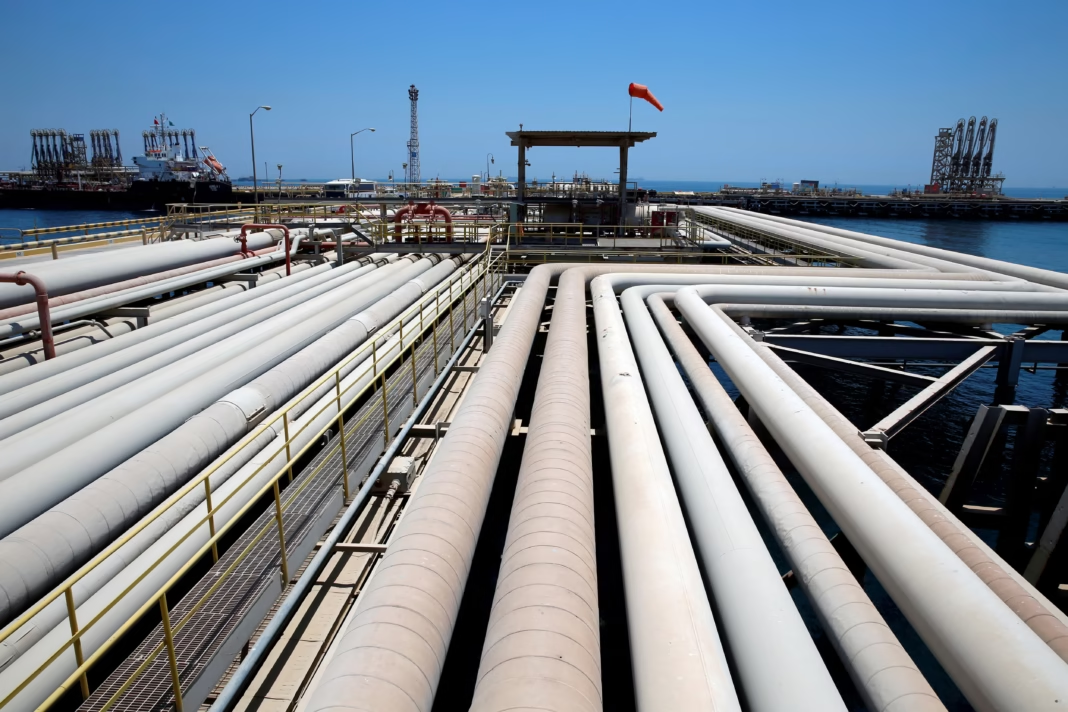
Saudi Arabia has increased the official selling price of its Arab Light crude for Asian buyers. The price rose by $1 per barrel, bringing it to a $3.20 premium over Oman and Dubai benchmarks. Additionally, Arab Extra Light gained $1.20 per barrel, while Arab Heavy saw a smaller $0.70 rise. These adjustments reflect stronger oil demand across key Asian markets, driven by economic recovery and rising energy use.
In North America, Saudi Arabia set Arab Light at $4.20 above the Argus Sour Crude Index. The kingdom continues pricing crude based on five density grades, ranging from Super Light to Arab Heavy. This approach helps global refiners match their processing needs with feedstock quality. By adjusting prices regularly, Saudi Arabia ensures competitiveness while responding to shifts in supply and demand conditions.
Crude prices set by Saudi Arabia influence nearly 9 million barrels per day of exports to Asia. These prices also guide other producers, including Kuwait, Iran, and Iraq, when setting their own benchmarks. The latest hike reflects market input from refiners and an analysis of yields, product prices, and refining margins. Saudi Arabia uses these signals to fine-tune its pricing strategy and protect its global market share.
Moreover, this pricing decision aligns with OPEC+ plans to raise output by 547,000 barrels per day next month. This move marks the end of voluntary cuts introduced in the past to stabilize oil markets. Improved global growth forecasts and steady fundamentals encouraged the group to expand supply. Full compliance with the Declaration of Cooperation remains a top priority for OPEC+ members.
With this change, Saudi Arabia’s output will reach 9.97 million barrels per day. Russia, Iraq, and the UAE plan to produce 9.44, 4.22, and 3.37 million barrels per day, respectively. Kuwait, Oman, Algeria, and Kazakhstan also announced target increases. In addition, these numbers suggest growing confidence among producers that global demand can absorb the added supply.
In conclusion, crude prices remain a key tool for Saudi Arabia’s energy strategy and fiscal planning. Higher prices support national revenues and reinforce the kingdom’s dominant role in global oil markets. The latest hikes signal strong demand across sectors, especially in Asia and North America. As global economies expand, Saudi Arabia continues to adjust prices in line with evolving market trends.

