



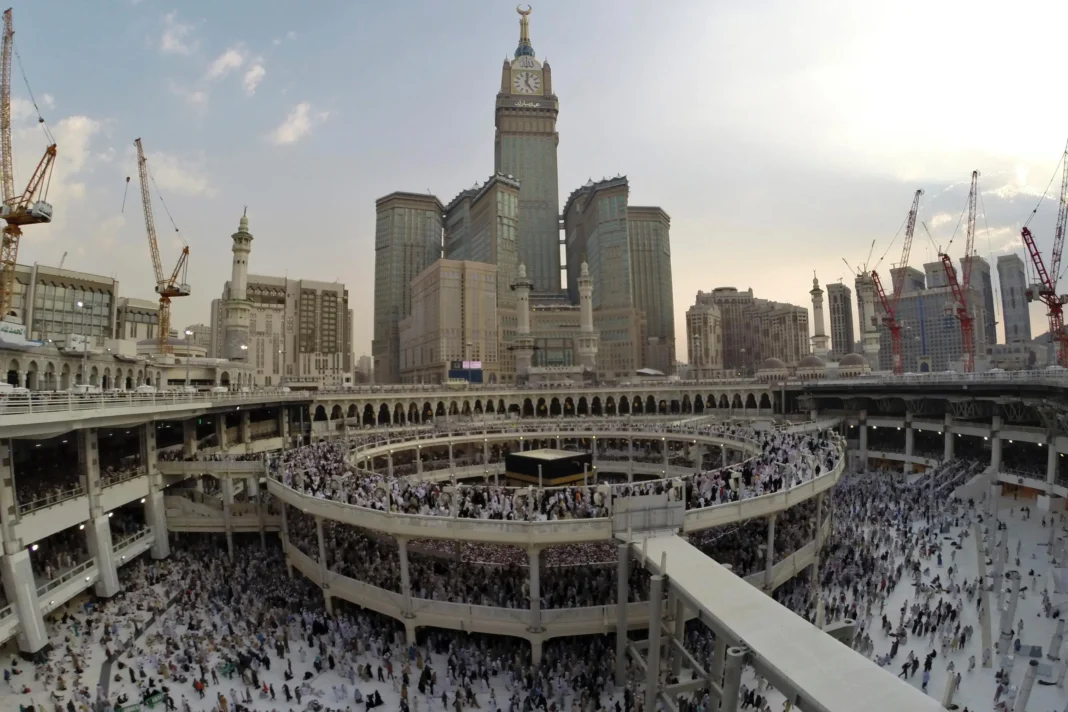
Saudi Arabia has completed a monumental expansion of the Grand Mosque in Mecca, marking one of the largest religious and architectural projects in history. The expansion of Al-Haram underscores the Kingdom’s long-term commitment to serving millions of pilgrims who visit Islam’s holiest site each year.
The project, which reportedly cost around $80 billion, stands as the most expensive architectural development in the world. Through this massive investment, Saudi Arabia has significantly increased the mosque’s capacity, allowing it to accommodate more than three million worshippers during peak periods such as Hajj and Ramadan.
The expansion focused on both scale and functionality. New prayer areas, wider courtyards, and improved walkways now allow smoother movement for pilgrims. These improvements reduce congestion and enhance safety, especially during high-density rituals like Tawaf and Sa’i.
In addition, the project introduced advanced infrastructure to support emergency response and public health. Authorities built a fully equipped hospital within the mosque complex to handle medical cases quickly. Helicopter landing pads were also installed to enable rapid evacuation during critical emergencies.
Saudi planners designed the expansion to balance modern engineering with Islamic architectural identity. Designers preserved the spiritual atmosphere of the Grand Mosque while integrating cutting-edge construction techniques. Marble flooring, climate-controlled spaces, and energy-efficient systems improve comfort without altering the mosque’s sacred character.
The expansion also supports Saudi Arabia’s broader vision to improve pilgrimage services. Each year, millions of Muslims travel to Mecca for Hajj and Umrah. Authorities expect these numbers to grow steadily in coming decades. Therefore, the project prepares the mosque to meet future demand while maintaining high safety standards.
Beyond physical infrastructure, the project strengthens crowd management and security systems. Surveillance technologies, emergency planning, and trained personnel work together to ensure pilgrim safety. These measures help authorities respond quickly to any situation without disrupting worship.
Religious scholars and visitors alike view the expansion as a milestone in Islamic history. Many note that the project allows more Muslims to pray closer to the Kaaba, fulfilling lifelong spiritual aspirations. At the same time, it reflects Saudi Arabia’s role as custodian of Islam’s holiest sites.
The Grand Mosque expansion also carries global significance. It demonstrates how large-scale development can respect religious heritage while embracing modern needs. For many Muslims worldwide, the project symbolizes unity, service, and devotion.
Overall, the expansion of Al-Haram reinforces the Grand Mosque’s position as a global center of worship and peace. It highlights Saudi Arabia’s ongoing efforts to improve the pilgrimage experience and ensure that Mecca remains accessible, safe, and spiritually profound for generations to come.