



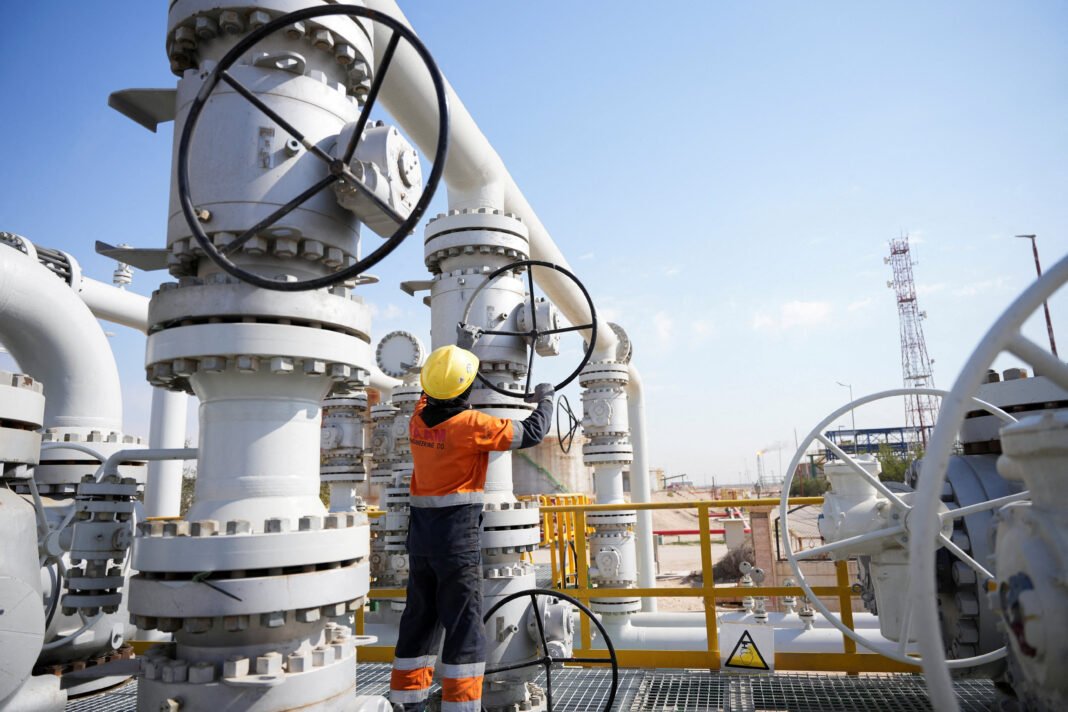
Iraq is accelerating plans to expand Turkiye oil exports as growing security risks around the Strait of Hormuz continue disrupting regional energy flows. The situation is also placing pressure on Iraq’s oil revenues and production strategy.
Iraqi Oil Minister Basim Khudhair al-Abadi announced that Baghdad aims to increase crude shipments through Turkiye to 500,000 barrels per day. However, the target depends on the return of international energy companies operating in the Kurdistan Region.
The minister spoke during his first official press conference in Baghdad after assuming office. He warned that rising geopolitical tensions threaten global energy transportation through the Strait of Hormuz, one of the world’s most important oil shipping corridors.
Turkiye oil exports currently average around 200,000 barrels per day through the Ceyhan export terminal. Iraqi officials want to more than double those volumes to reduce dependence on Gulf shipping routes during the ongoing regional crisis.
The Iraqi government continues prioritising negotiations with the Kurdistan Regional Government regarding energy production and export coordination. Baghdad also hopes renewed cooperation will encourage suspended international operators to restart production activities across northern Iraq.
According to the minister, Iraq exported nearly 93 million barrels monthly before the recent US-Iran escalation intensified regional instability. However, exports dropped sharply to around 10 million barrels during April because of maritime disruption and operational uncertainty.
Turkiye oil exports have therefore become increasingly important for Iraq’s economic stability. The country remains heavily dependent on crude revenue to finance infrastructure projects, public salaries, and long-term state spending obligations.
The minister also confirmed that combined production from Basra and Kirkuk currently stands near 1.4 million barrels per day. Consequently, lower export capacity continues placing pressure on government revenues and Iraq’s position in global energy markets.
Baghdad is also seeking international support for higher production allowances within the Organization of the Petroleum Exporting Countries. Iraqi officials argue that expanded output would support economic recovery and strengthen public investment programmes.
Regional energy markets remain highly volatile as investors monitor shipping disruptions near Hormuz. Ongoing uncertainty surrounding maritime security continues increasing insurance costs and slowing tanker movements across Gulf export routes.
Turkiye oil exports could provide Iraq with a more stable alternative route if Hormuz disruptions continue. Energy analysts believe diversified export infrastructure may reduce Iraq’s exposure to future transportation risks.
At the same time, Iraq continues balancing relations with regional partners while managing domestic energy disputes. Cooperation between Baghdad and Erbil remains essential for restoring suspended northern production capacity and attracting international energy investment.
The Ceyhan pipeline corridor also carries broader strategic importance for regional energy trade. Expanding Turkiye oil exports may strengthen Iraq’s role in regional supply diversification across global crude markets.
Overall, Iraq’s latest export strategy reflects growing urgency within the energy sector as geopolitical risks continue threatening Gulf shipping routes and global oil supply stability.