



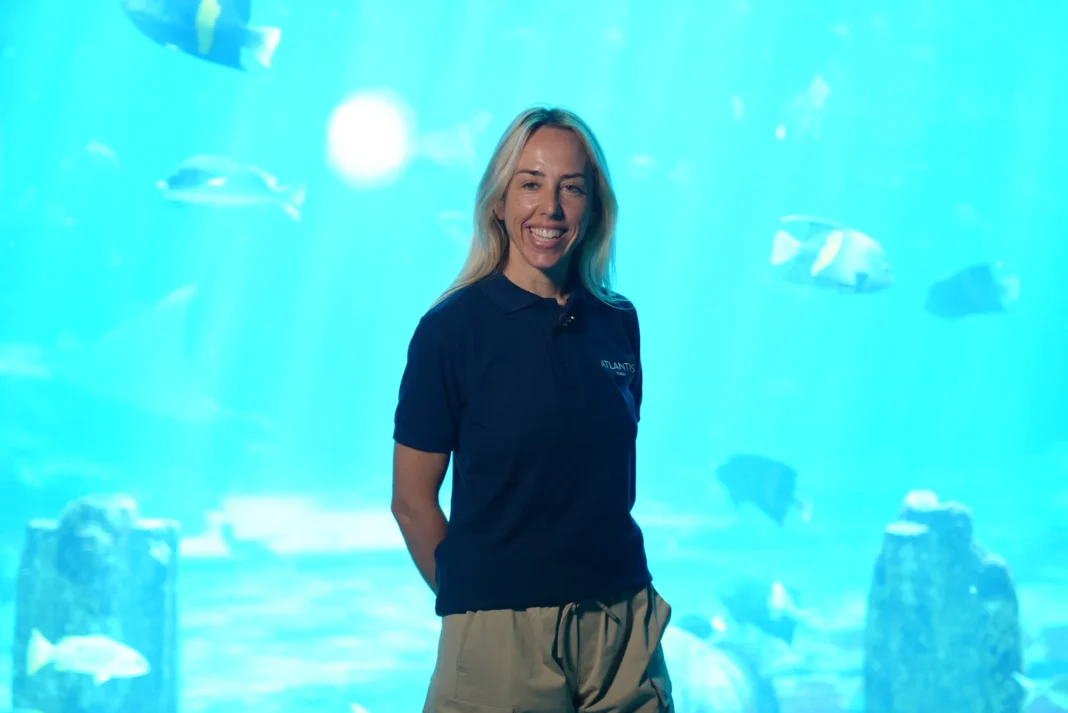
Beneath the luxury towers and famous aquariums of Atlantis Dubai, a hidden marine hospital operates around the clock. The facility protects thousands of ocean species, supports marine conservation, and strengthens Dubai’s growing position in environmental tourism and scientific research.
The underground centre at Atlantis The Palm manages more than 65,000 marine animals from over 285 species. It also breeds sharks, rays, jellyfish, and coral through one of the Middle East’s most advanced marine care programmes.
Marine conservation remains central to the project’s long-term strategy. Animal care specialists focus on breeding native Arabian Gulf species. Selected animals are later released into protected coastal waters across the UAE.
Kelly Timmins, Executive Director of Marine Animal Operations and Sustainability at Atlantis Dubai, said nearly 90 percent of the aquarium’s species come from the Arabian Gulf. She added that most were successfully bred inside the underground facility rather than imported.
The hidden operation supports Dubai’s wider environmental and tourism goals. Marine conservation projects continue attracting investment into scientific tourism, sustainability research, and educational partnerships across the UAE hospitality sector.
Inside the facility, specialists monitor shark eggs, quarantine new arrivals, and maintain habitats that closely replicate natural marine environments. As a result, the centre operates more like a research institute than a traditional aquarium support unit.
One of the programme’s biggest achievements involves Arabian carpet sharks. Since 2019, Atlantis Dubai has partnered with Dubai Municipality to release 73 sharks into the protected Jebel Ali Wildlife Sanctuary. This initiative supports local biodiversity and strengthens conservation efforts along the UAE coastline.
Earlier this year, the facility recorded its first successful blacktip reef shark births. Veterinary teams closely monitored the newborn sharks and created customised feeding programmes to support healthy early development.
Marine conservation efforts also extend to coral restoration and jellyfish breeding. The facility grows moon jellyfish and coral species for aquarium exhibits while reducing pressure on natural marine ecosystems.
The operation requires extensive technical management each day. Teams prepare specialised diets for thousands of animals. Divers clean habitats and monitor environmental conditions. Technicians also test water quality twice daily to maintain ideal living standards.
Dr Marina Caveney, Manager of Veterinary Services at Atlantis Dubai, said preventive healthcare remains a major priority. Veterinary teams regularly conduct blood tests, ultrasounds, and behavioural monitoring inside the fully equipped 24-hour medical unit.
The project also reflects Dubai’s broader investment in sustainability and eco-tourism. Marine conservation initiatives support the emirate’s reputation as a destination that combines luxury hospitality with environmental responsibility and scientific innovation.
Atlantis Dubai’s aquarium holds accreditation from the Association of Zoos and Aquariums. This recognition confirms that the facility meets international animal care and conservation standards.
The Atlantis Atlas Project also works with universities and schools to promote environmental education and marine research. As a result, the programme continues expanding its role beyond tourism into long-term scientific collaboration and sustainability development.
Overall, the hidden marine hospital beneath Atlantis Dubai represents far more than an aquarium support centre. It has become a major regional platform for marine conservation, scientific investment, and environmental innovation across the Gulf region.

