



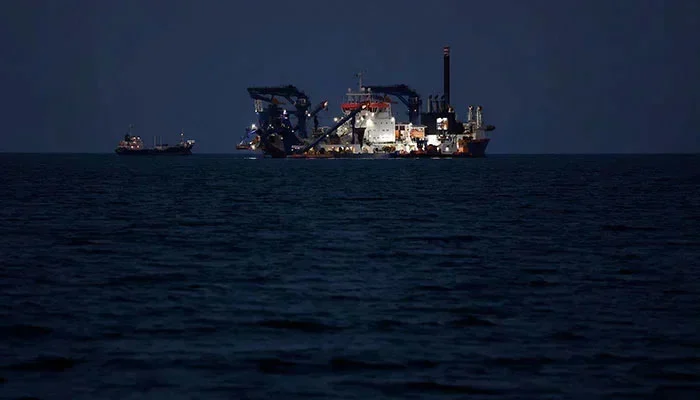
Saudi Arabia’s crude oil cargo is en route to Pakistan after passing through the Strait of Hormuz under tightened security measures. This transit comes amid ongoing regional tensions following the US-Israel-Iran conflict.
According to tracking data, seven vessels departed the Gulf on Saturday. These included one Saudi oil tanker, two liquefied petroleum gas carriers, and four bulk carriers. All ships took a northerly route between the Iranian islands of Larak and Qeshm, a narrow passage now under close Tehran control.
Iran is reportedly considering legislation to charge fees on vessels seeking safe passage through Hormuz. The strait, a strategic global oil corridor, is currently operating at a fraction of its prewar traffic. Electronic interference and deliberate deactivation of AIS transponders by ships have further complicated tracking.
Analysts note that limited vessel movement reflects both caution by operators and geopolitical risk. Many ships navigating the area disable automatic identification systems to avoid exposure in the high-risk waters. Despite these challenges, Saudi crude shipments continue, supporting regional supply chains.
Data from TankerTrackers.com shows that Iran-linked crude vessels averaged around 1.6 million barrels per day through Hormuz during the first 23 days of March. These operations often occur with transponders turned off, making monitoring difficult.
Observers warn that any escalation in the conflict could further restrict maritime traffic and disrupt global energy markets. The current volume of oil movement underscores the delicate balance between regional security and energy supply.
Industry officials highlight the importance of alternative routing strategies and contingency planning. Meanwhile, Pakistan is expected to receive the Saudi cargo without delays, illustrating ongoing efforts to maintain energy trade despite regional volatility.
Shipping companies and traders are closely monitoring the evolving situation in the Gulf. They anticipate that Iran’s proposed fee system could impact transit costs, further complicating logistics for international operators.
Experts suggest that while global oil markets remain resilient, regional tensions in the Strait of Hormuz continue to pose a persistent risk. The combination of geopolitical uncertainty, electronic tracking interference, and restricted traffic emphasizes the strategic importance of this maritime corridor.