



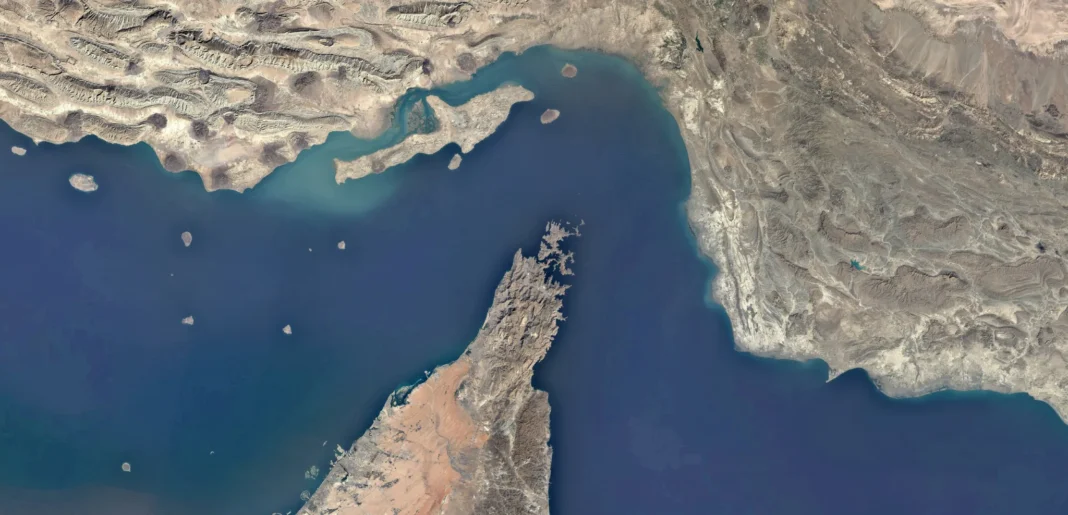
US Secretary of State Marco Rubio issued a firm warning against Iran and its Houthi allies. He emphasized that their threats to the Strait of Hormuz are unacceptable. Moreover, he announced strong US support for Bahrain’s diplomatic initiative at the United Nations. This effort aims to prevent Iran from turning the strait into a toll road for global trade.
Rubio spoke from Washington, D.C., explaining that Iran and the Houthis want to control international waterways. Furthermore, he said, “It’s unacceptable to us, and it should be unacceptable to the world.” He praised Bahrain for leading a UN effort to build a coalition opposing any regime that blocks the free flow of goods.
The Strait of Hormuz handles roughly 20-25% of global oil and liquefied natural gas daily. Consequently, shipping traffic has dropped from around 140 vessels per day to just two to four vessels. Recent US-Israeli strikes on Iran triggered Tehran’s retaliatory attacks. As a result, insurance costs have soared, and thousands of seafarers remain stranded.
Rubio highlighted broader economic consequences. He warned that Iran’s proposed toll system would charge nations for safe passage, creating global instability. Additionally, the US and its allies classify this move as economic piracy. Meanwhile, Iran-backed Houthis have targeted Red Sea shipping routes, which increases the regional threat to energy security.
Bahrain, hosting the US Navy’s 5th Fleet, circulated UN draft resolutions under Chapter VII. These authorize necessary measures, including naval patrols. The initiative has gained support from Gulf states, the US, and a coalition of 22 nations. Japan, South Korea, Australia, and New Zealand have joined the coalition. Rubio emphasized that the coalition focuses on protecting navigation rights, not seeking US dominance.
Economists and energy analysts note that reopening Hormuz without interference is crucial for global oil prices. Therefore, the strait’s closure risks higher inflation and energy shortages worldwide. By backing Bahrain’s UN effort, the US signals that major economies, not a single regime, will control vital waterways.
Looking ahead, diplomats expect the initiative could lead to a UN Security Council resolution. This may authorize multinational naval patrols or even a maritime peacekeeping mission. Rubio confirmed the US aims to neutralize Iran’s missile, drone, and naval capabilities quickly, avoiding ground troops. Operations are expected to finish within weeks.
The Hormuz Strait remains central to global energy security. Consequently, Rubio’s message sends a clear signal: the world will not accept Iranian or Houthis’ attempts to hold energy markets hostage.

