



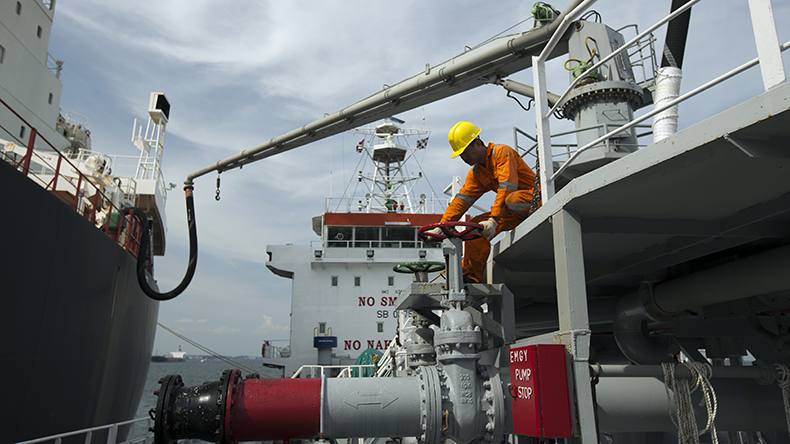
Singapore bunker imports are declining as fuel shipments from Kuwait have effectively disappeared. The disruption follows escalating regional tensions that have limited access through the Strait of Hormuz.
Kuwaiti very low sulfur fuel oil (VLSFO) supplies have not reached Singapore since the conflict began. As a result, traders and suppliers are adjusting sourcing strategies to meet demand in the world’s largest bunkering hub.
The Strait of Hormuz plays a critical role in global energy flows. However, ongoing restrictions have reduced tanker movements significantly. Therefore, traditional supply routes from the Gulf are facing major disruptions.
At the same time, Singapore bunker imports continue to rely on alternative sources. Recent shipments from South Korea have helped ease some pressure. Nevertheless, tight supply of marine gas oil (MGO) is expected to persist in the near term.
In addition, India has resumed VLSFO exports to Singapore for the first time since October. This development offers partial relief to the market. However, volumes remain limited compared to previous Kuwaiti supplies.
Traders note that supply diversification is becoming increasingly important. Companies are exploring new routes and partners to maintain stable fuel availability. Consequently, market dynamics are shifting across Asia’s energy sector.
Despite these adjustments, supply constraints continue to affect pricing and availability. Limited inflows have tightened inventories, leading to increased competition among buyers. Therefore, bunker fuel prices may remain under upward pressure.
Moreover, logistics challenges and higher shipping costs add further strain. Disruptions in key maritime routes have increased operational risks for suppliers. As a result, delivery timelines have become less predictable.
Singapore bunker imports also reflect broader global energy trends. Geopolitical tensions continue to reshape trade flows and fuel distribution networks. Therefore, markets remain sensitive to further developments in the region.
Looking ahead, the arrival of additional cargoes from Asia may provide some stability. However, the market still depends on the reopening of major supply routes. Until then, uncertainty is likely to persist.
Singapore bunker imports highlight the fragile balance of global fuel supply chains. The situation underscores the need for flexibility, diversification, and strategic planning in the energy sector.