



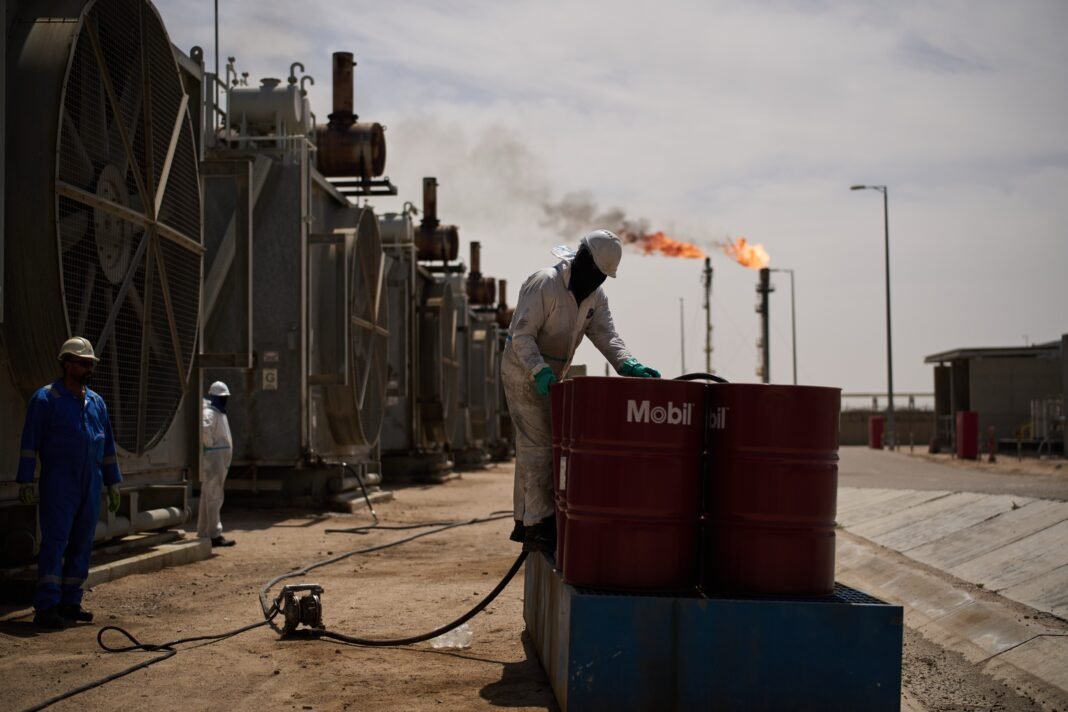
Iraq says it could quickly restore crude oil exports if the Strait of Hormuz reopens. That would offer major relief after weeks of severe disruption.
The head of Basra Oil Company said Iraq could raise exports to about 3.4 million barrels per day within one week. However, that recovery depends on ending the Iran war and reopening the key shipping route. This matters because Iraq has suffered one of the sharpest oil revenue losses in the Gulf. Unlike some neighbors, Iraq lacks strong alternative routes for crude exports.
As a result, the closure of Hormuz hit Iraq harder than several regional producers. Most of Iraq’s southern crude exports depend on safe passage through this corridor.
Before the conflict, Iraq produced around 4.3 million barrels per day. However, exports and output fell after shipping through the Strait became highly restricted. Basra Oil Company officials said Iraq can still return to near pre-war export levels quickly. That suggests the country’s oil production system remains operational despite the disruption.
Meanwhile, the crisis exposed a major weakness in Iraq’s energy sector. The country depends heavily on southern export terminals and Gulf shipping lanes. That reliance leaves Iraq vulnerable during military escalation or maritime blockades. Therefore, the current crisis has renewed concerns about export security and infrastructure resilience.
By contrast, some Gulf producers have more flexibility. Saudi Arabia can move some oil through the East-West pipeline. The UAE also benefits from export access through Fujairah. Iraq does not have similar large-scale alternatives. Consequently, Baghdad remains more exposed when Gulf shipping lanes face disruption.
In the short term, Iraq redirected some crude toward domestic refining. It also adjusted output to match internal demand. However, these steps cannot replace export income. Oil revenue remains critical for Iraq’s budget and public spending. Therefore, restoring shipments remains a top priority for the government and energy sector.
The wider market is also watching Iraq closely. The Strait of Hormuz usually handles about one-fifth of global oil and LNG flows. Any reopening could ease pressure on energy prices and improve supply confidence. Moreover, Iraq oil exports could quickly return valuable barrels to global markets.
Still, risks remain high. Tanker safety, regional security, and political tensions continue to threaten a full recovery. Iraq appears ready to act quickly once conditions improve. If shipping resumes, Iraq oil exports could rebound faster than expected.