



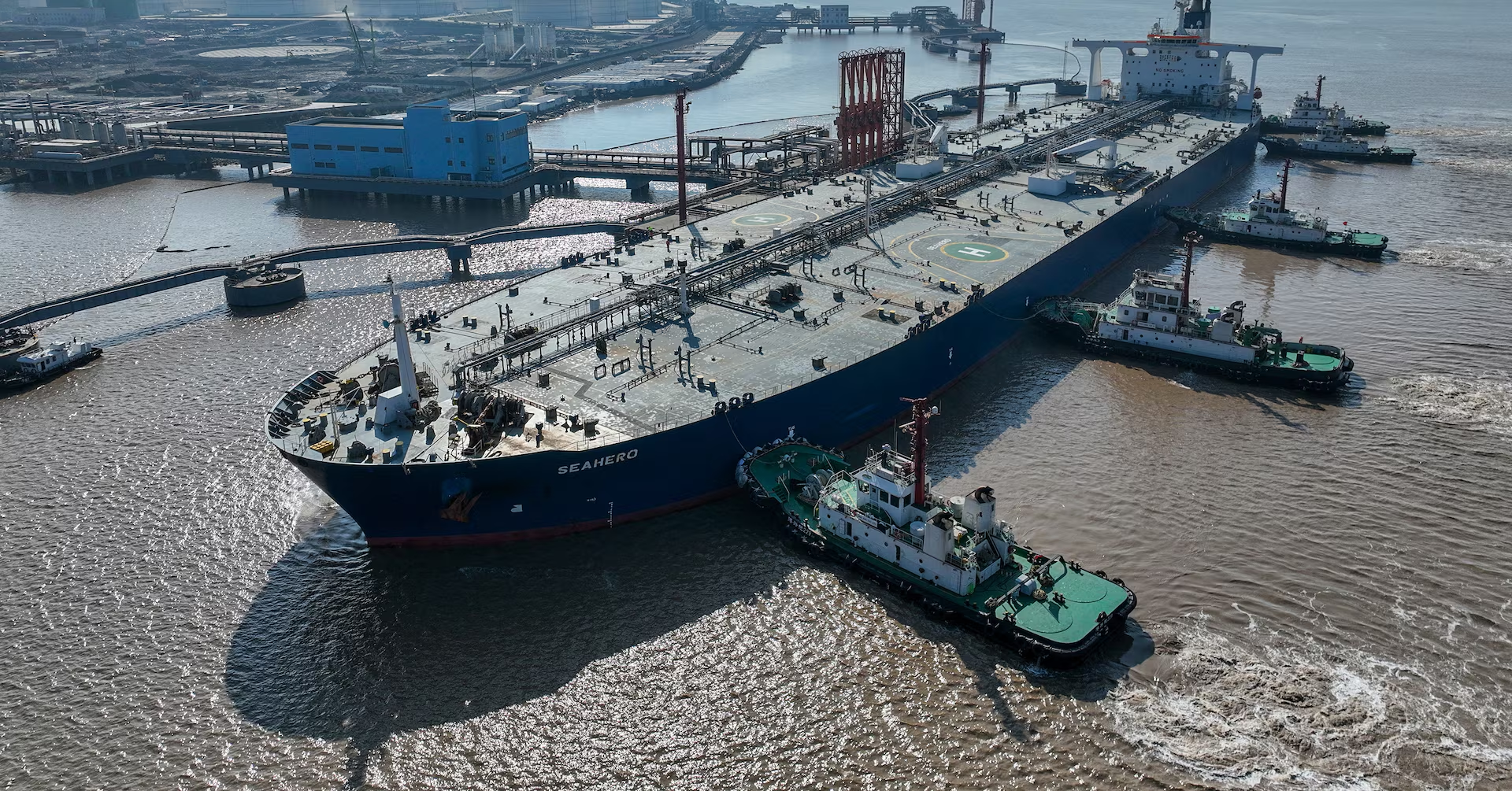
Saudi oil China flows are expected to decline sharply in May as regional tensions disrupt supply chains. The ongoing conflict in the Middle East continues to reshape global energy markets. As a result, traders now anticipate a major reduction in shipments to China.
Estimates suggest Saudi Arabia may send around 20 million barrels to China in May. This marks a significant drop from nearly 40 million barrels allocated for April. The sharp decline reflects changing market conditions and rising geopolitical risks.
Several factors continue to drive this downward trend. Saudi Aramco recently increased crude prices amid the ongoing conflict with Iran. Higher prices have reduced demand from key buyers, including China. Consequently, Saudi oil China trade volumes have weakened under current conditions.
At the same time, disruptions near the Strait of Hormuz have added pressure to global oil flows. This key shipping route remains critical for energy exports. However, rising tensions have limited smooth transit for tankers in the region. As a result, suppliers face growing challenges in maintaining steady deliveries.
Oil markets reacted strongly earlier this week. Prices surged after diplomatic talks between the United States and Iran failed. In response, the US Navy enforced tighter controls on vessels linked to Iranian ports. However, prices eased slightly after officials signaled continued diplomatic engagement.
Meanwhile, Saudi Arabia has worked to stabilize its production capacity. The East-West pipeline has resumed operations at full capacity after recent damage. This pipeline plays a key role in transporting crude across the kingdom. Its recovery supports internal distribution despite external challenges.
Production at the Manifa offshore field has returned to normal levels. This site had previously lost around 300,000 barrels per day. Recovery efforts have helped restore output and improve supply stability. However, repairs at the Khurais field remain ongoing.
Energy analysts continue to monitor the broader impact of the conflict. Reports indicate that over 60 energy facilities across the Gulf region have faced disruptions. These developments highlight the scale of the ongoing crisis.
Looking ahead, uncertainty remains high across global energy markets. Traders expect continued volatility as geopolitical tensions persist. Therefore, Saudi oil shipments to China may remain under pressure in the coming months.

