



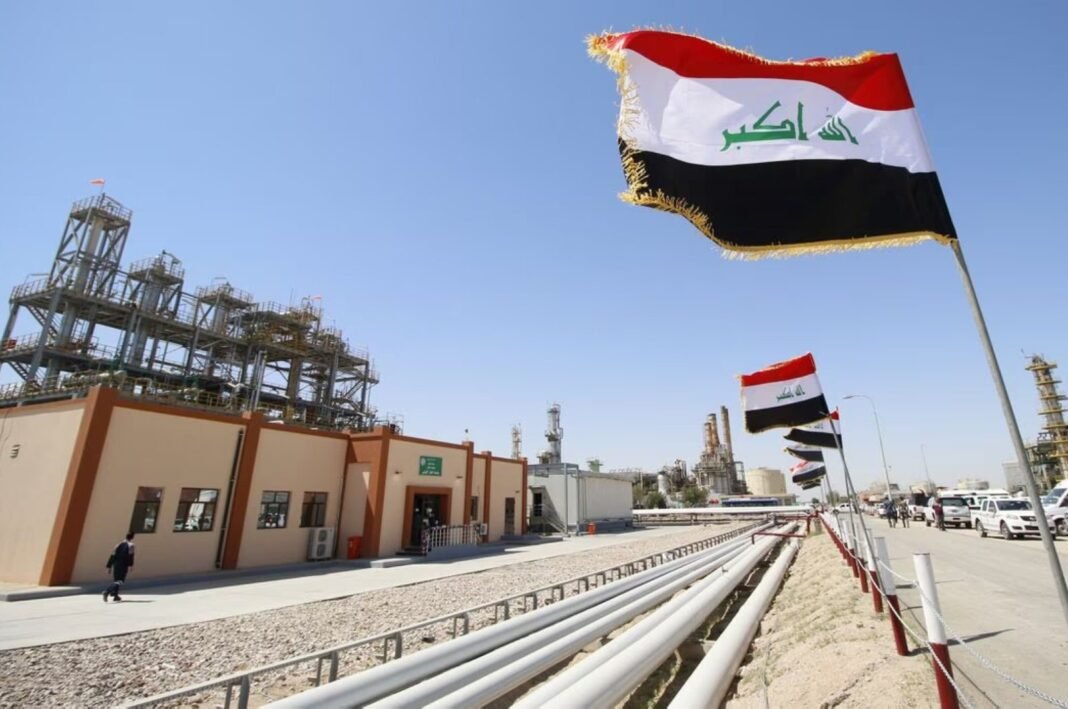
Iraq cash crisis pressures are growing as disruptions around the Strait of Hormuz reduce the country’s oil export revenues. The situation has raised concerns about government finances and delayed payments for public employees.
Iraq depends heavily on oil exports to finance its national budget. Oil revenue normally provides between 85% and 90% of the government’s total income.
However, recent disruptions have sharply reduced the country’s ability to move crude through regional export routes. Consequently, government revenue has fallen far below the amount needed for regular spending.
Public employees have already started feeling the financial pressure. Some workers reported delays in receiving their monthly salaries during recent months.
Teachers, healthcare workers and other government employees have faced uncertainty over payment schedules. As a result, many households have started cutting expenses and saving more money.
Small demonstrations have also emerged in response to delayed salaries. University employees and electricity workers participated in protests during early August.
The government has rejected rumors about switching public salaries from monthly payments to longer payment cycles. Officials have also emphasized that the country still holds substantial financial reserves.
According to government statements, Iraq has around $83 billion in reserves. Officials also pointed to gold holdings and income from sources outside the oil sector.
The government said those resources could support salary payments for several months. Nevertheless, prolonged disruption could place additional pressure on public finances.
Iraq’s dependence on oil makes the country especially vulnerable to export disruptions. Unlike several regional producers, Iraq has limited alternative routes for shipping large volumes of crude.
Before the current crisis, most Iraqi oil exports moved through the Strait of Hormuz. Estimates indicate that roughly 80% to 90% of exports relied on that route.
Therefore, the disruption created a significant challenge for Iraq’s oil industry. Export volumes reportedly dropped sharply compared with the previous year.
Iraqi oil exports declined by about 83% in March compared with the same month previously. By May, seaborne crude exports had reportedly fallen by approximately 97%.
That decline has significantly reduced government income. Reports indicated that monthly government revenue reached only around $2 billion to $2.3 billion during May and June.
Those amounts remain well below the government’s regular monthly requirements. Iraq needs billions of dollars each month to cover salaries, pensions and social welfare programs.
The country’s large public sector adds further pressure to the budget. Around two-thirds of Iraq’s working-age population reportedly depends on government-related income.
Consequently, salaries, pensions and social programs consume most government spending. This leaves limited funding for infrastructure, development and economic diversification.
The wider economy has also begun showing signs of pressure. New vehicle sales reportedly declined by 28.6% during the first half of the year.
Higher shipping and insurance costs have added another challenge for Iraqi businesses. Meanwhile, reduced government spending could further weaken economic activity.
The Iraq cash crisis has therefore moved beyond the oil sector. Economists have warned that prolonged revenue shortages could affect businesses, households and public services.
At the same time, concerns about social stability are increasing. However, analysts do not currently expect the situation to immediately develop into nationwide unrest.
Instead, further salary delays could initially produce more sector-specific demonstrations. Those protests could remain limited unless several economic problems occur simultaneously.
Electricity shortages, inflation and weaker public services could increase public frustration. If those issues continue alongside salary delays, protests could potentially expand.
Iraq has already explored alternative methods for exporting some of its oil. A limited amount of crude can move through a pipeline toward Turkey.
Authorities have also used trucking routes to transport oil toward other regional ports. Additionally, officials have announced plans to revive an older pipeline connection toward Lebanon.
Iraqi officials have also sought diplomatic solutions to the export problem. The government has discussed arrangements that could allow Iraqi crude to pass through the affected route.
However, experts argue that Iraq needs broader economic reforms. Reducing dependence on oil could provide stronger protection against future external disruptions.
Such reforms could include reducing corruption and expanding private-sector opportunities. They could also create more jobs outside the public sector.
Nevertheless, economic reform requires financial resources. The current revenue shortage makes it harder for the government to fund major development programs.
Recent spending figures illustrate the problem clearly. Government expenditure reportedly declined by around one-quarter during May compared with last year.
Meanwhile, salaries, pensions and social security represented almost all operational government spending. That leaves very little money for other public priorities.
The current situation could nevertheless create pressure for long-term economic changes. Previous fiscal difficulties have encouraged Iraqi governments to consider diversification and revenue reforms.
Lower oil income can also increase interest in private-sector development. However, political support for reform often weakens when oil revenues recover.
The Iraq cash crisis could therefore provide an opportunity for structural economic changes. Whether those reforms continue after oil income improves remains uncertain.
For now, Iraq faces a difficult balance between maintaining public salaries and protecting financial reserves. The government must also preserve essential services while managing reduced oil income.
Continued disruptions around major export routes could increase those pressures further. Therefore, restoring stable oil exports remains crucial for Iraq’s short-term financial stability.
At the same time, developing alternative export routes could reduce future vulnerabilities. Greater investment in non-oil industries could also strengthen the country’s economic resilience.
Overall, Iraq faces mounting financial challenges as lower oil exports restrict government revenue. Public salary delays have already created concern among workers and households.
If the disruption continues, pressure could spread across more parts of the economy. However, the crisis could also encourage Iraq to accelerate long-delayed economic reforms.