



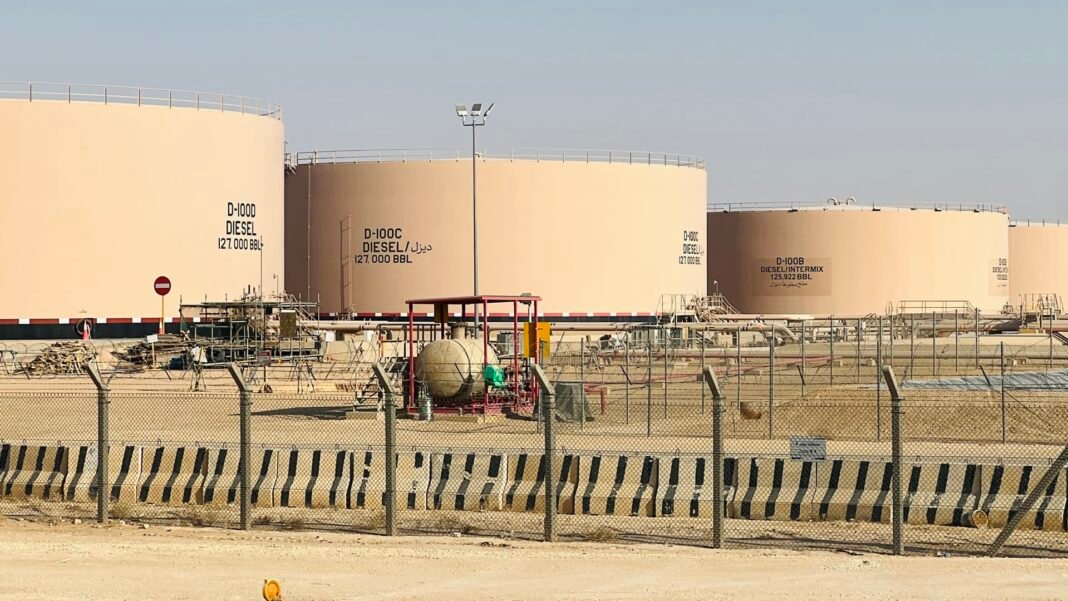
Saudi oil exports have reached their highest level since the conflict began. The increase follows the partial restart of the East-West pipeline. Saudi Arabia exported about 8.5 million barrels per day last week. That figure sits around one-third above the country’s 2025 average. Meanwhile, Yanbu loaded about 10 million barrels of crude on Monday. The port had paused shipments after a drone attack disrupted pipeline operations. Operations have now resumed, although the pipeline has not reached full capacity.
The East-West pipeline can move up to 7 million barrels daily. Current flows remain below that level. Estimates put recent flows between 2.5 million and 3.5 million barrels per day. Therefore, Saudi Arabia continues using additional shipping routes to maintain exports. The country has also started moving crude through the Strait of Hormuz. This strategy allows Saudi Arabia to ship oil from both coasts. However, it also creates additional logistical challenges and higher costs.
Saudi oil exports could benefit from strong global crude prices. Brent crude has traded above $100 per barrel during the conflict. However, higher shipping costs could reduce some of those gains. Transporting one barrel to East Asia previously cost around $5. Current costs have risen to roughly $30 per barrel. East Asia remains an important market for Saudi crude. Consequently, expensive freight could affect the revenue Saudi Arabia receives from each shipment.
Shipping companies also face higher risks across regional routes. Security concerns affect vessels operating through the Gulf of Oman and Red Sea. As a result, fewer operators are willing to accept these routes. Companies that continue operating can charge higher rates. Therefore, Gulf exporters face greater transportation expenses. Saudi Arabia must also maintain enough vessels to sustain current shipment levels.
Saudi oil exports now depend on several factors. Pipeline recovery remains important for increasing transport capacity. Shipping availability also remains crucial for maintaining current volumes. Meanwhile, elevated oil prices could support Saudi revenues. However, higher freight costs continue to pressure exporters. The coming weeks will show whether Saudi Arabia can maintain its current export pace.