



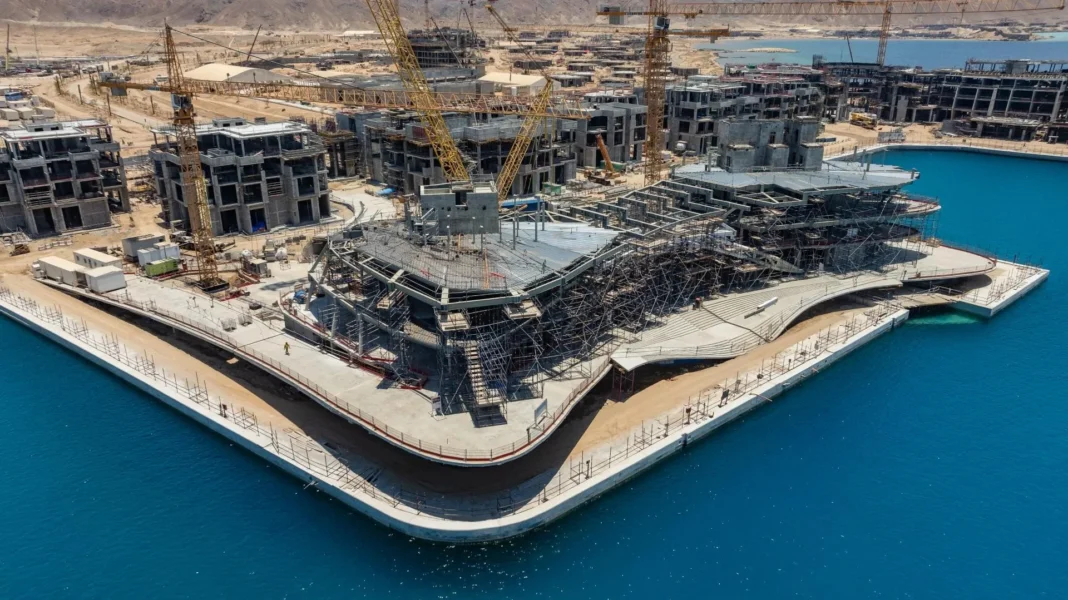
Saudi construction projects face higher costs as shipping disruptions force companies to use longer land routes. Contractors now rely more heavily on trucks for materials that previously arrived by sea. As a result, transportation expenses have increased across several major projects. Saudi construction activity, however, continues expanding despite the additional logistical pressure.
The disruption has affected supply chains rather than significantly changing material costs. Industry experts say contractors can still source many construction materials. However, bringing those materials into Saudi Arabia now costs considerably more. Truck transportation can cost substantially more than moving the same cargo by ship.
Some cargo previously entered the region through nearby ports before reaching Saudi Arabia. Companies now move some of those shipments overland instead. Consequently, contractors face higher freight bills and more complicated delivery schedules. These challenges have also forced construction companies to rethink project planning.
Material prices have not increased uniformly across the market. Locally produced bulk materials have remained relatively stable during recent months. Cement prices, for example, recorded a slight annual decline during July. However, imported electrical products have experienced much stronger price increases.
Electrical wire prices have risen by as much as 22 percent year on year. Cable prices have increased by as much as 26 percent over the same period. Copper dependence and international supply conditions contribute to those increases. Therefore, contractors must manage both transportation costs and certain material expenses.
Despite the logistical challenges, Saudi Arabia continues awarding large construction contracts. The kingdom awarded about SAR111 billion in construction contracts between January and July. That figure represents an increase of almost 60 percent compared with the previous year. The strong performance highlights continued momentum across the country’s construction sector.
However, construction companies have adjusted project schedules to absorb supply disruptions. Instead of allowing delays to push completion dates further, contractors have changed work sequences. Teams can bring some later-stage activities forward when materials remain available. This approach gives projects additional flexibility during uncertain supply conditions.
Mechanical and electrical installation work provides one example of this strategy. Contractors can sometimes complete these activities earlier than originally planned. Therefore, teams can create additional time for deliveries affected by transportation challenges. Nevertheless, schedule adjustments do not eliminate the additional financial burden.
Some contractors may also carry those extra costs under fixed-price agreements. In other cases, developers have accepted alternative materials to avoid lengthy delays. Local substitutions can help projects continue when imported products face transportation difficulties. However, contractors must still ensure that substitute products meet project requirements.
Major Saudi developments continue to receive strong attention despite these challenges. Large projects linked to future events have sufficient time to absorb current disruptions. This provides contractors with greater flexibility when managing supply chains and construction schedules. Consequently, not every project faces the same level of immediate pressure.
At the same time, Saudi Arabia’s construction market is undergoing another important change. Developers and contractors have become more cautious about relying heavily on massive individual projects. The changing investment environment has encouraged companies to broaden their project portfolios.
Large-scale development programs previously created expectations for substantial long-term construction volumes. However, some contractors now believe that expected demand has not fully materialized. Therefore, companies increasingly seek opportunities across multiple sectors instead of depending on one major development.
Infrastructure projects could benefit from this shift in strategy. Water infrastructure continues to represent a major pipeline of future work. Rail projects have also gained importance as Gulf countries improve regional transport connections.
The disruptions around Hormuz have highlighted the importance of reliable overland and regional transport networks. Better rail connections could help move goods across the region more efficiently. Consequently, infrastructure investment could become increasingly important for construction companies.
Saudi construction activity therefore remains strong despite higher logistics costs. Contractors continue adapting their schedules and sourcing strategies to manage disruption. Meanwhile, major infrastructure and development projects continue moving forward across the kingdom.
The market may face additional challenges if shipping disruptions continue for an extended period. Higher freight expenses could place further pressure on project budgets. Contractors will therefore need flexible procurement strategies and broader supply networks.
Saudi construction companies are increasingly balancing ambitious development plans with changing market conditions. Companies that maintain diverse project portfolios could have greater resilience. Meanwhile, stronger transport infrastructure could reduce future dependence on vulnerable shipping routes.
Overall, Saudi construction remains active despite the costly logistical effects of regional disruption. Strong contract awards indicate continued demand across several sectors. However, higher transport costs and changing project pipelines could shape construction strategies in the months ahead.