



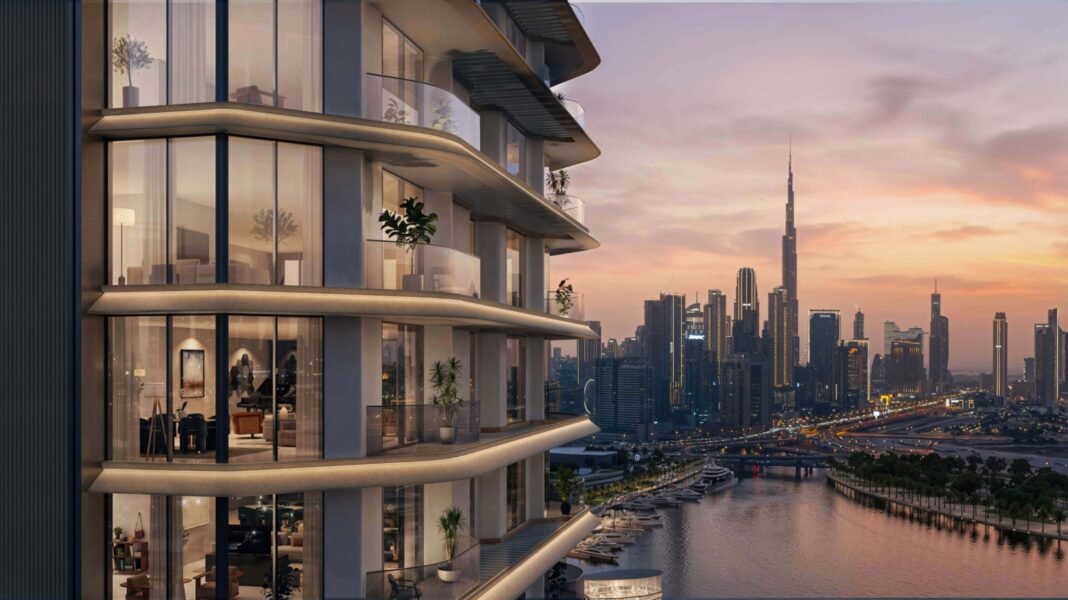
Dubai branded residences continue to shape the UAE’s property market and global luxury housing sector. The emirate now leads the world in branded residence developments. According to a new industry report, Dubai has 175 branded residence schemes. The total includes 68 completed or operating schemes and 107 projects in development. As a result, Dubai has more than twice the schemes recorded in Miami. London follows with a much smaller total of 30 schemes.
The UAE also holds a significant position in the global branded residence pipeline. The country represents 19 percent of developments worldwide. Meanwhile, Abu Dhabi ranks eighth globally with 24 schemes. Of those projects, 19 remain in the development pipeline. Ras Al Khaimah also continues to expand its presence. Al Marjan Island ranks ninth globally with 23 branded residence schemes.
Moreover, non-hotel brands now account for a growing share of developments. These brands represent 42 percent of schemes in Dubai. They account for 38 percent of schemes in Abu Dhabi. On Al Marjan Island, their share reaches 52 percent. Therefore, the market now extends beyond traditional hotel operators.
The broader Middle East market also shows strong development activity. The region represents 20 percent of global live and pipeline schemes. It also accounts for 25 percent of projects still under development. Consequently, developers continue to target the region’s growing luxury property demand.
Market participants also point to changing buyer expectations. Buyers now examine more than the reputation of a brand. They increasingly consider location, property quality, services, and overall experience. Therefore, developers face greater pressure to offer value beyond branding.
Buyer profiles also vary across Middle Eastern markets. Dubai attracts several groups seeking different types of properties. Some buyers want primary homes or investment opportunities. Others seek lifestyle properties or second homes. Abu Dhabi has also gained attention alongside its expanding wealth sector.
Meanwhile, Ras Al Khaimah continues to benefit from tourism growth. Better connectivity has also supported the emirate’s residential expansion. International flight volumes increased 44 percent between 2023 and 2026. That growth represented the strongest increase among the ten largest markets. Abu Dhabi recorded a 37 percent increase during the same period.
Globally, the branded residence market has expanded considerably over the past decade. Industry research identified nearly 1,800 live and pipeline schemes worldwide. These projects involve more than 200 brands across 90 countries. The market has nearly tripled since 2015. At that time, developers recorded 354 schemes worldwide.
The global market could exceed 1,000 schemes during 2026. Current projections point toward about 1,088 schemes and more than 170,000 units. Furthermore, the market could approach 1,800 schemes by 2031. That total could include more than 300,000 residential units.
Growth also continues outside major global cities. More than half of branded residence schemes now sit outside large urban centers. That share stood below 40 percent in 2016. It could reach 57 percent by 2028. As a result, resort destinations and emerging locations continue gaining attention.
Hotel companies still dominate much of the branded residence market. Major operators include Marriott, Accor, Hilton, Four Seasons, Banyan Group, and IHG. Together, these groups represent more than 40 percent of global supply. Hotel brands account for around 70 percent of existing schemes.
However, their overall share could decline as non-hotel brands expand. Non-hotel developments could approach 40 percent of supply by 2028. Fashion and automotive brands are also entering the sector. Names such as Armani, Elie Saab, Missoni, and Aston Martin have expanded their involvement.
Dubai branded residences therefore remain a major part of the emirate’s luxury property landscape. The market combines international brands with Dubai’s established real estate appeal. At the same time, competition continues to increase across the region. Developers must now combine branding with location, services, design, and property quality. These trends could continue shaping the UAE’s residential market as new projects reach buyers.

