



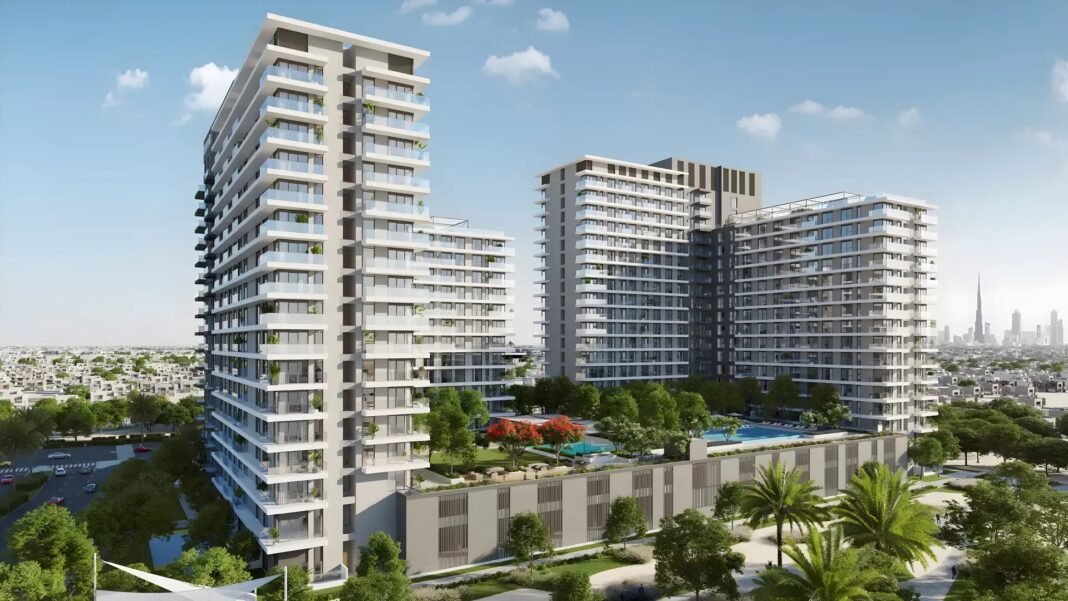
Dubai home deliveries are heading toward their strongest annual level since 2008. However, developers have started slowing new project launches across the market.
Dubai’s residential sector continues to experience strong construction activity during 2026. Meanwhile, developers are becoming more selective about introducing additional projects.
Around 32,000 residential units could reach buyers during the second half of 2026. Therefore, total annual completions could reach approximately 55,600 homes.
That figure would represent Dubai’s highest yearly completion level in almost two decades. The previous comparable level occurred in 2008.
More than 13,200 residential units reached completion during the second quarter. As a result, the market remains broadly aligned with expected delivery schedules.
Several major developments contributed significantly to the quarterly completion figures. These projects included apartments, townhouses, villas and other residential properties.
Crest Grande at Sobha Hartland added 965 completed apartments during the quarter. Skyhills Residences 1 in Dubai Science Park added another 635 apartments.
City Tower on Sheikh Zayed Road also contributed 608 completed apartments. Together, these developments represented a substantial portion of quarterly apartment deliveries.
Villa projects also recorded notable completion numbers during the period. Malta 1 at Damac Lagoons delivered 760 villas to the market.
Costa Brava 1 at Damac Lagoons added another 555 units. Furthermore, Jebel Ali Village Townhouses delivered 614 villas across several phases.
Elora at The Valley contributed another 430 villas during the quarter. Consequently, Dubai continues to receive significant residential supply across several communities.
However, the delivery outlook could become more moderate after 2026. Construction progress remains uneven across the wider development pipeline.
Developers have planned almost 525,000 residential units through 2030. Yet, only about 186,000 units have passed the 20 percent construction stage.
Therefore, many planned properties may not reach completion according to their original schedules. Supply could instead enter the market gradually over several years.
Several factors could also affect future construction activity. Supply chain difficulties remain an important concern for developers and contractors.
Contractor capacity also faces pressure as numerous projects move through different construction stages. Additionally, softer market conditions could encourage developers to adjust their timelines.
The slower delivery pace could eventually create a more balanced residential market. It may also give existing projects more time to attract buyers.
At the same time, new project launches have declined sharply during 2026. Apartment launches fell by roughly 58 percent compared with the previous year.
Villa launches experienced an even larger decline during the same period. The number of newly launched villas dropped by approximately 78 percent.
Developers had already begun reducing launch activity during the first quarter. However, uncertainty during the second quarter encouraged further delays.
As a result, several planned developments did not reach the market as originally expected. Developers instead focused on projects with clearer demand potential.
New launches largely targeted mid-market buyers and end users. This approach reflects a more cautious strategy across Dubai’s residential sector.
Developers also adjusted sales incentives to encourage transactions. These measures included revised payment plans and discounts for selected buyers.
Some projects also offered reductions on property registration fees. In addition, developers increased broker commissions to support sales activity.
These incentives could help maintain buyer interest despite slower launch volumes. Consequently, the market may experience steadier transaction activity over time.
However, fewer launches could affect off-plan sales during the near term. Nevertheless, the reduced pipeline may prevent excessive supply from entering the market.
Dubai home deliveries therefore face an important transition during the coming years. Strong 2026 completions could be followed by more measured supply growth.
The market could benefit from this gradual adjustment as developers respond to actual demand. Meanwhile, buyers may gain more options among completed properties.
Ready-to-move-in homes could also attract greater attention as supply conditions change. Buyers may increasingly favor properties with immediate availability and clearer costs.
Overall, Dubai’s residential sector remains active despite the slowdown in new launches. Strong completions in 2026 highlight the depth of the existing construction pipeline.
At the same time, cautious development strategies could shape the market beyond this year. Dubai home deliveries may become more evenly distributed as developers prioritize demand.