



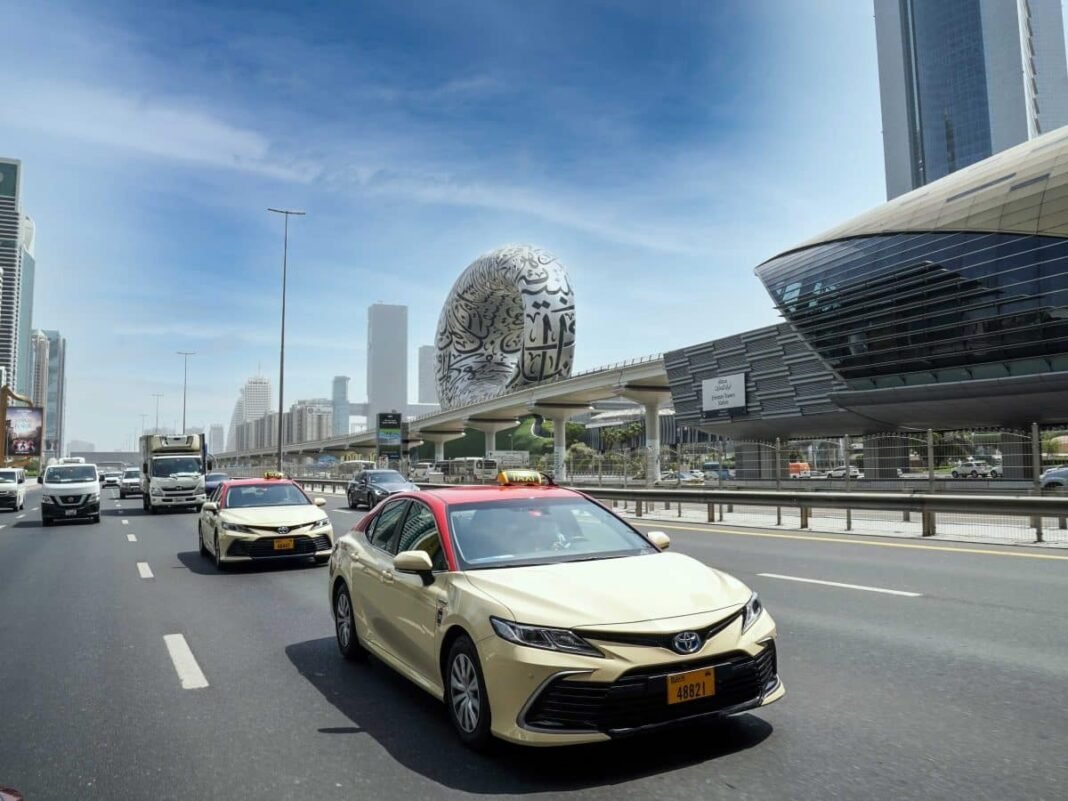
Dubai Taxi Revenue remained resilient during the first half of 2026 despite weaker tourism demand and fewer airport-related trips. The company generated more than Dh1 billion in revenue while continuing its regional expansion and investing in long-term growth across the UAE.
Dubai Taxi Company announced first-half revenue exceeding Dh1 billion, even though lower travel demand affected its second-quarter performance. Reduced airport traffic and softer tourism activity lowered taxi and limousine trip volumes. Even so, the business continued strengthening its market position through expansion and strategic investments.
During the second quarter, revenue reached Dh484.5 million, representing a 22.5 percent decline from the same period last year. EBITDA totaled Dh77.2 million during the quarter. Meanwhile, net profit came in at Dh10.4 million. First-half net profit reached Dh61.1 million, reflecting the impact of lower travel demand.
Taxi and limousine trips declined by 24.4 percent year over year during the second quarter. The company completed 10.3 million trips across its network. Airport travel and tourism remained the biggest factors behind the decrease in customer activity.
Conditions gradually improved as the quarter progressed. June trip volumes fell only 11.2 percent compared with the previous year. Earlier in the quarter, April recorded a much steeper decline of 36.7 percent. Those figures indicate customer demand started recovering before the end of the reporting period.
Alongside improving demand, the company continued implementing its five-year growth strategy. It secured 600 additional taxi license plates through the latest Roads and Transport Authority auction. Consequently, its Dubai market share increased to 46 percent. That figure rises to 59 percent when National Taxi operations are included.
Regional expansion also remained a major priority. Bolt expanded into Abu Dhabi by launching limousine services before introducing taxi operations. At the same time, the company entered the Ajman market to strengthen its presence across multiple emirates.
Following the reporting period, Dubai Taxi Company completed the acquisition of National Taxi after receiving all required regulatory approvals. The deal significantly increased its footprint in Abu Dhabi, where the combined business now holds an estimated 12 percent market share.
As a result of the acquisition, the company became the UAE’s largest taxi operator. The combined fleet now includes more than 9,000 vehicles. Management expects the transaction to contribute positively to earnings during its first full year of ownership.
Looking ahead, company leaders believe market conditions continue improving despite ongoing challenges. Future priorities include integrating National Taxi, expanding into additional markets, growing the Bolt platform, and investing in advanced technology.
Management also plans to improve fleet efficiency through continuous optimization. These initiatives aim to strengthen operations while supporting sustainable long-term growth.
In addition, the Roads and Transport Authority recalculated monthly taxi vehicle fees for March through May. The adjustment reduced fees by Dh25.6 million. Those savings will appear in the company’s third-quarter financial results.
Chief Executive Officer Mansoor Rahma Alfalasi said the company remained fully operational throughout the challenging quarter. He noted that weaker airport and tourism demand affected the business, yet services continued without interruption across every operating segment.
According to Alfalasi, Dubai’s long-term outlook remains positive because of ongoing urban development, steady population growth, and continued investment in transportation infrastructure. He added that recent expansion initiatives and technology investments will help support future growth opportunities.
Dubai Taxi Revenue demonstrates the company’s resilience despite temporary market pressures. Continued expansion, digital innovation, and stronger regional operations position the business for improved performance as travel demand steadily returns.

