



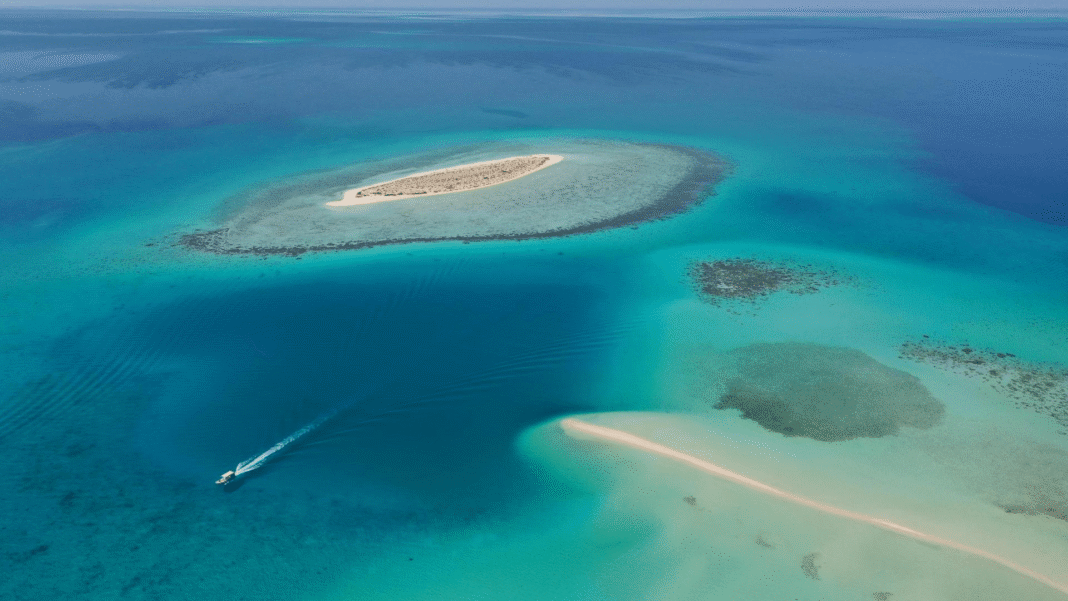
Red Sea Global now receives all its power from renewable energy as Saudi Arabia expands sustainable tourism. The development has reached a major milestone through a large renewable utilities project. The initiative supplies electricity and several essential services across the destination. Red Sea Global operates several hotels and facilities along Saudi Arabia’s western coast. Red Sea International Airport also receives power through the new renewable system.
Saudi utilities company Acwa Power leads the infrastructure project. The company developed the system under a long-term concession agreement. Commercial operations have now started following the project’s completion. The initiative carries an estimated value of $1.8 billion. Furthermore, the project will support Red Sea Global’s operations for the next 25 years.
The project provides more than electricity for the growing tourism destination. It also supplies treated water, district cooling, wastewater services, and waste management. Therefore, the system covers several critical utilities through one integrated platform. This approach reduces the destination’s reliance on traditional energy infrastructure. It also supports Saudi Arabia’s broader plans for sustainable tourism development.
The project began after an Acwa-led consortium secured the development contract in 2020. The consortium included China’s SPIC Huanghe Hydropower and Saudi Tabreed. Together, the companies developed the infrastructure needed to operate the destination independently. The system works without connecting Red Sea Global to the national electricity grid. As a result, the destination can rely entirely on renewable power for its operations.
Financial close for the project took place in February 2022. The development secured $1.33 billion in senior debt facilities from Saudi and international banks. Meanwhile, a Chinese consortium handled engineering, procurement, and construction responsibilities. Acwa will operate and maintain the infrastructure throughout the 25-year concession period.
The renewable system combines a large solar power plant with battery storage technology. A 340-megawatt solar photovoltaic facility generates electricity for the destination. Meanwhile, a 1,227-megawatt-hour battery system stores energy for later use. This combination helps maintain reliable power supplies throughout different operating conditions.
The integrated system can also expand as additional phases of the destination become operational. Therefore, developers can increase capacity when demand grows across the project. The system can generate up to 760,000 megawatt-hours of clean electricity annually. Acwa estimates that the project could prevent about 600,000 tonnes of carbon dioxide emissions each year.
In addition to renewable electricity, the project includes major water infrastructure. Three seawater reverse osmosis plants will provide potable water for the destination. The system also includes a sewage treatment facility. That facility can process up to 16,000 cubic metres of wastewater each day.
Waste management forms another important part of the infrastructure network. A dedicated waste management centre will support hotels and other facilities. Furthermore, district cooling systems will help maintain comfortable temperatures across the destination. The network provides 32,500 refrigeration tonnes of cooling capacity.
The infrastructure also serves Red Sea International Airport alongside the destination’s hotels. Several operational hotels already benefit from the renewable utilities system. Consequently, the project links tourism growth with a lower-carbon infrastructure model. This approach could provide a blueprint for other large developments in challenging locations.
Red Sea Global continues to develop the destination as part of Saudi Arabia’s tourism strategy. The project combines hospitality, infrastructure, and environmental goals within one major development. Meanwhile, renewable energy remains central to the destination’s long-term operating model.
Red Sea Global’s transition also highlights the growing role of renewable energy in large tourism projects. Traditional developments often depend heavily on national power grids and conventional utilities. However, this project takes a different approach through an independent renewable system. As a result, the destination can manage several essential services through integrated infrastructure.
The project’s expansion capability could become increasingly important as new hotels and facilities open. Additional capacity can support future development without requiring a major redesign. Therefore, the infrastructure can grow alongside the wider destination.
Red Sea Global has reached an important sustainability milestone with the launch of its renewable utilities network. The system now supports electricity, water, cooling, waste, and wastewater services. The development also demonstrates how large tourism projects can combine growth with environmental objectives.
Overall, Red Sea Global now operates with renewable energy at the centre of its infrastructure strategy. The project strengthens Saudi Arabia’s ambitions for sustainable tourism and clean energy. As more phases open, the system can expand to meet rising demand. The development could also strengthen the country’s position in renewable-powered tourism.