



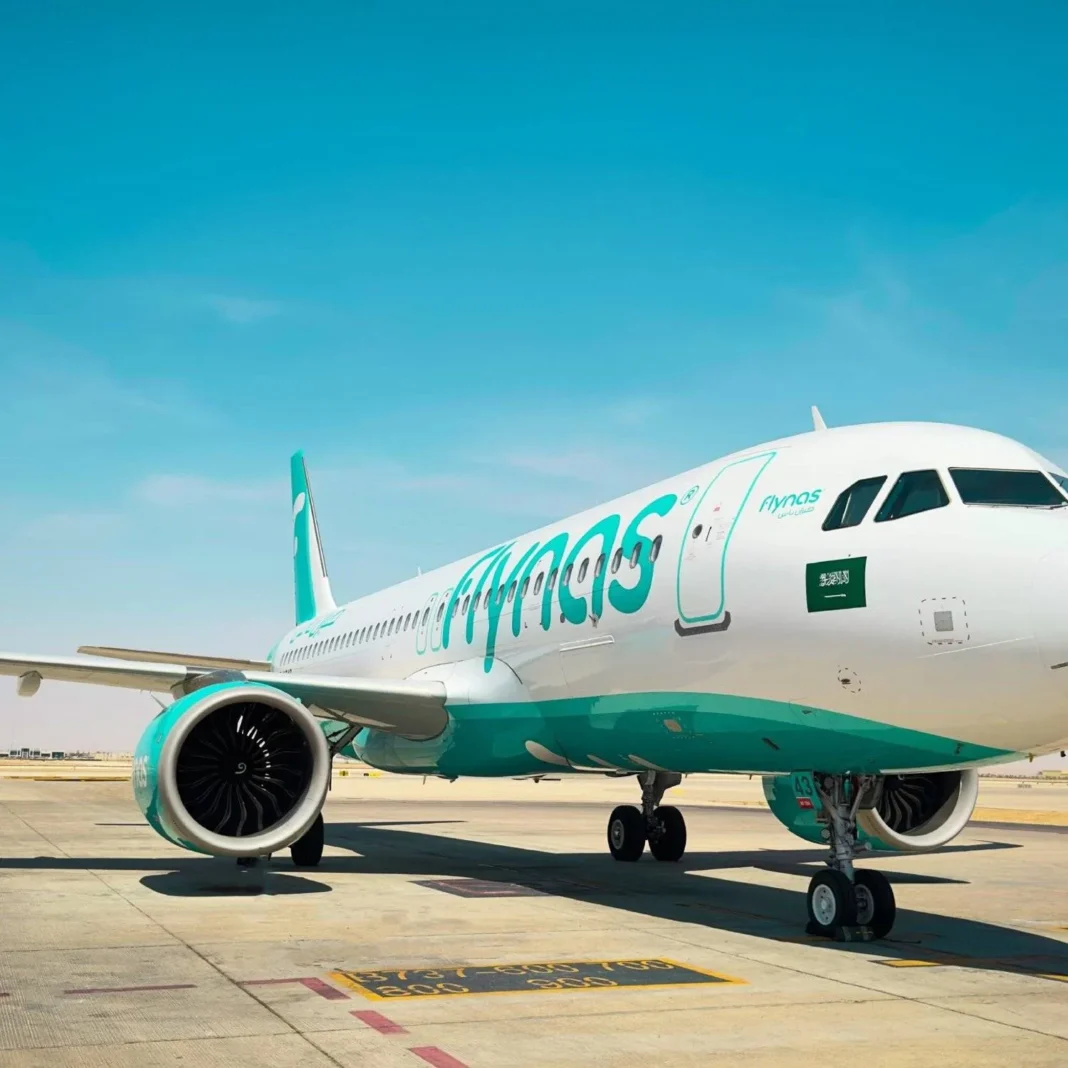
Flynas losses continued to improve as Saudi Arabia’s low-cost airline reduced its financial deficit despite fewer passengers during the first half of 2026. Flynas losses narrowed as higher revenue, better cost management, and operational flexibility helped the carrier handle regional travel challenges.
The airline reported a smaller loss during the second quarter and the first six months of 2026. Revenue increased during both periods despite disruptions caused by regional tensions and weaker travel demand.
Flynas said second-quarter revenue grew by 3 percent compared with the same period last year. Meanwhile, revenue for the first half increased by 6 percent. The airline also recorded stronger revenue per available seat kilometre, an important measure of airline performance.
Revenue per available seat kilometre increased by 22 percent during the second quarter. It also improved by 6 percent during the first six months. This growth showed stronger earnings from available aircraft capacity.
The airline reduced its second-quarter loss to SAR241 million, equal to around $64.2 million. This marked a major improvement compared with the SAR863 million loss recorded during the same quarter in 2025.
Additionally, Flynas reduced its half-year losses by 83 percent compared with the previous year. Lower financing expenses contributed to the improvement. The company benefited from reduced interest costs on loans and banking guarantees.
However, passenger numbers faced pressure during the period. The airline carried 6.6 million passengers during the first half of the year. That figure represented a 9 percent decline compared with the previous year.
The company also reported a lower load factor. The figure dropped to 77 percent from 82 percent a year earlier. Regional instability affected international travel demand and influenced passenger activity.
Flynas temporarily suspended flights to several destinations during the period. The affected markets included the UAE, Qatar, Bahrain, Kuwait, Iraq, and Syria. Together, these destinations represented around 15 percent of the airline’s network.
Fuel expenses also increased significantly during the first half. Costs rose by 52 percent year on year to SAR1.3 billion. Higher jet fuel prices contributed to the increase after regional conflict affected energy markets.
Despite these challenges, Flynas maintained confidence in its business model. Chief executive Bander Almohanna said the airline’s low-cost strategy continued showing strength. He highlighted cost discipline, operational flexibility, and network management as key advantages.
The company also improved its operational position before the busy summer travel season. Flynas restored capacity to levels similar to the previous year by July.
Chief financial officer Ramzi Zaroubi said the airline ended the first half with SAR3.7 billion in cash. He added that net debt remained largely stable compared with the previous year.
Flynas operated a fleet of 67 aircraft by June. The number declined from 71 aircraft a year earlier. The reduction mainly resulted from ending temporary aircraft leasing arrangements.
The airline maintained its decision to suspend full-year guidance for 2026. Management continues monitoring regional developments before providing updated expectations.
Flynas listed 30 percent of its shares on the Saudi stock market in May 2025. The airline’s shares closed slightly lower during recent trading and recorded a decline during 2026.
Despite market challenges, Flynas continues focusing on expansion and efficiency. The airline’s improved financial results show resilience during a difficult period for global aviation.
Flynas losses remain a key focus for investors as they monitor the company’s recovery, passenger demand, and future growth strategy. The airline’s ability to control costs and maintain revenue growth could support stronger performance in the coming years.

