



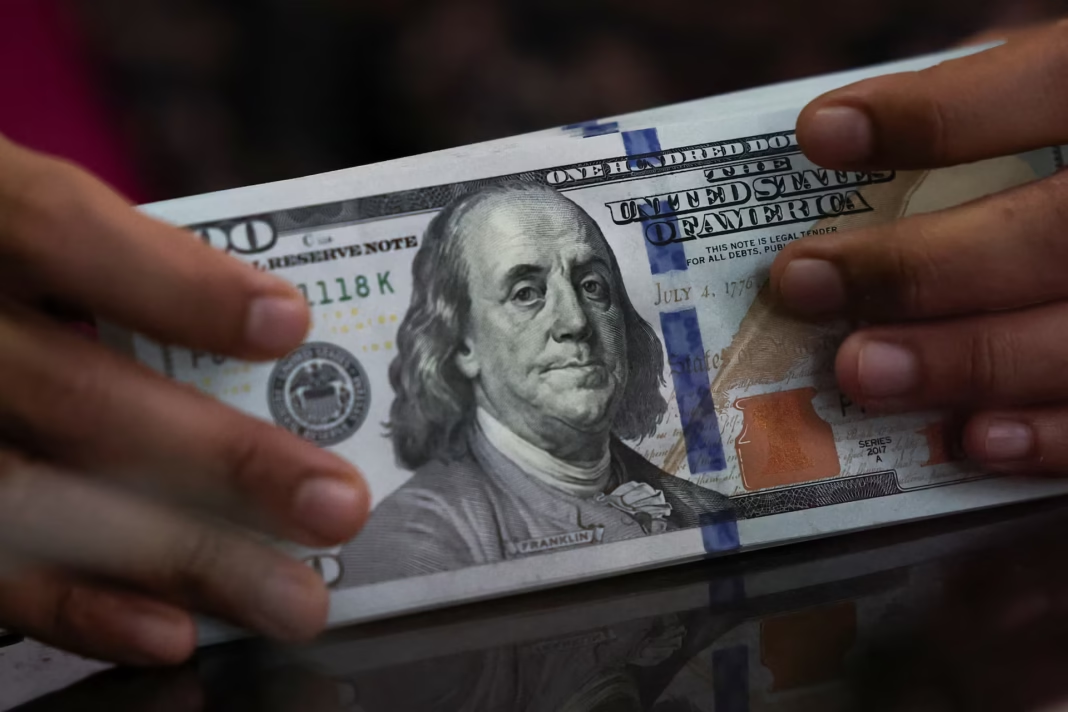
Iraq’s US dollar rate continued rising on Sunday, signaling renewed pressure on local currency markets. Moreover, traders in Baghdad and Erbil reported higher prices as demand increased. The US dollar rate became a key focus for businesses and households across Iraq.
In Baghdad, the US Dollar Rate Rises at the Al-Kifah and Al-Harithiya exchanges. Specifically, the rate reached 1,464 Iraqi dinars per dollar. Earlier that morning, the rate stood near 1,460 dinars. Therefore, the increase reflected steady intraday movement.
Meanwhile, currency exchange shops in Baghdad showed mixed pricing. However, most shops sold dollars between 1,460 and 1,470 dinars. As a result, retail customers faced higher costs for dollar purchases. Consequently, importers watched the market closely.
At the same time, Erbil markets followed a similar trend. The US dollar rate in Erbil fluctuated between 1,460 and 1,461 dinars. Although the increase appeared modest, traders viewed it as significant. Thus, regional markets mirrored Baghdad’s direction.
Importantly, the US Dollar Rate Rises above the official benchmark. The Central Bank of Iraq adopted a new rate in February 2023. That rate fixed the dollar at 1,300 dinars. However, market prices continue to exceed this level.
Previously, Iraq applied an official rate of 1,450 dinars per dollar. During that period, the parallel market traded near 1,550 dinars. As a result, the gap widened between official and street prices. This difference complicated monetary stability.
In January 2023, pressures intensified further. At that time, the parallel market reached 1,610 dinars per dollar. Consequently, the spread exceeded ten percent. Such variation raised concerns among policymakers and economists.
Today, the US dollar rate still reflects structural challenges. Iraq relies heavily on imports paid in foreign currency. Therefore, any increase directly affects prices and consumer confidence. Moreover, traders respond quickly to political and financial signals.
Additionally, tighter banking procedures influenced dollar availability. Over recent years, authorities strengthened compliance rules. As a result, some traders faced delays accessing dollars. This situation increased reliance on cash markets.
Meanwhile, businesses adjusted pricing strategies. Many importers passed higher currency costs to consumers. Consequently, inflation concerns resurfaced in retail sectors. Households also monitored exchange movements carefully.
Looking ahead, analysts expect continued volatility. However, stability depends on policy coordination and market confidence. If authorities boost dollar supply, pressure may ease. Otherwise, the US dollar rate may stay elevated.
Ultimately, Iraq’s currency market reflects broader economic realities. Oil revenues support state finances, yet dollar demand remains strong. Therefore, managing the US dollar rate remains essential for economic balance and public confidence.

