

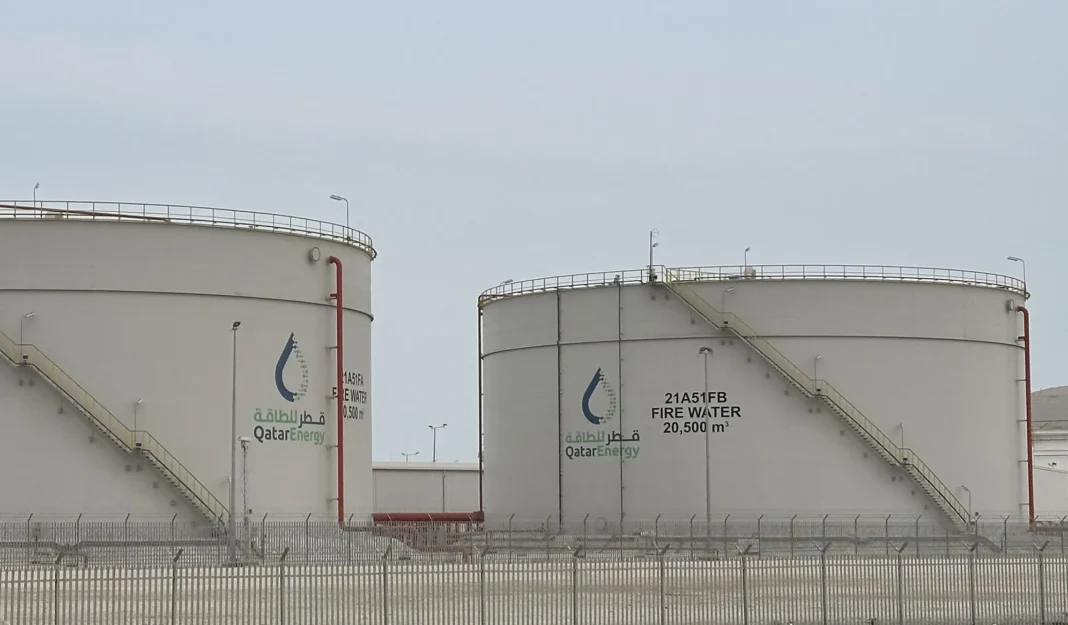
Qatar energy diplomacy is expanding beyond liquefied natural gas as Doha develops a broader portfolio of energy products and strategic value chains. Qatar remains a major LNG producer, but its energy strategy now covers oil, condensates, petrochemicals, fertilisers, helium, solar power and lower-carbon technologies.
Qatar’s North Field expansion remains central to this strategy. The expansion is expected to increase LNG production capacity from 77 million tonnes per year to 142 million tonnes by 2030.
However, Qatar is also increasing its production of other energy-related commodities. These include ethane, condensates, liquefied petroleum gas and helium.
This approach allows Qatar to use its large natural gas reserves across several markets. As a result, Doha can build commercial relationships with customers that depend on different products and supply chains.
Qatar energy diplomacy also extends into food security through fertiliser production. QatarEnergy plans to increase annual urea production from around six million tonnes to more than 12.4 million tonnes.
Fertilisers have strategic importance for economies that rely on imports to support agricultural production. Therefore, reliable supplies can create long-term commercial relationships between Qatar and food-importing countries.
Helium provides another example of Qatar’s expanding strategic portfolio. The US Geological Survey estimated that Qatar was the world’s second-largest helium producer in 2024, accounting for around 35% of global production.
Helium supports several specialised industries. These include semiconductor manufacturing, medical imaging, aerospace and scientific research.
Qatar’s energy network also creates influence through physical infrastructure. The Dolphin Gas Project transports around two billion standard cubic feet of Qatari gas each day to the UAE and Oman.
The gas supports electricity generation, water desalination and industrial activity in both countries. Long-term pipeline infrastructure can create deeper supply relationships because customers depend on established physical connections.
At the same time, Qatar is adding lower-carbon activities to its energy portfolio. Its operational renewable capacity reached 1,675 megawatts in 2025. QatarEnergy is targeting 4,000 megawatts by 2030.
The company is also developing carbon capture and storage and lower-carbon ammonia. These projects can help Qatar participate in emerging energy markets while maintaining its established hydrocarbon business.
However, Qatar’s strategy does not represent a move away from hydrocarbons. Natural gas accounted for 77.7% of Qatar’s primary energy consumption in 2023, according to the US Energy Information Administration.
Oil and petroleum liquids accounted for another 22.3%, while renewables represented only 0.1%. Therefore, Qatar’s diversification is mainly focused on products, markets and value chains rather than replacing hydrocarbons.
Qatar energy diplomacy also faces important infrastructure risks. The 2026 crisis highlighted the concentration of Qatar’s production and export system around Ras Laffan and Gulf shipping routes.
Damage to Ras Laffan affected around 17% of Qatar’s LNG capacity. Disruptions around the Strait of Hormuz also complicated equipment deliveries and created uncertainty around expansion schedules.
These challenges demonstrate the limits of product diversification. A wider portfolio can reduce dependence on one commodity, but it cannot remove geographic risks.
Qatar is responding through several forms of diversification. These include expanding its product range, reaching different markets, investing in overseas assets and developing different export relationships.
The country has already increased its overseas energy presence. QatarEnergy is a major shareholder in Golden Pass LNG in Texas, which has production capacity of more than 18 million tonnes per year.
The combination of domestic production and overseas assets gives Qatar additional exposure to global energy markets.
Qatar energy diplomacy is therefore increasingly based on multiple strategic relationships. LNG supports energy security, fertilisers contribute to food security, helium supports advanced industries and petrochemicals serve manufacturing markets.
Solar power, lower-carbon ammonia and carbon capture can also provide links to emerging energy markets.
Still, diversification alone does not automatically create broader geopolitical influence. Its impact depends on how difficult Qatar’s supplies are to replace and how strongly customers depend on long-term relationships.
The country’s future influence will therefore depend on combining its large gas resources with broader markets, overseas investments and more resilient supply routes.
This strategy could allow Qatar to turn its energy advantage into a wider network of commercial and strategic relationships. However, the concentration of production and exports in the Gulf means geography will remain a major factor in its energy diplomacy.