



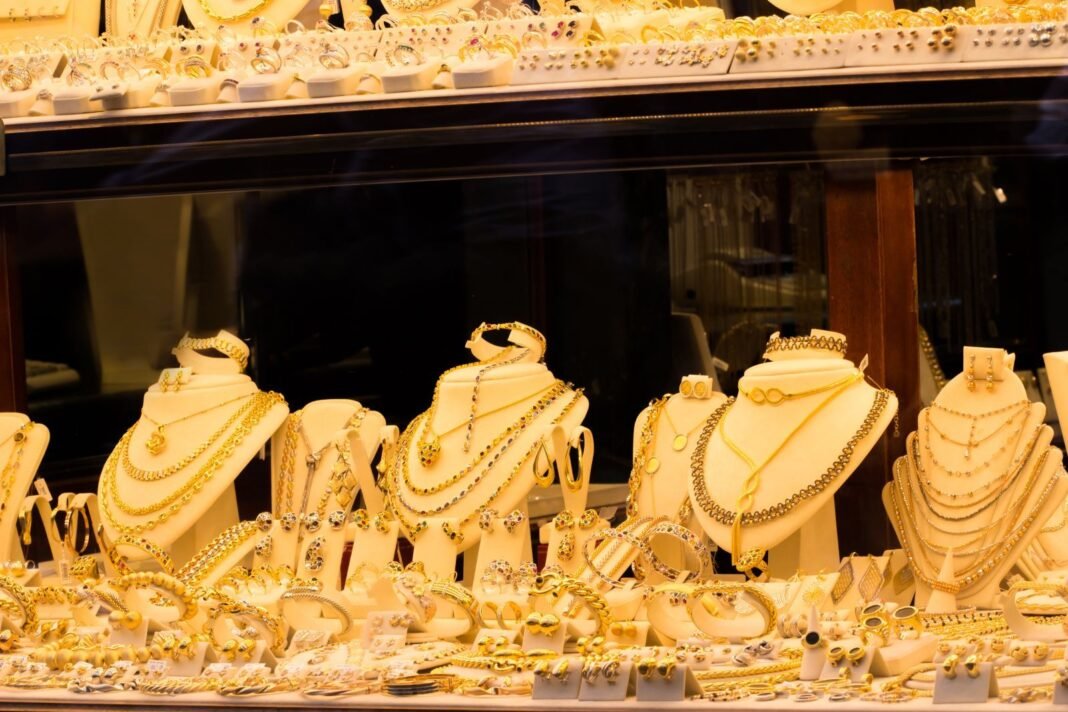
UAE gold prices remained stable on Thursday despite renewed geopolitical uncertainty across the Middle East. However, the precious metal has still lost value over the past week. Market participants continued to monitor political developments while tracking movements in global gold and oil markets.
The price of 24K gold opened at Dh490 per gram across the UAE. This level matched Wednesday’s closing price. Even so, the precious metal has fallen by around Dh4.75 per gram during the past week.
Other gold categories also started the day without changes. The price of 22K gold stood at Dh453.75 per gram. Meanwhile, 21K gold traded at Dh435.25 per gram. In addition, 18K gold opened at Dh373 per gram, while 14K gold reached Dh291 per gram.
International markets also showed limited movement during the morning session. Spot gold traded near $4,070 per ounce, recording a slight decline. Silver prices also edged lower as investors waited for fresh economic and geopolitical signals.
Analysts believe UAE gold prices continue to face pressure because investors remain cautious. Although demand for safe-haven assets usually increases during periods of uncertainty, stronger market expectations and changing investor sentiment have limited gold’s recent gains.
Fresh geopolitical developments also influenced investor confidence. Renewed tensions in the Middle East increased concerns about regional stability. As a result, energy markets reacted quickly, pushing crude oil prices sharply higher during recent trading sessions.
Oil prices climbed by more than seven percent after concerns about possible military escalation returned. The rapid increase reflected fears that supply disruptions could affect global energy markets if tensions continue.
Economists noted that uncertainty remains high. However, many analysts believe it remains too early to predict a prolonged disruption. Instead, they expect political developments to remain unpredictable in the coming weeks.
Several market experts explained that temporary periods of calm may alternate with renewed tensions. Therefore, investors continue to balance risk while avoiding major changes to their long-term market expectations.
Commodity analysts also pointed to recent shifts in regional oil production. Before the latest escalation, producers had focused on increasing exports and recovering market share. As supply volumes expanded, inventories also grew across the Gulf region.
Those larger inventories encouraged producers to accelerate shipments and create additional storage space. Consequently, energy markets had already prepared for increased supply before geopolitical risks returned.
Despite the recent volatility, analysts believe gold remains inside a broader downward trading pattern. Technical indicators suggest the market continues to face resistance, preventing a stronger recovery in prices.
Even so, investors continue to watch economic data, central bank decisions, and political developments closely. Any major change in these factors could quickly influence precious metal prices around the world.
For now, UAE gold prices remain stable, offering some reassurance to buyers and retailers. Nevertheless, traders expect continued volatility as global markets respond to ongoing geopolitical events and changing economic conditions.
Overall, UAE gold prices continue to reflect the balance between geopolitical risks, oil market movements, and investor sentiment. While prices have remained steady in the short term, ongoing regional tensions and global economic developments could influence future market direction.

