



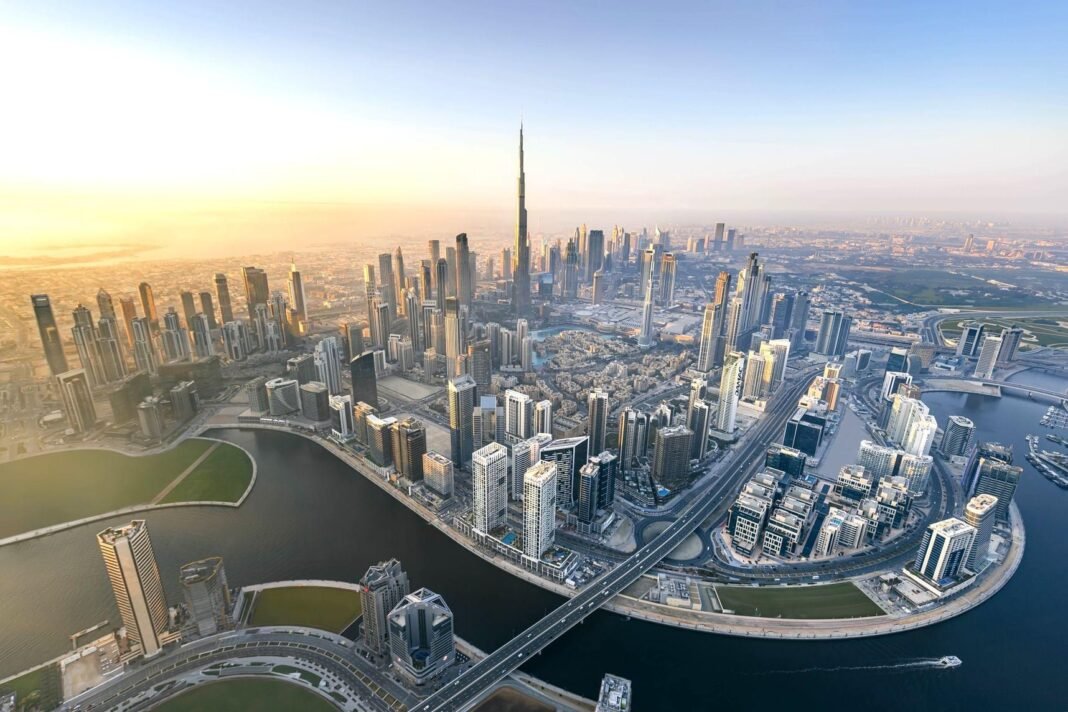
Dubai property market continued attracting strong international demand during the first half of 2026. Dubai property market remained a preferred destination for overseas buyers because of investor-friendly regulations, economic stability, and long-term investment opportunities. Strong demand from foreign investors also reflected growing confidence in the emirate’s real estate sector.
Indian investors remained the largest group of international property buyers, accounting for approximately 20.6 percent of total foreign purchasing activity. British investors ranked second with a 13.3 percent share, while Egyptian buyers followed with 12.6 percent. American investors secured fourth place at 9 percent, and Pakistani buyers represented 6.9 percent of international transactions. Saudi Arabian and Australian investors each accounted for 5.7 percent, followed by German, French, and Canadian buyers.
Dubai continues attracting overseas investors because it offers a stable economy, transparent regulations, and an attractive business environment. In addition, the absence of personal income tax and the availability of long-term residency programs continue strengthening investor confidence. Full foreign ownership in designated freehold areas also encourages international buyers to expand their property portfolios.
Several communities recorded strong sales activity during the first six months of the year. Dubai Islands led apartment sales with transactions worth approximately Dh8.4 billion. Airport City followed with Dh7.2 billion, while Business Bay secured third place after recording around Dh6 billion in apartment sales.
Villa and building transactions also remained active across the emirate. Al Yalayis 1 recorded the highest sales value, reaching approximately Dh10.6 billion. Wadi Al Safa 3 and Saih Shuaib 1 followed with transactions of around Dh1.4 billion each. Meanwhile, Me’aisem Second led land sales after recording Dh10.1 billion in transactions. Al Yalayis 5 ranked second with Dh7 billion, while Al Ruwayya 1 followed with Dh6.3 billion.
Buyer preferences continued favoring smaller residential units. One-bedroom apartments accounted for the largest share of completed transactions. Studio apartments ranked second, followed by two-bedroom homes. Larger properties represented a smaller portion of overall sales, reflecting continued interest in affordable homes that offer attractive rental returns and long-term investment potential.
Market analysts believe these trends highlight a healthier and more balanced real estate sector. Instead of depending on short-term speculation, the market now benefits from genuine demand driven by population growth, business expansion, international wealth, and corporate relocations. As a result, long-term investors and end-users continue supporting overall market activity.
The Dubai property market has also entered a more sustainable phase of growth. While property prices continue rising, the pace has become more moderate as additional housing supply enters the market. Experts believe this gradual adjustment creates a healthier environment for both buyers and developers while reducing the risk of excessive price increases.
Developers expect more than 160,000 residential units to be scheduled for delivery during 2026. However, industry observers believe actual completions could remain below planned levels. Apartments will represent the majority of future supply, while villas and branded residential projects will account for smaller shares. Growing inventory should improve market balance without triggering significant price corrections.
Industry experts also expect construction costs and higher shipping expenses to influence future project launches. Consequently, developers may place greater emphasis on quality, efficiency, and long-term value instead of rapid expansion. Investors are also becoming more selective as they focus on sustainable returns rather than short-term gains.
Despite global economic uncertainty and regional geopolitical challenges, confidence in Dubai’s real estate sector remains strong. Continued property purchases, business expansion, and steady population growth support long-term demand. Consequently, the Dubai property market continues demonstrating resilience and remains one of the region’s strongest destinations for international real estate investment.

