



Oman hosted the International Green Innovation Forum, emphasizing Arab integration in sustainable development. Moreover, Green Innovation played a central role in guiding strategies for a circular economy. The forum brought together researchers, policymakers, and industry leaders from across the region.
The event, organized by the Ministry of Higher Education, Research and Innovation in cooperation with the Federation of Arab Scientific Research Councils, began in Muscat. Additionally, over 200 participants from regional and international organizations joined the forum to explore environmental, agricultural, and energy solutions.
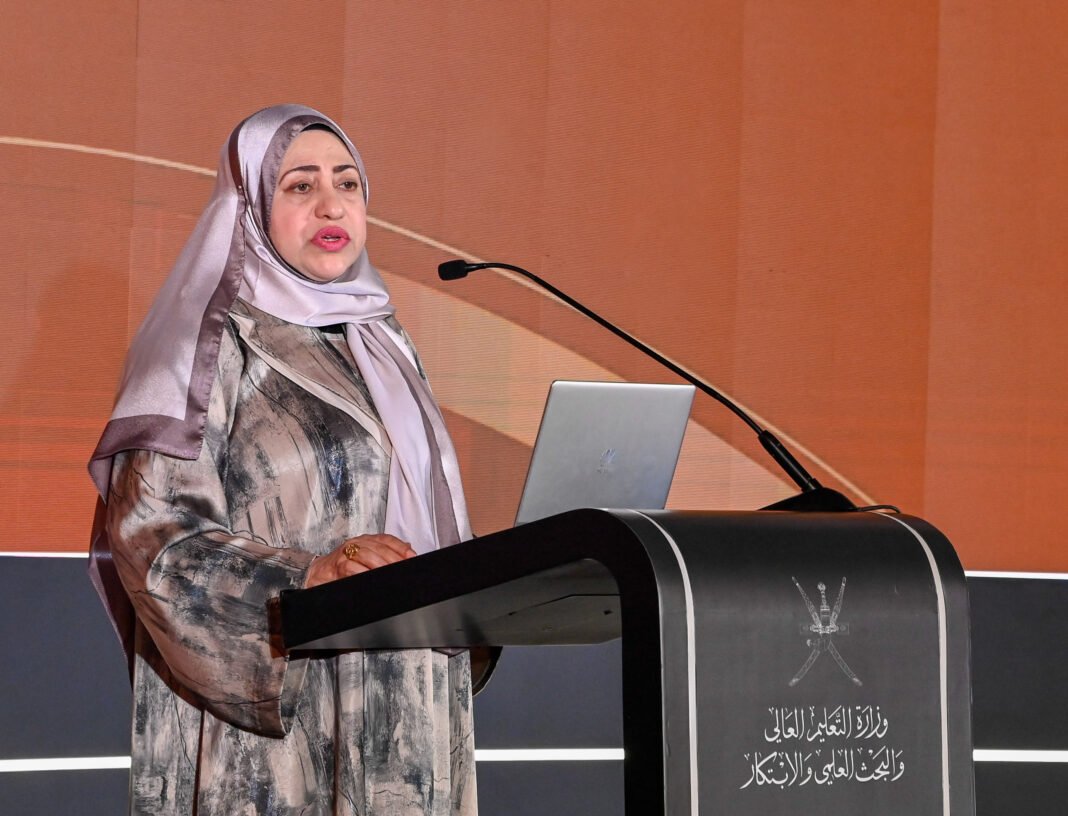
Dr. Rahma Ibrahim Al Mahrouqi, Minister of Higher Education, Research and Innovation, highlighted Oman’s strong commitment to sustainable development. She further noted that Green Innovation is essential for achieving Oman Vision 2040 goals while balancing economic growth and environmental protection.
Meanwhile, Prof. Abdelmajid Benamara, Secretary General of the Federation of Arab Scientific Research Councils, emphasized that Arab nations now possess advanced scientific systems. He added that it is time to transform research outputs into patents, products, and startups, which can have tangible societal impact.
The forum included three scientific sessions. The first focused on renewable energy, circular economy, and strategies to achieve net-zero carbon emissions. Furthermore, experts examined both opportunities and challenges in regional green development.
The second session showcased practical solutions. Presentations covered solar energy systems, microbial engineering of plant roots, and converting biological waste into biofuels, protein, and fertilizers. These initiatives demonstrated how Green Innovation can directly benefit local communities and industries.
In addition, the third session explored waste management and circular economy practices. Participants discussed recycling technologies, biomaterial production, and applying artificial intelligence for environmental problem-solving.
Visual presentations highlighted key topics. For instance, Dr. Buthaina Mahfoudh Al Wuhaibi shared insights on transitioning toward a circular economy, while Dr. Salah Somar Al Zadjali outlined research support and capacity-building programs. These discussions provided actionable guidance for policy makers and researchers alike.
Specialized entities contributed to the forum, including ACSAD, ICARDA, the Arab Organization for Agricultural Development, and the Arab Union for Sustainable Development and Environment. Their participation reinforced regional cooperation on Green Innovation, fostering practical collaboration among Arab countries.
Ultimately, the forum created a platform for knowledge exchange, policy alignment, and cross-border collaboration. Therefore, Green Innovation emerged as a driving force to achieve sustainable development goals, strengthen environmental policies, and foster regional partnerships.
Experts concluded that continued investment in renewable energy, circular economy practices, and Green Innovation will enhance Arab countries’ global standing. As a result, Oman’s leadership in hosting the forum signals a strong commitment to sustainability and collaborative growth.

