



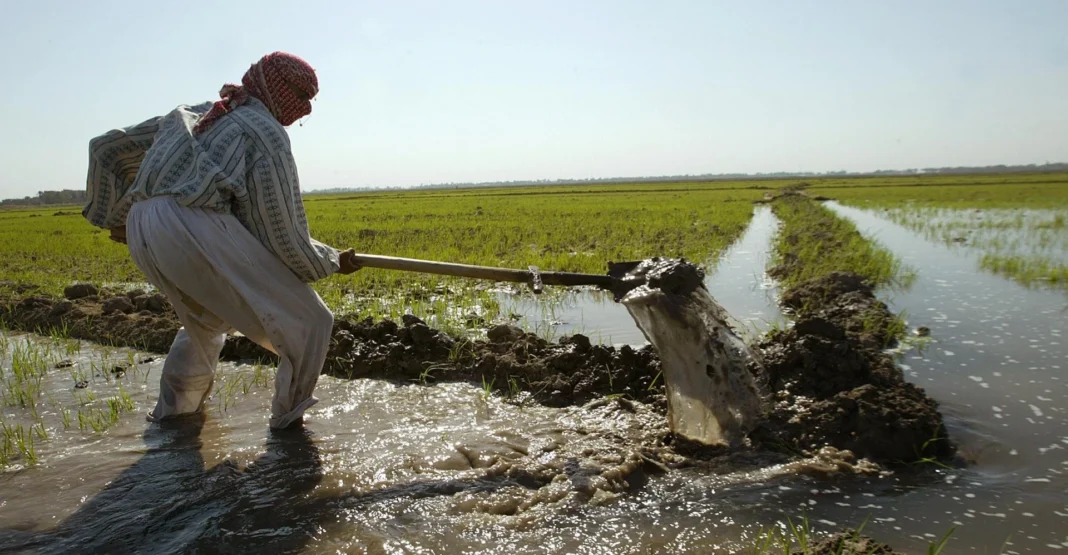
Sustainable rice production is gaining attention in Najaf as farmers explore modern farming methods. The new approach aims to reduce water consumption and improve crop efficiency across the governorate.
Recently, officials and agricultural experts discussed expanding mechanised rice transplanting in Najaf. The initiative focuses on climate adaptation and strengthening agricultural practices.
The consultation took place in Najaf on June 15. It brought together government representatives and agricultural specialists. Furthermore, participants discussed ways to improve rice cultivation methods and support sustainable farming.
The initiative supports farmers facing increasing water-related challenges. Therefore, authorities plan to introduce advanced agricultural techniques. These methods can help conserve resources while improving productivity.
The project operates under a climate-focused agricultural program that supports rural communities affected by environmental changes. Additionally, it encourages farmers to adopt modern and efficient farming solutions.
Representatives from the agriculture, water resources, and environmental sectors participated in the discussions. Provincial officials also attended the meeting. Meanwhile, technical experts shared recommendations for implementation.
Participants agreed to expand mechanised rice transplanting from 100 donums to 800 donums during the current growing season. As a result, more farmers will benefit from advanced cultivation techniques.
Selected farmers will follow specific participation requirements. Moreover, field teams will supervise implementation throughout the project. These teams include agriculture officials, water authorities, farmer groups, and technical specialists.
The teams will monitor progress during the farming season. They will also evaluate results and provide technical support to farmers. Consequently, the initiative can improve long-term agricultural practices.
A senior agriculture official highlighted the importance of mechanised transplanting. He explained that the method can increase productivity while reducing pressure on limited water resources.
Mechanised systems enable farmers to plant rice more efficiently. They also reduce resource wastage during cultivation. Furthermore, the approach can improve crop quality and consistency.
Climate conditions continue to affect agricultural activities across Iraq. Consequently, farmers require innovative methods to maintain production levels. The latest initiative offers a practical solution to these challenges.
The project also promotes cooperation among institutions. Government agencies and technical organizations continue working together to support implementation. Therefore, farmers receive stronger assistance and guidance.
Sustainable rice production can help protect farming communities and improve food security. Moreover, it supports national efforts to manage environmental challenges and strengthen agricultural resilience.
The expansion in Najaf represents an important step forward. It combines modern technology with traditional farming knowledge. This balance can support future agricultural development across the region.
The initiative highlights the growing importance of innovation in agriculture. Additionally, it demonstrates how modern techniques can benefit local communities and create better opportunities for farmers.
Overall, the mechanised rice transplanting program supports Iraq’s agricultural development goals. It promotes efficient water management and stronger crop production. Sustainable rice production remains a key priority for future farming strategies.
As Najaf continues developing its agricultural sector, modern practices will become increasingly important. The project demonstrates a commitment to adapting farming methods while supporting a more resilient agricultural future.

