



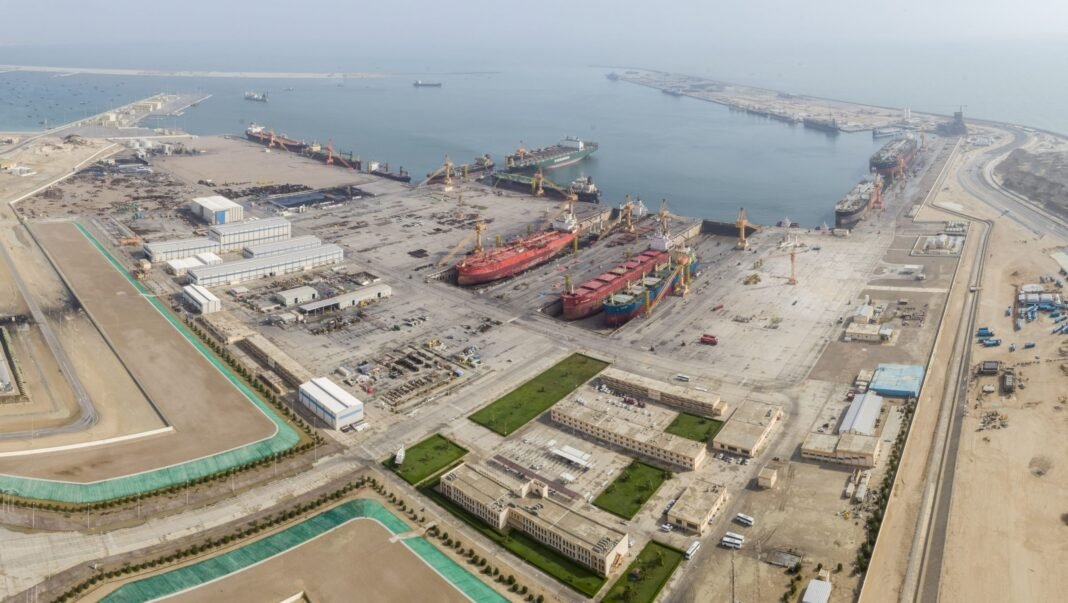
Duqm Port strengthens its position as a major logistics hub as global trade routes continue to evolve. As supply chains face growing challenges, Duqm Port offers businesses a secure and flexible gateway for international commerce. Furthermore, its strategic location supports trade diversification and strengthens regional connectivity.
Located on the Arabian Sea, Duqm Port sits outside the Strait of Hormuz. As a result, it provides shipping companies with an alternative route for moving cargo. Many businesses now seek dependable logistics corridors. Consequently, the port continues to attract increasing attention from regional and international markets.
Reggy Vermeulen, Chief Executive Officer of the Port of Duqm, said global trade patterns are changing rapidly. He explained that many companies now want to reduce reliance on traditional shipping routes. Therefore, ports that offer flexibility and security are becoming more important.
Duqm Port plays a central role in Oman’s logistics network. In addition, it connects ports, industrial zones, warehouses, and distribution centers. This integrated system helps companies move goods more efficiently. It also reduces transport times and lowers operating costs.
For many years, Gulf logistics activities centered around a small number of major hubs. However, recent developments have encouraged businesses to explore alternative routes. As a result, cargo flows increasingly move toward ports located outside the inner Gulf.
Several regional ports have benefited from this shift. Nevertheless, Oman continues to strengthen its position within the changing logistics landscape. Industry leaders believe the country offers stability and resilience during periods of uncertainty.
At the same time, supply chain diversification remains a growing priority for businesses worldwide. Even if current disruptions ease, companies continue to value alternative trade corridors. Therefore, logistics experts expect diversified routes to remain part of long-term planning.
Vermeulen stressed the importance of preparedness. He noted that active logistics corridors can expand quickly during disruptions. Consequently, countries can maintain trade flows and support industrial activity when challenges arise.
Duqm Port focuses on handling large-scale industrial cargo. These shipments include project cargo, vehicles, oil and gas equipment, and industrial raw materials. Because of this specialization, the port serves a unique role within the Gulf logistics sector.
Many companies import raw materials through the port before processing them for export. As a result, the facility supports both regional manufacturing and international trade. This approach helps strengthen industrial supply chains across multiple markets.
According to industry officials, each port serves a different purpose. Duqm Port stands out because of its ability to handle large cargo volumes and support heavy industries. Moreover, its infrastructure helps businesses connect with regional and global value chains.
Looking ahead, the port is expected to play an even greater role in international logistics. As trade networks continue to adapt, Oman aims to expand its influence in global supply chains. Therefore, Duqm Port remains a key asset in the country’s long-term economic and logistics strategy.

