



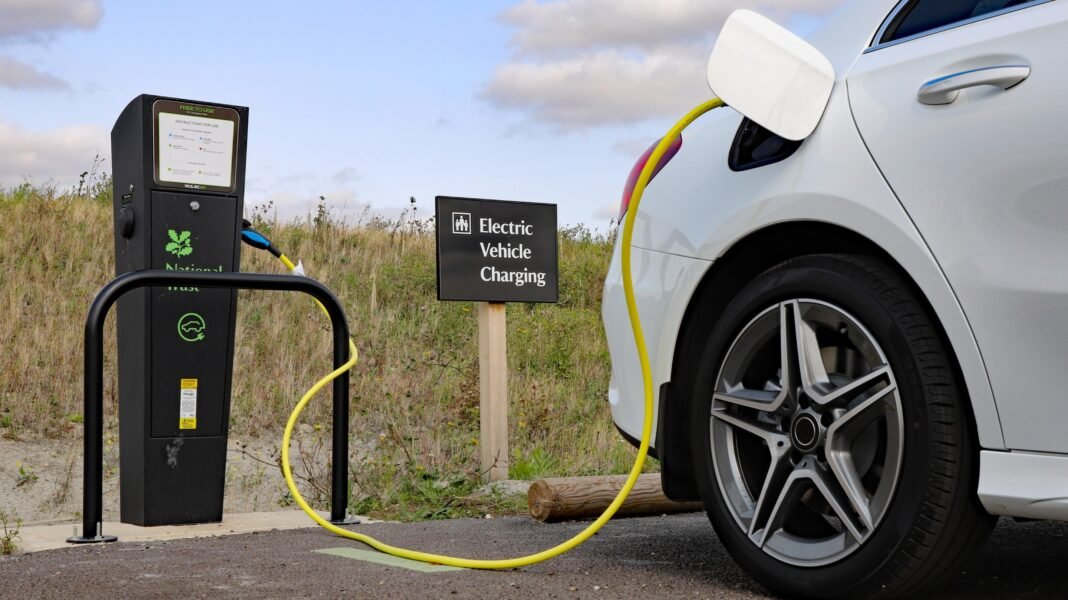
Oman EV platform marks a major step in the country’s transition toward cleaner transportation. The locally developed charging ecosystem aims to simplify electric vehicle charging while supporting businesses and drivers. Furthermore, the new system strengthens Oman’s efforts to build sustainable transport infrastructure and accelerate digital innovation.
Electric vehicle adoption continues to grow across the Sultanate. Government initiatives have encouraged more residents to choose cleaner transportation. As a result, more than 5,900 electric vehicles were registered during the first half of 2026.
Meanwhile, charging infrastructure has expanded rapidly across the country. The national network now includes more than 160 charging stations. In addition, officials plan to increase that number to 350 charging points by 2027.
Despite this progress, many drivers still face charging challenges. Different charging providers require separate mobile applications. Moreover, several foreign software systems create payment and compatibility issues for local users.
To solve these challenges, Muscat AI Solutions introduced a locally developed charging ecosystem. The company expanded its existing mobile application by adding an intelligent charger management platform. Together, the systems create Oman’s first unified charging management solution.
The mobile application helps drivers locate nearby charging stations quickly. It also assists users with journey planning through live battery information. Consequently, drivers can organize trips more efficiently while reducing charging uncertainty.
In addition, the platform integrates directly with Oman’s local banking network. Therefore, users can complete secure payments without relying on overseas payment systems. This feature improves convenience while minimizing transaction difficulties.
Businesses also benefit from the new technology. Property managers, commercial fleet operators, and fuel retailers can manage charging stations through one centralized platform. As a result, operators gain greater control over their charging infrastructure.
The platform supports chargers from multiple international manufacturers. Furthermore, it uses an open communication standard that allows different charger brands to operate together. Consequently, businesses no longer need to manage several disconnected systems.
Operators can also monitor charging stations in real time. The locally engineered software enables faster technical support without depending on overseas service providers. Therefore, businesses can resolve operational issues more efficiently.
Additionally, the platform includes smart charging technology that manages electricity demand automatically. When several vehicles charge simultaneously, the software balances power usage across the network. As a result, it reduces unnecessary pressure on the electrical grid.
Balanced charging also protects transformers and other electrical equipment. At the same time, drivers continue receiving stable and reliable charging services. Consequently, these improvements enhance the overall charging experience.
Local charger suppliers may also benefit from the new ecosystem. Previously, installers mainly focused on one-time hardware sales. However, they can now provide ongoing monitoring, maintenance, and remote support services.
This approach creates additional business opportunities for local companies. Moreover, long-term service contracts could generate more stable revenue for charging providers. Therefore, the technology supports broader economic development alongside sustainability goals.
Developers designed the entire software platform in Muscat. As a result, local engineering teams can introduce updates more quickly whenever regulations change. The platform can also adapt rapidly to future charging tariffs and evolving market requirements.
Meanwhile, government initiatives continue supporting cleaner transportation across Oman. Expanding charging infrastructure remains an important part of that strategy. Furthermore, locally developed technology strengthens national capabilities in digital innovation and smart mobility.
Officials believe domestic software improves the long-term resilience of the transport sector. In addition, local expertise reduces dependence on imported technology solutions. Consequently, future improvements can respond more effectively to national priorities.
Overall, Oman EV platform represents another important milestone in the country’s sustainable mobility journey. The system combines smart technology, local expertise, and expanding infrastructure into one integrated solution. Looking ahead, as electric vehicle adoption continues to grow, the Oman EV platform could play a central role in supporting cleaner transportation, digital transformation, and long-term economic development.

