



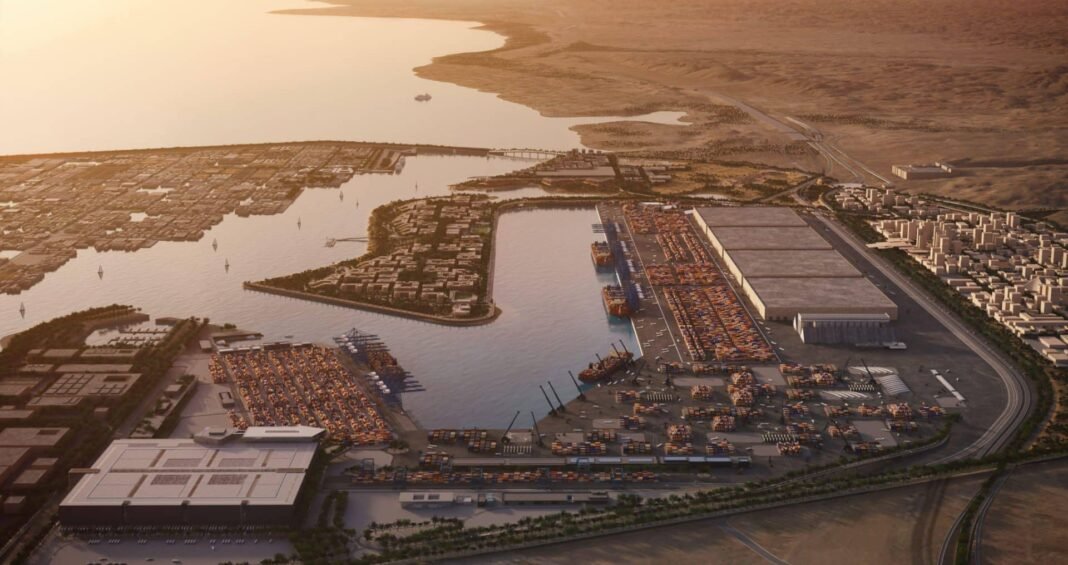
NEOM wheat shipment marks a major milestone in Saudi Arabia’s growing grain logistics network. The operation strengthens national food security while improving supply chain efficiency. It also highlights the Kingdom’s ongoing efforts to modernize import infrastructure.
SABIL completed the first unloading of a 66,000-tonne wheat cargo at NEOM Port. The shipment marks the first wheat delivery to the port and supports the company’s strategy to diversify import routes across Saudi Arabia. Officials described the operation as an important step toward building a stronger and more resilient logistics network.
The company continues expanding partnerships with leading logistics and infrastructure providers across the Kingdom. Through these collaborations, SABIL aims to improve grain distribution while increasing supply chain efficiency. Consequently, the company can respond more quickly to changing market demand and strengthen food supply resilience.
The arrival of the wheat shipment at NEOM Port also improves access to northern Saudi Arabia. The port will support grain deliveries to Tabuk, Al-Jawf, Hail, and Al-Qassim. As a result, these regions will benefit from faster and more reliable supply chains.
Located on the Red Sea, NEOM Port occupies a strategic position along major international shipping routes. This location allows imported grain to move more efficiently from global suppliers into Saudi Arabia. It also strengthens the Kingdom’s role in international trade and maritime logistics.
Meanwhile, ongoing development at NEOM Port focuses on creating an integrated logistics hub. Maritime operations connect directly with road transport and inland freight networks. Therefore, cargo can move efficiently across multiple transportation systems, reducing delivery times.
In addition, NEOM Port supports stronger regional trade connections beyond Saudi Arabia. The facility enhances logistics links with Gulf countries and wider Middle Eastern markets. This growing connectivity improves regional supply chain competitiveness while supporting international trade.
SABIL also continues investing in advanced supply chain technologies to improve operational performance. These technologies enhance cargo management, increase reliability, and reduce distribution delays. Over time, they will strengthen long-term food security planning across the Kingdom.
The recent NEOM wheat shipment demonstrates how modern infrastructure supports Saudi Arabia’s national development priorities. It highlights the importance of advanced ports in ensuring stable grain imports while improving overall logistics efficiency. Moreover, officials expect wheat imports through NEOM Port to continue increasing as operations expand.
Saudi Arabia continues prioritizing logistics transformation as part of its long-term economic strategy. NEOM Port plays a central role in supporting this vision by strengthening food security, improving transportation networks, and expanding trade capacity. Ultimately, the NEOM wheat shipment represents another important milestone in the Kingdom’s efforts to modernize its logistics infrastructure and secure reliable food supplies for the future.