



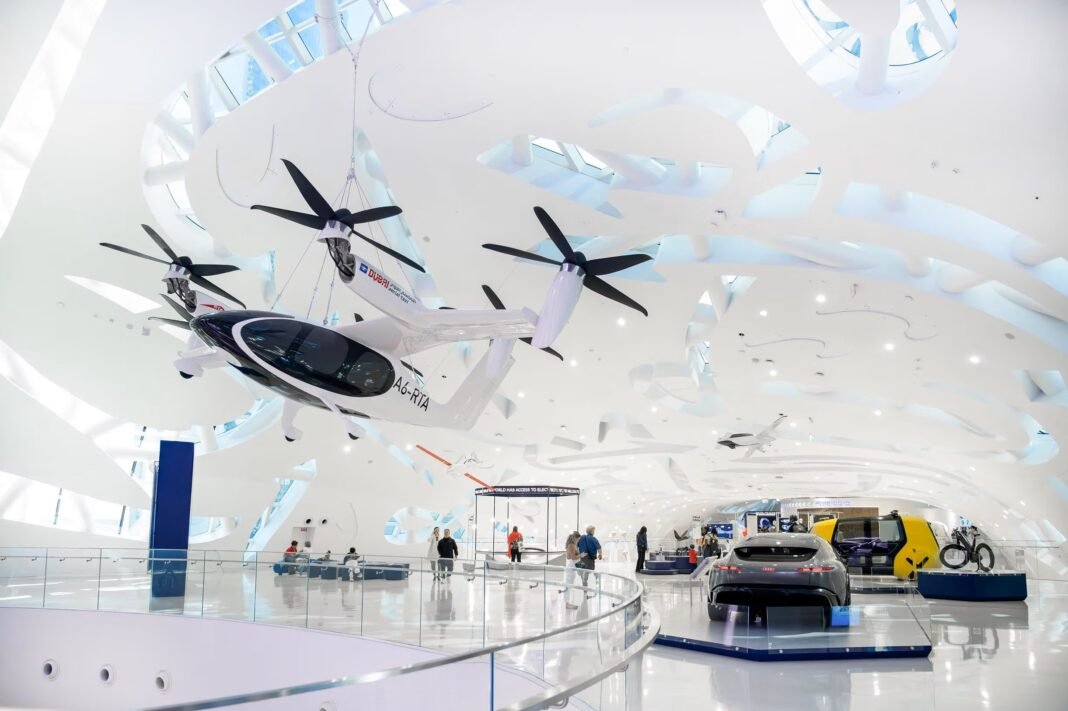
Dubai vertiport development reached a major milestone after aviation authorities approved the operation of electric vertical take-off and landing (eVTOL) aircraft from the city’s first purpose-built commercial facility. The approval marks another important step toward launching an urban air mobility network. Furthermore, the project supports Dubai’s vision of adopting advanced transportation technologies.
The newly certified facility will serve as the main hub for Dubai’s planned air taxi network. Officials expect the project to improve urban transportation while introducing faster travel options across the city. In addition, the network will support future mobility solutions using electric aircraft.
The General Civil Aviation Authority granted operational clearance after completing the required certification process. This approval allows electric vertical take-off and landing aircraft to operate from the new facility. Consequently, commercial air taxi services have moved closer to becoming a reality.
The vertiport carries the official designation VDX under the national aviation certification system. Industry officials describe it as the world’s first certified commercial vertiport designed specifically for electric air taxis. The project represents a significant advancement in urban aviation infrastructure.
Joby Aviation plans to launch commercial air taxi services in Dubai later this year. The company continues preparing its aircraft and operational systems before introducing passenger flights. Officials believe the service will transform short-distance urban transportation.
The new facility includes two dedicated take-off and landing pads for electric aircraft. It also features rapid charging systems designed to support frequent daily operations. These systems reduce turnaround times between flights and improve operational efficiency.
Passengers will benefit from modern terminal facilities designed for quick and efficient travel. The four-storey building covers approximately 3,100 square metres. Once fully operational, it will accommodate up to 170,000 passengers annually.
Dubai also continues expanding its wider air taxi infrastructure. Three additional vertiports are currently under development across the city. Together, these facilities will create an integrated urban air mobility network.
Developers continue working closely with Dubai’s Roads and Transport Authority to complete the remaining infrastructure. Construction is progressing according to schedule. Officials remain focused on preparing the network for future operations.
Industry leaders believe commercial air taxi services are approaching an important milestone. Certification of the first vertiport demonstrates continued progress toward full network deployment. Additional facilities will further strengthen the transportation system.
Electric air taxis offer several environmental advantages over conventional aircraft. They produce no direct operating emissions during flights. Therefore, they support sustainability goals while reducing environmental impact.
The aircraft can carry one pilot and four passengers on each flight. They can also reach speeds of up to 322 kilometres per hour. These capabilities make them well suited for rapid transportation across urban areas.
Dubai continues investing heavily in innovative transportation technologies. Smart mobility projects remain an important part of the city’s long-term development strategy. These new transport systems also support population growth and economic expansion.
Advanced aviation infrastructure helps position Dubai as a global leader in future transportation. Authorities continue introducing technologies that improve mobility while enhancing passenger convenience. Innovation remains central to the city’s transportation vision.
Regional interest in electric air taxis continues growing. Several neighbouring countries are also evaluating similar transportation systems. Future networks could improve travel while supporting tourism and business activities.
Urban air mobility is expected to play a larger role in future transportation planning. Electric aircraft can significantly reduce travel times across busy metropolitan areas. Consequently, cities continue investing in the infrastructure needed to support these services.
Overall, Dubai vertiport development demonstrates the city’s commitment to next-generation transportation solutions. Through certified infrastructure, electric aircraft technology, and continued investment, Dubai aims to build a modern urban mobility network. As additional vertiports become operational, Dubai vertiport development will support faster, cleaner, and more efficient passenger transportation while reinforcing the emirate’s position as a global leader in transportation innovation.