



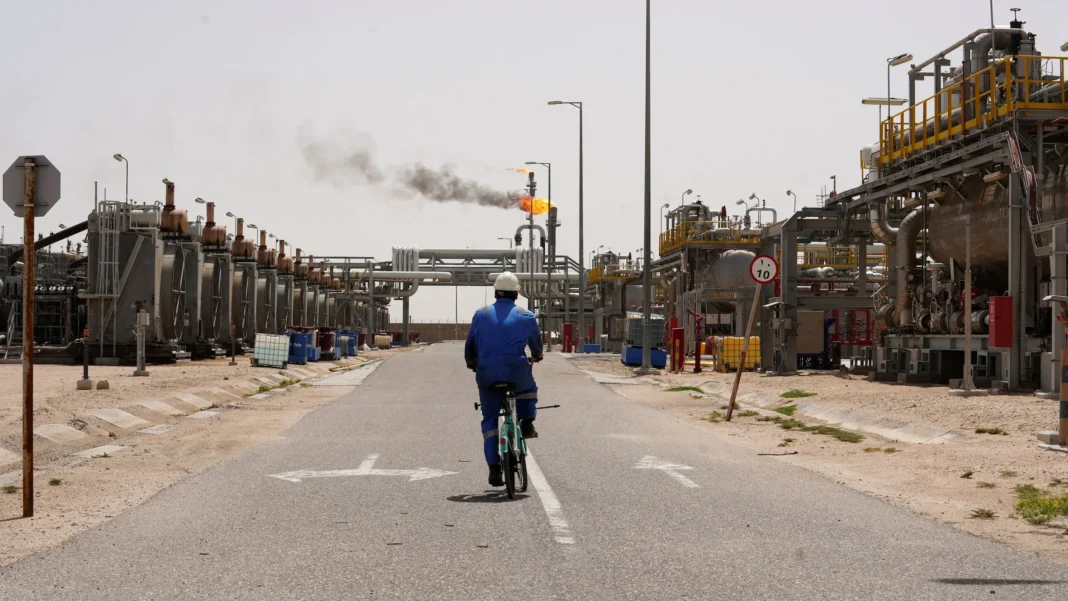
Nahr Bin Umar gas project plans are advancing in Iraq’s Basra province as officials review the next stages of development. The latest meeting examined implementation requirements and measures to expand gas processing capacity at the oil field.
The meeting was chaired by Dr. Izzat Sabir Ismail, Deputy Minister of Oil for Gas Affairs. Representatives from South Gas Company attended alongside government officials. The Planning and Follow-Up Directorate also participated in the discussions.
Representatives from Halfaya Gas Company joined the meeting as well. Officials reviewed the project’s implementation stages and assessed requirements for future development. They also examined measures needed to increase processing capacity at the field.
The project targets total processing capacity of 300 million standard cubic feet per day. Development will take place through two separate phases. Each phase is designed to add 150 million standard cubic feet per day.
The first phase will establish processing capacity of 150 Mmscfd. The second phase will add another 150 Mmscfd. Once both stages are completed, the facility will reach the planned 300 Mmscfd capacity.
The expansion would allow the field to process greater volumes of associated gas from oil production. Officials are therefore reviewing technical and operational requirements for each stage. They are also assessing measures needed to maintain progress throughout the development.
The investment and gas processing contract dates back to January 2024. South Gas Company signed the agreement with Halfaya Gas Company at that time. The original agreement covered an initial processing capacity of 150 Mmscfd.
The contract also included an option for a second phase. That phase would add another 150 Mmscfd to the facility. Consequently, the current expansion plans follow the development framework established under the original agreement.
The contract provides a pathway toward the project’s full planned capacity. Officials are now examining implementation details for the additional development. Coordination between the companies and government departments will remain important as the project progresses.
The Nahr Bin Umar gas project could help Iraq make greater use of associated gas generated during oil production. Oil fields can produce significant volumes of gas that require dedicated processing infrastructure. Capturing and processing this gas can therefore improve the utilization of domestic energy resources.
Processed gas can support several areas of Iraq’s energy system. These include power generation and industrial activities. Increasing processing capacity can also provide additional domestic gas supplies while reducing the amount of potentially usable gas that remains unprocessed.
Iraq has continued focusing on better use of its domestic gas resources. Consequently, projects that increase associated gas processing can contribute to broader energy infrastructure objectives. Greater processing capacity can connect oil production more effectively with domestic gas requirements.
The latest meeting also highlighted the importance of monitoring each implementation stage. Officials reviewed the progress needed to advance the associated gas investment plans. They also discussed development measures connected to the planned capacity increase.
The participation of South Gas Company and Halfaya Gas Company supports coordination among key project participants. Government departments will continue monitoring the development process. This coordination can help address technical and operational requirements as work moves forward.
The two-phase structure also provides a clear framework for expanding capacity. The initial stage establishes 150 Mmscfd of processing capacity. A second stage would then bring an additional 150 Mmscfd once the planned expansion moves ahead.
Nahr Bin Umar gas infrastructure could therefore become more significant within Basra’s energy sector. The province remains central to Iraq’s oil and gas industry. Expanding gas processing capacity could strengthen the role of associated gas within the region’s energy infrastructure.
The project’s eventual 300 Mmscfd capacity would represent a significant increase from the initial 150 Mmscfd stage. This expansion could allow more associated gas to be captured and processed at the field.
At the same time, continued progress will depend on coordination between companies and government authorities. Officials must monitor technical requirements, implementation schedules, and operational needs across both phases.
The latest review demonstrates that Iraq is continuing to advance the project within the framework established by the 2024 agreement. Further development will focus on moving from the initial processing stage toward the planned additional capacity.
Overall, Nahr Bin Umar gas development represents part of Iraq’s wider effort to increase the use of domestic gas resources. The project’s two-phase expansion could eventually deliver 300 Mmscfd of processing capacity. Continued coordination between South Gas Company, Halfaya Gas Company, and government authorities will be important as the development moves into its next stages.