



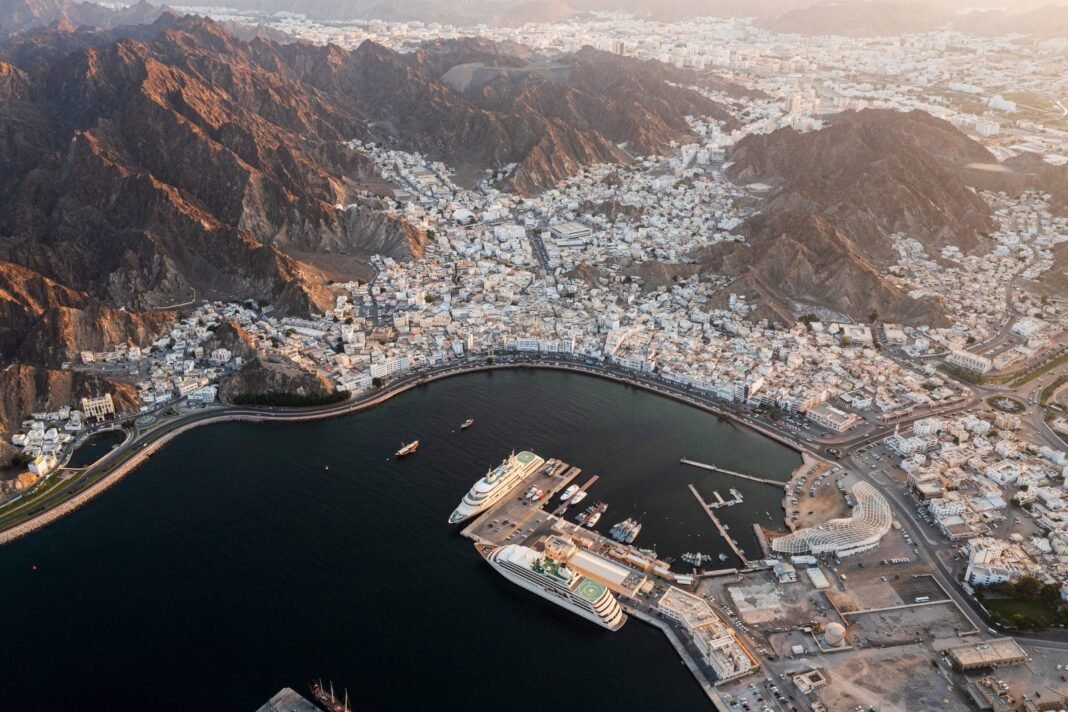
Oman plans to transform the Port waterfront in Muscat into a major tourism and leisure destination. The redevelopment will create new hotels, residences, retail areas, restaurants, and public spaces. Furthermore, the project will strengthen Muttrah’s position as an important cultural destination. The plans also support Oman’s wider efforts to expand tourism and attract international visitors.
Oman Tourism Development Company, known as Omran, signed an agreement for the integrated tourism complex. The agreement involves Oman’s Ministry of Heritage and Tourism. Together, the partners will develop the waterfront area around Sultan Qaboos Port. The project will also highlight Muttrah’s historic importance as a trading centre.
The redevelopment will cover nearly one million square metres across the waterfront district. More than 400,000 square metres will undergo development during three planned phases. Meanwhile, the wider master plan divides the destination into four main districts. Each district will offer different attractions and facilities for residents and visitors.
The Port Souq district will focus on shopping, retail, entertainment, and leisure activities. Meanwhile, Port Gateway will combine hotels, retail outlets, and public spaces. Al Shatifi will feature residential units, hotels, restaurants, and cafes. Additionally, visitors will find a waterfront promenade within the district.
The fourth area, Al Shatifi Hills, will introduce a mountain resort experience. This district will add another tourism element to the wider waterfront development. Together, the four districts will create a diverse destination within Muttrah. Consequently, the project could attract visitors seeking culture, hospitality, shopping, and outdoor experiences.
However, authorities have not announced the project’s total investment cost. They have also not provided a detailed construction schedule. Therefore, investors and tourism operators will need to wait for further information. Nevertheless, the scale of the planned development highlights Oman’s ambitions for Muttrah.
The Port waterfront project comes as Oman seeks to strengthen its tourism sector. The country continues to pursue tourism growth under its long-term Vision 2040 strategy. Officials aim to attract 11 million visitors annually through increased tourism investment. Therefore, new destinations could play an important role in achieving those targets.
Moreover, the redevelopment arrives during a challenging period for Oman’s hotel industry. Three- to five-star hotels experienced a significant revenue decline during the first half. Lower visitor numbers from Arab countries and Europe contributed to that weakness. However, Oman continues developing tourism assets despite the recent pressure on visitor demand.
The country’s economic performance also provides important context for the development. Oman’s economy expanded between April and June this year. Meanwhile, the projected budget deficit for 2026 declined compared with the previous year. These developments could provide additional support for investment across key economic sectors.
Tourism remains an important part of Oman’s strategy to diversify its economy. The government wants to reduce reliance on traditional sources of economic activity. Consequently, major tourism developments can create jobs and support businesses across multiple industries. They can also encourage investment in hospitality, retail, transport, and entertainment.
Muttrah already has strong cultural and historical appeal within Muscat. Its traditional markets and coastal setting attract both residents and international visitors. The new development could therefore combine heritage attractions with modern tourism facilities. As a result, the project may create a more integrated destination around the historic port.
The redevelopment could also improve the connection between Muscat’s tourism attractions and its waterfront. Hotels and residences could support longer visitor stays in the area. Meanwhile, restaurants, cafes, and retail outlets could increase activity throughout the district. Public spaces and promenades could further enhance the visitor experience.
The Port waterfront plans also demonstrate Oman’s continued focus on large-scale tourism projects. Authorities can use these developments to broaden the country’s tourism offering. Furthermore, new attractions could help Oman compete for a larger share of regional travel demand. The project will likely remain a key development to watch as planning progresses.
For now, Omran and the tourism ministry will continue working on the development framework. Further announcements should clarify construction phases, investment requirements, and delivery schedules. The project ultimately aims to create a major destination around Sultan Qaboos Port. If completed as planned, it could reshape Muscat’s waterfront tourism landscape.

