



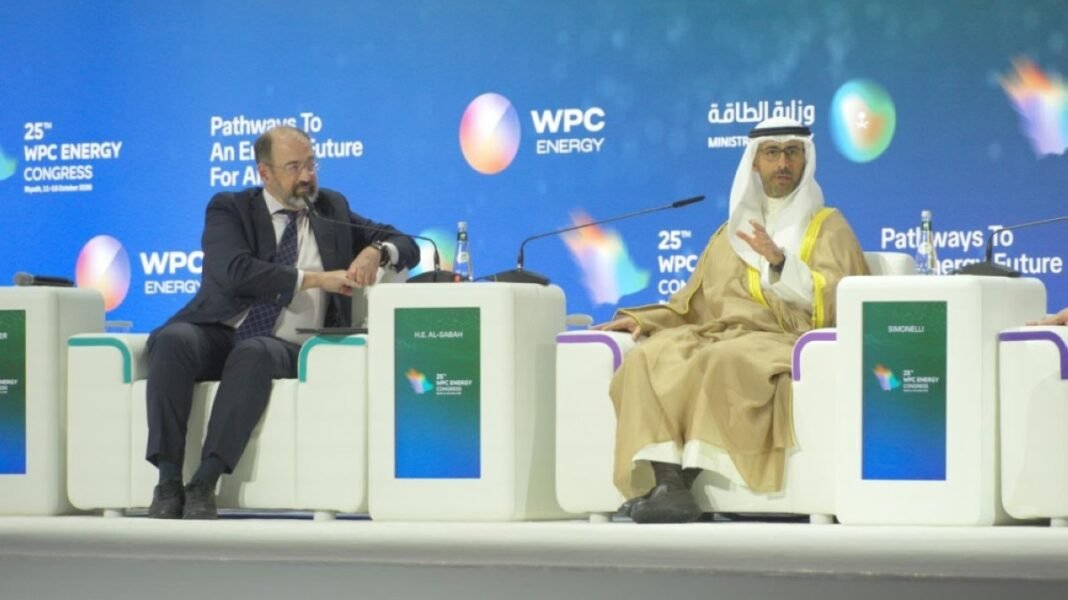
Kuwait Petroleum Corporation (KPC) is exporting crude at roughly the levels it shipped before the regional war began, but is still restraining some refining because too few product tankers can safely leave the Gulf, Chief Executive Sheikh Nawaf Saud Nasser Al-Sabah said in an interview with Bloomberg published on Wednesday.
“On the crude oil side, we are exporting basically what we had been doing before the war began,” he said. “We’re meeting the requirements of our customers on crude oil.”
Production has risen from “almost nothing” at the height of the crisis to “well over 2 million barrels a day,” he said. KPC has been using its strategic tanker fleet to shuttle crude and products out through the Strait of Hormuz and carry out ship-to-ship transfers outside the Gulf.
Refined products are the main bottleneck. Sheikh Nawaf said shipping for products is more constrained and that KPC has had to hold back some of its refining capacity, which he linked to high international diesel and jet fuel prices. “We need more product carriers to come into the Gulf to carry that product out,” he said.
He said about 6 million barrels of refining capacity sits inside the Gulf and much of it is restrained because its output cannot be moved out safely. Existing pipelines through Saudi Arabia and the UAE carry only crude, he said.
Returning to the prewar output of 2.7 million barrels a day requires additional security for ships transiting the strait, he said. If a de-escalation deal were reached, the ramp-up would be “immediate” because KPC’s fields and facilities are ready. He said he was not aware of progress toward such a deal.
Asian customers have started sending ships into the Gulf to collect cargoes from Kuwait, and KPC has asked European customers to do the same, he said. Some KPC tankers damaged during the conflict are back in service, while others are in dry dock.
Sheikh Nawaf said OPEC+ production allocations are “of limited use” while global markets face a shortage of crude and fuel. “We will produce as much as we can and I think everybody else is doing the same,” he said.
KPC remains committed to reaching 4 million barrels a day of production capacity by 2035, he said, with international oil companies invited to help develop offshore fields. He said Kuwait has drilled three offshore wells in its history and all three were successful. Studies of export pipelines with Saudi Arabia and the UAE are progressing and would continue even if shipping through Hormuz normalizes, he added.