



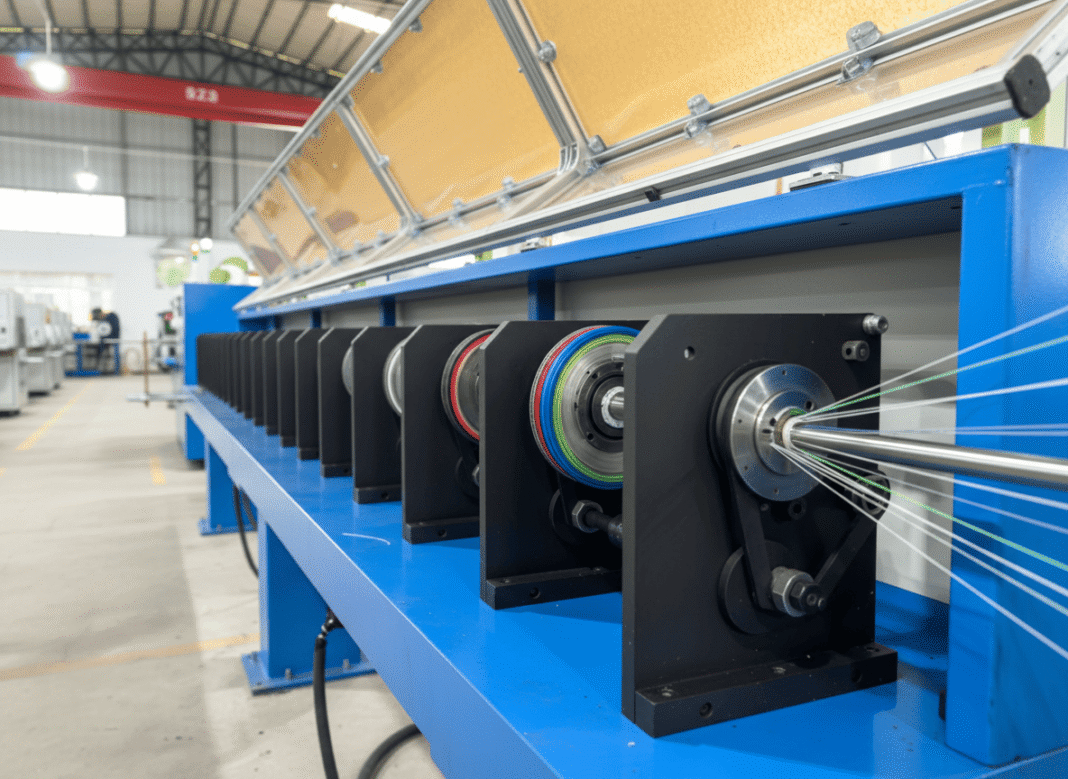
Fibre Optic Production is expanding in Iraq after Diyala General Company introduced a modern manufacturing line. The project aims to strengthen local telecommunications production and support digital development.
Additionally, the new sixth-generation production line increases Iraq’s ability to manufacture advanced fibre optic cables. The facility can produce up to 15,000 kilometres of cable annually.
Furthermore, the project represents an important step for Iraq’s communications industry. It supports efforts to improve local manufacturing and reduce dependence on imported products.
Diyala General Company operates under the Ministry of Industry and Minerals. Therefore, the project supports national plans to develop industrial capabilities.
The company installed the production line through a strategic partnership. Meanwhile, cooperation continues with Al-Manthiqa Al-Dhakiyya General Trading and Telecommunications Services Company.
Additionally, the partnership includes technology support from FiberHome. The company provides expertise in fibre optic manufacturing solutions.
Through this agreement, Diyala can produce different fibre optic cable types. Moreover, the facility can meet various technical requirements for telecommunications projects.
The new line follows international quality standards. As a result, Iraq can improve the reliability of locally produced communication equipment.
Furthermore, the project will help address growing demand for internet infrastructure. Businesses, institutions, and communities require faster and stronger digital connections.
Therefore, expanding fibre optic manufacturing has become increasingly important. Better production capacity can support network expansion across the country.
In addition, the facility may create new opportunities for industrial growth. Local manufacturing can encourage technical training and support skilled employment.
Meanwhile, Iraq continues investing in digital transformation projects. Strong telecommunications networks remain essential for economic and social development.
Moreover, improved connectivity can benefit multiple sectors. Education, healthcare, business, and government services all depend on reliable internet access.
The new production line also strengthens cooperation between Iraqi companies and international technology providers. Consequently, these partnerships can introduce advanced manufacturing methods.
Additionally, international cooperation can improve production efficiency. It can also help local industries adopt modern technologies.
As demand for digital services continues rising, fibre optic networks become more important. Therefore, Iraq needs stronger domestic production capabilities.
Furthermore, the Diyala facility will support future telecommunications projects. The expanded capacity allows production for different network requirements.
At the same time, local manufacturing can improve supply chain stability. Companies can access essential materials more quickly within the domestic market.
The project reflects Iraq’s broader focus on industrial development. Moreover, authorities continue encouraging investments that strengthen key economic sectors.
Going forward, the new facility is expected to support Iraq’s communications goals. The project will contribute to expanding digital infrastructure nationwide.
Additionally, Fibre Optic Production will remain a major part of Iraq’s technology development. The Diyala project demonstrates progress toward stronger local manufacturing.
Overall, the new production line represents a significant achievement for Iraq’s industrial sector. It combines advanced technology, local expertise, and international cooperation.
Fibre Optic Production at Diyala General Company is expected to strengthen Iraq’s telecommunications industry by expanding domestic manufacturing, supporting digital infrastructure projects, reducing reliance on imports, and encouraging long-term industrial growth through advanced technology and international partnerships.

