



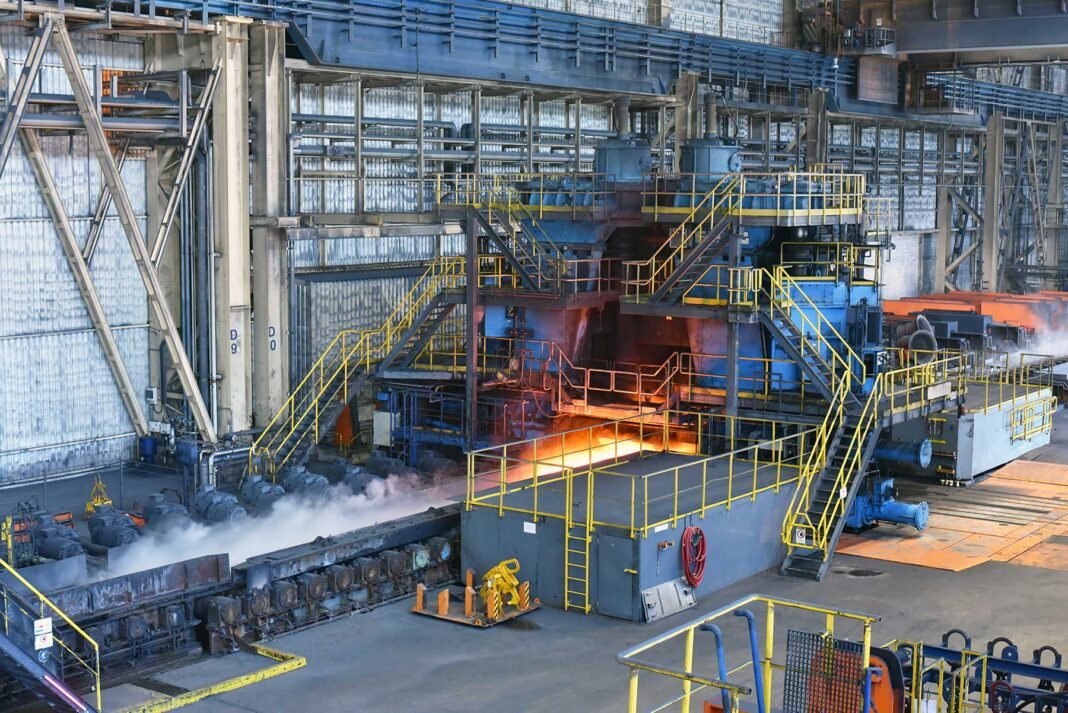
GCC Steel Demand is expected to decline by nearly 11 percent in 2026 as construction projects face delays across the region. The forecast marks a sharp reversal from the strong growth recorded during 2025. However, industry experts expect consumption to recover as regional uncertainty eases and delayed developments move forward. The outlook highlights how project schedules, financing decisions, and supply chain conditions influence the Gulf’s construction sector.
The World Steel Association expects the Gulf Cooperation Council’s steel consumption to weaken this year. During 2025, regional demand increased by 17.7 percent amid economic diversification and strong construction activity. Saudi Arabia and the UAE supported that growth through housing developments and major infrastructure investments. Nevertheless, delays in project awards have created a more challenging environment for steel suppliers in 2026.
The association attributes the expected decline mainly to postponed construction decisions. Developers have delayed project awards, construction starts, and financing arrangements amid unresolved security concerns. Consequently, steel demand has shifted into a later period rather than disappearing entirely. This distinction suggests that some projects could generate stronger material demand once developers regain confidence.
Regional steel consumption could recover significantly in 2027 if conditions improve. The association forecasts growth exceeding 11 percent next year, potentially returning demand to its 2025 level. Furthermore, the reopening of the Strait of Hormuz and normalized supply chains could support the recovery. Reduced geopolitical uncertainty may also encourage developers to restart delayed projects and approve new investments.
The global steel market faces a different outlook, with demand expected to remain broadly unchanged during 2026. Worldsteel forecasts worldwide consumption at approximately 1.722 billion tonnes this year. However, the association anticipates growth of 1.7 percent in 2027, bringing demand to around 1.752 billion tonnes. These projections suggest that the Gulf’s expected decline reflects regional pressures rather than a uniform global downturn.
Meanwhile, construction contract awards across the GCC have dropped considerably. Kuwait-based investment consultancy Kamco Invest reported a 37 percent annual decline in the combined value of awarded contracts. Total awards reached approximately $47 billion, compared with $76 billion during the same period last year. This reduction highlights slower project activity across several Gulf economies.
Lower contract values can affect steel producers, construction companies, and suppliers of building materials. When developers postpone projects, demand for structural steel and other construction inputs may weaken. Additionally, uncertainty can delay procurement decisions and reduce visibility for manufacturers planning production. Therefore, the timing of major infrastructure and real estate projects remains important for the regional steel industry.
Saudi Arabia’s large-scale development programme also illustrates changing investment priorities. The kingdom has reviewed spending plans and placed greater emphasis on projects offering nearer-term economic returns. As a result, some ambitious developments have faced adjustments to their original plans and schedules. These changes could influence steel procurement, particularly for projects requiring substantial quantities of construction materials.
The NEOM development programme previously attracted attention because of its significant projected steel requirements. However, Saudi Arabia’s changing spending priorities have encouraged greater scrutiny of costs, schedules, and expected returns. Consequently, suppliers must consider revised development timelines when assessing future demand. The broader shift also reflects efforts to align major projects with evolving economic objectives.
Despite the near-term slowdown, the region retains substantial long-term construction needs. Economic diversification, housing demand, infrastructure expansion, and industrial development could support future steel consumption. Moreover, projects delayed during periods of uncertainty may eventually return to active construction. However, the pace of recovery will depend on financing conditions, project approvals, and regional stability.
For steel manufacturers and construction suppliers, the coming year could require careful production and investment planning. Companies may need to adjust delivery schedules and manage inventories while awaiting clearer demand signals. At the same time, renewed project activity could create opportunities when delayed developments resume. Businesses that monitor contract awards and construction timelines may therefore respond more effectively to changing market conditions.
Looking ahead, GCC Steel Demand will depend heavily on whether developers restart delayed projects and supply chains return to normal. The forecast rebound in 2027 offers a more positive outlook for regional producers. Nevertheless, continued uncertainty could postpone the recovery and affect construction schedules further. Ultimately, the Gulf steel market’s direction will depend on project execution, investment confidence, and broader economic conditions.

