



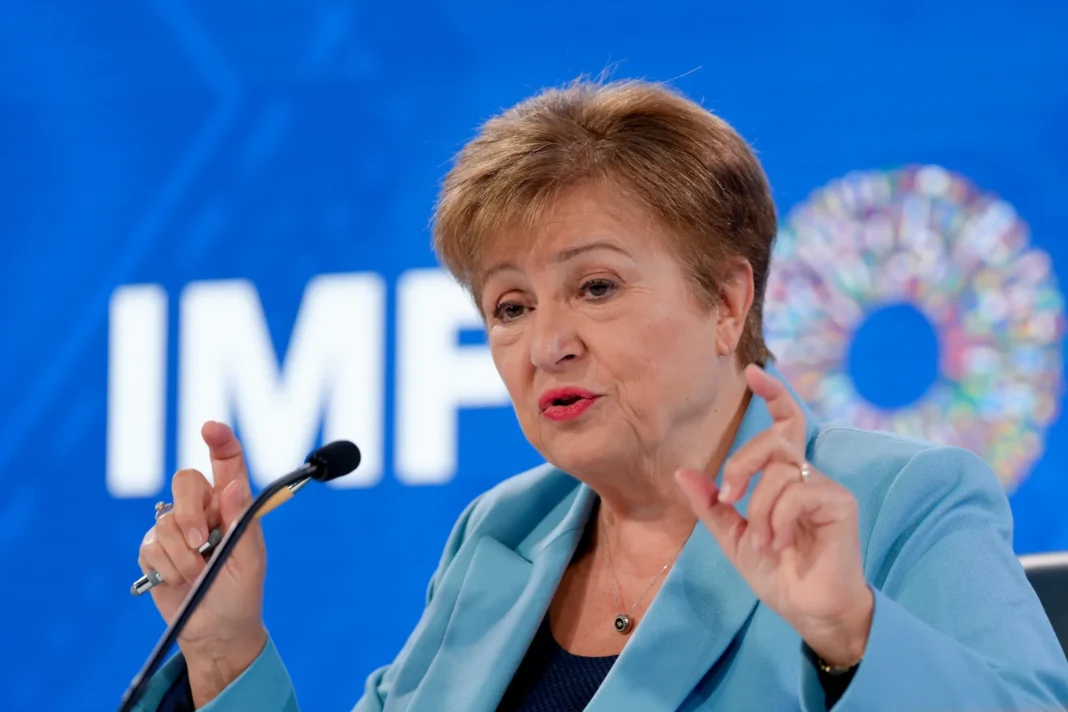
The International Monetary Fund expects Middle East GDP to contract in 2026 as the regional conflict continues to disrupt economic activity. However, the organisation forecasts a stronger recovery in 2027 as energy production and trade gradually improve. Its latest outlook reflects prolonged disruptions to the Strait of Hormuz and their effects on regional economies.
The IMF projects economies across the Middle East, North Africa and Central Asia will shrink by 0.3% in 2026. In contrast, the region could record growth of 6.3% in 2027. These estimates represent a significant change from the organisation’s previous projections. The IMF lowered its 2026 forecast by 2.2 percentage points while raising its 2027 outlook by 1.7 points.
The revised figures reflect expectations of an extended closure of the Strait of Hormuz. The strategic waterway remains essential for transporting oil, gas and other goods from Gulf producers. Consequently, shipping restrictions have weakened exports and disrupted energy production across several regional economies. The IMF also expects a stronger recovery once maritime traffic returns to normal.
Bahrain, Iraq, Kuwait and Qatar face particularly severe economic pressure. The IMF expects these countries to experience double-digit contractions in 2026. However, it forecasts similarly strong expansions in 2027 as production, exports and logistics recover. Their outlook depends heavily on restoring energy operations and reliable transport routes.
Saudi Arabia also faces economic challenges despite having more diversified energy export options. The IMF forecasts that its economy will contract by 3.3% in 2026. Nevertheless, it expects growth to approach 8% in 2027. Alternative export routes could help Saudi Arabia reduce some risks linked to Hormuz disruptions.
The organisation has also changed its outlook for other Gulf economies. Its earlier projections anticipated some growth in Saudi Arabia, the United Arab Emirates and Oman. Now, the IMF expects significant contractions across most regional economies. Oman remains the exception to this broader downward revision.
However, geopolitical uncertainty could further complicate the regional outlook. Continued attacks on Saudi infrastructure could affect aviation, energy operations and investor confidence. In addition, security concerns may discourage some businesses from expanding their regional activities. These risks could challenge recovery plans even if shipping conditions improve.
Saudi Arabia has continued to emphasise investment in energy infrastructure. The kingdom aims to strengthen its ability to transport oil without relying entirely on the Strait of Hormuz. Such projects could improve export flexibility and reduce exposure to future disruptions. However, ongoing security threats could still affect implementation and investor sentiment.
The IMF based its latest projections on a scenario in which the strait reopens in March 2027. Under this assumption, regional conditions would gradually return to pre-conflict levels over the following year. The timeline remains uncertain, however, because it depends on developments in the conflict and maritime security.
Energy prices are also expected to remain elevated during 2026. The IMF estimates crude oil prices will average 41% above their 2025 levels. Meanwhile, natural gas prices could rise by 48%. Higher prices may support some producers, but disruptions to output and exports can limit those benefits.
Global economic growth forecasts have changed little compared with the IMF’s April outlook. The organisation points to several factors that have helped cushion the wider economic impact. Energy companies have redirected exports, increased production outside the Gulf and drawn on existing inventories. These measures have helped maintain supply and support international trade.
Furthermore, investment linked to artificial intelligence has supported global economic activity. The technology boom has encouraged spending and helped sustain cross-border commerce despite geopolitical pressures. Nevertheless, prolonged disruptions could continue weighing on business confidence and supply chains.
The outlook therefore highlights the close connection between regional stability, energy exports and economic growth. For Gulf governments, restoring shipping routes and maintaining production will remain crucial priorities. The pace of recovery will depend on security conditions and the return of reliable trade flows. Ultimately, the Middle East GDP outlook hinges on how quickly regional economies can overcome these disruptions.

