


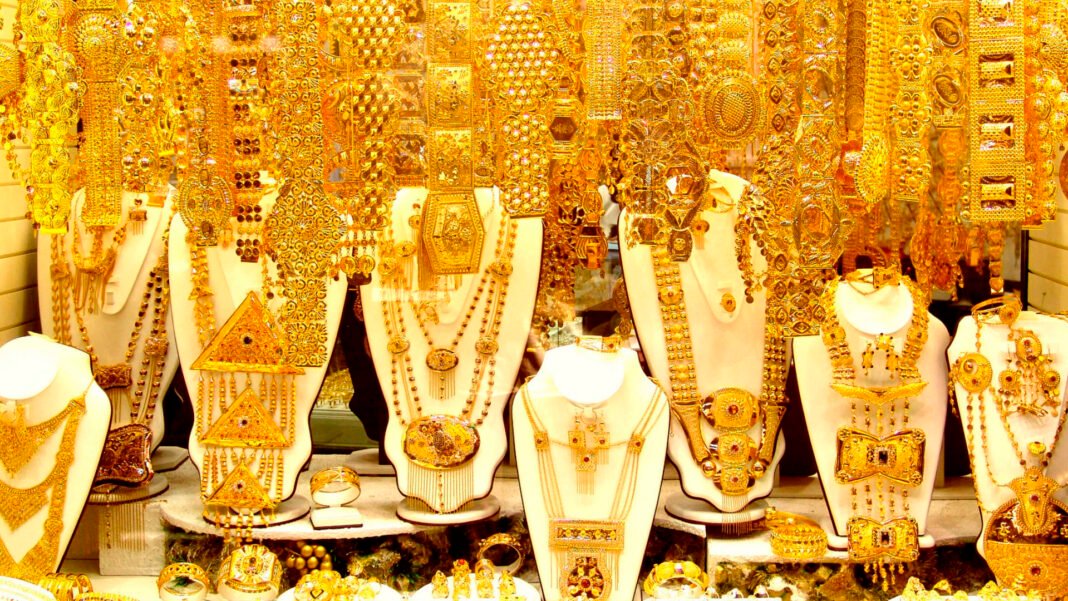
Dubai Gold prices remained stable at the start of the week despite continued geopolitical uncertainty across global markets. Dubai Gold continued attracting investor attention, although currency strength and higher bond yields limited additional price gains.
The price of 24-karat gold remained unchanged at Dh484.50 per gram. This marked the second time within a week that the benchmark price stayed at the same level.
Other gold categories also maintained stable pricing across the local market. Twenty-two-karat gold traded at Dh448.75 per gram, while 21-karat gold reached Dh430.25 per gram.
Meanwhile, 18-karat gold held at Dh368.75 per gram. In addition, 14-karat gold continued trading at Dh287.75 per gram.
The stable pricing reflected mixed global market conditions. Investors continued balancing economic expectations against ongoing geopolitical developments while monitoring financial markets closely.
Internationally, spot gold recorded a modest increase and traded above $4,012 per ounce. Silver also moved higher during the trading session, posting stronger gains than gold.
Despite geopolitical uncertainty, gold prices faced pressure from a stronger United States dollar. A stronger currency often reduces demand because gold becomes more expensive for international buyers.
Higher Treasury yields also influenced investor sentiment throughout the market. Rising yields increase returns on interest-bearing assets, making gold comparatively less attractive because it does not generate income.
Financial analysts believe these market conditions continue limiting gold’s upward momentum. Strong economic performance in the United States has also supported the dollar while reducing immediate demand for traditional safe-haven assets.
Persistent inflation concerns have further complicated market expectations. Investors continue evaluating how central banks may respond through future monetary policy decisions.
Many market participants expect policymakers to maintain relatively tight monetary conditions for an extended period. Consequently, higher interest rates continue supporting the dollar while placing additional pressure on precious metals.
Analysts also noted that gold could face additional selling pressure if prices fall below the important psychological level of $4,000 per ounce. Such a move could influence short-term investor sentiment across international markets.
However, several factors continue supporting long-term market stability. Central bank purchases remain an important source of demand and could help reduce the risk of significant price declines.
Many central banks continue increasing their gold reserves as part of broader reserve diversification strategies. This steady institutional demand provides additional support during periods of market volatility.
Experts expect gold prices to remain within a relatively narrow trading range throughout the second half of the year. Unless major economic conditions change, significant price movements may remain limited.
Future economic data will likely influence investor expectations regarding interest rates and monetary policy. Inflation reports, employment figures, and economic growth indicators will continue shaping market direction.
Geopolitical developments may also affect investor confidence in the months ahead. Increased global uncertainty often strengthens demand for safe-haven assets, including gold.
At the same time, stronger economic performance could continue supporting the dollar and bond yields. That combination may limit further gains even if geopolitical tensions remain elevated.
Jewelry buyers and investors in the UAE continue monitoring both local and international market developments. Stable domestic prices provide greater certainty for consumers planning purchases during current market conditions.
Looking ahead, Dubai Gold prices will likely remain influenced by global economic indicators, central bank decisions, currency movements, and geopolitical events. Market participants will continue watching these factors closely as they assess future price trends.