



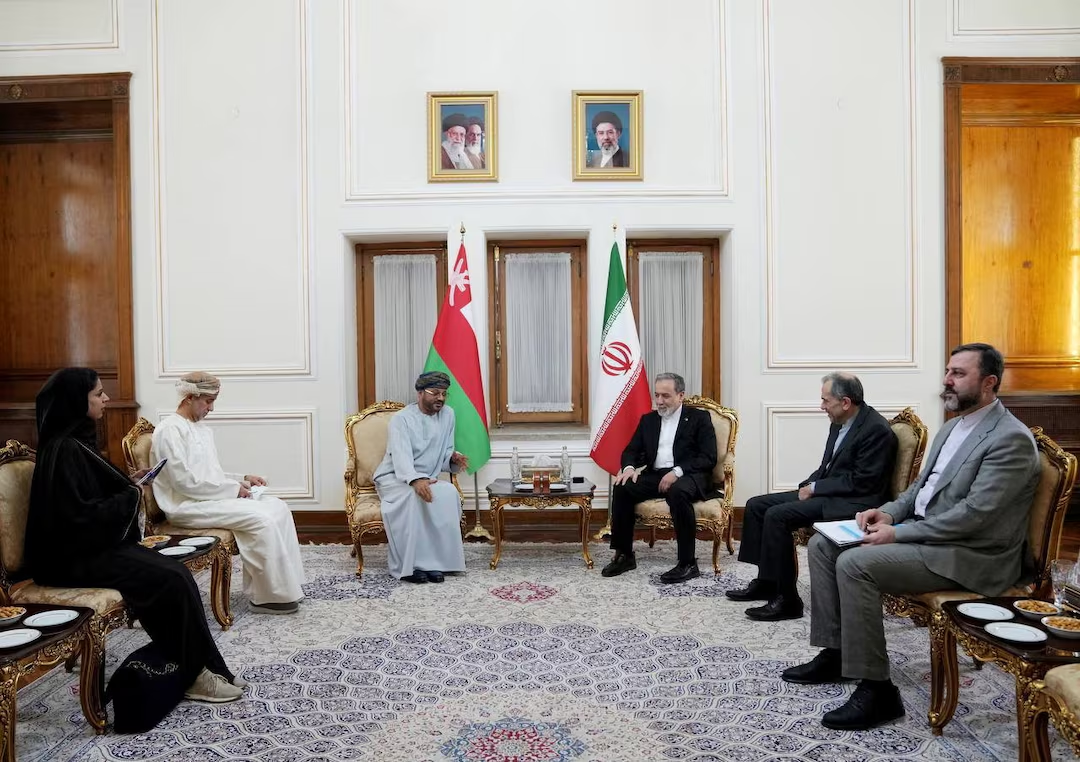
Hormuz reopening hopes have increased after Oman and Iran announced plans to improve maritime safety. The announcement also pushed oil prices lower during early Wednesday trading. Investors now expect further developments from the two countries as negotiations continue.
Brent crude futures fell 2.5 percent to $86.39 a barrel. Meanwhile, US West Texas Intermediate crude declined 2.4 percent to $80.38. Both benchmarks continued their recent downward trend amid improving expectations around regional shipping.
Both major benchmarks also suffered losses during Tuesday’s session. Brent and WTI each dropped more than three percent by the close. The declines reflected growing optimism about possible improvements in maritime conditions.
The latest decline followed signs of progress between Oman and Iran. The two countries discussed ways to restore safer navigation through the strategic waterway. Their discussions have raised hopes that shipping activity could gradually return to normal.
Their proposed framework includes a temporary joint maritime corridor. The plan also includes efforts to remove mines from shipping routes. These measures could reduce risks for commercial vessels using the important waterway.
Officials now plan to continue technical discussions. Those talks will focus on finalising a permanent navigation corridor. They will also examine practical arrangements needed to maintain safe maritime movement.
They will also examine how authorities could manage the waterway in the future. Therefore, traders now see a possible path toward improved shipping conditions. However, markets still expect further confirmation before fully pricing a reopening.
The Strait of Hormuz remains one of the world’s most important energy routes. Large volumes of crude oil and other commodities pass through the area. Its strategic importance makes any disruption particularly significant for global energy markets.
Any disruption can quickly affect energy markets and transportation costs. Consequently, traders closely monitor every development involving navigation through the strait. Shipping companies also assess security conditions before sending vessels through the region.
Earlier this month, Iran and Oman also discussed coordinates for a proposed shipping route. The latest announcement provides further details about their maritime cooperation. This development has strengthened expectations for a more structured navigation arrangement.
The proposed corridor could offer ships a safer route through the waterway. However, authorities still need to complete technical arrangements before permanent operations begin. Shipping companies will likely wait for clearer guidance before changing their current routes.
Mine clearance represents another important part of the plan. Maritime mines can create significant risks for commercial vessels and energy shipments. Removing these hazards would therefore remain essential for restoring confidence among ship operators.
Therefore, removing those threats could improve confidence among shipping companies. It could also support a gradual return of normal maritime traffic. A safer route would help reduce uncertainty across regional shipping and energy markets.
The developments have already influenced oil market sentiment. Traders responded to the possibility of improved navigation by selling crude contracts. The reaction shows how closely oil prices remain linked to developments around Hormuz.
Market participants had previously priced significant risks into oil prices. Those concerns increased because of uncertainty surrounding shipping through the strait. Higher security risks had raised concerns about supply disruptions and transportation costs.
However, the latest diplomatic efforts have reduced some immediate concerns. As a result, crude prices moved lower during early Wednesday trading. Further diplomatic progress could create additional downward pressure on oil prices.
The United States has also taken a tougher approach toward Iran. American officials recently announced plans targeting networks linked to Iranian oil exports. The measures could influence Iran’s ability to maintain crude shipments to international markets.
The measures aim to pressure companies and networks involved in sanctions evasion. Such actions could create additional uncertainty for global energy markets. They could also complicate the outlook for Iranian oil exports in the coming months.
Meanwhile, US President Donald Trump said American naval forces had cleared mines from international waters. He also warned against placing new mines in the waterway. His comments added further attention to the ongoing maritime security situation.
The comments added another dimension to the ongoing maritime security situation. Nevertheless, markets remain focused on whether commercial navigation can return safely. Traders will closely follow developments involving both military and diplomatic efforts.
Regional financial markets also responded to the latest developments. Saudi Arabia’s main stock index gained 0.5 percent on Tuesday. The move reflected continued investor activity across major Gulf financial markets.
The increase marked the sixth consecutive positive session for the Saudi market. Abu Dhabi’s benchmark index also recorded a modest 0.2 percent gain. Investors continued to assess regional economic conditions alongside developments in energy markets.
However, Dubai’s main market index moved in the opposite direction. The index declined 0.5 percent during the session. The decline highlighted the mixed investor reaction across Gulf financial markets.
Qatar and Bahrain also recorded gains. Meanwhile, Kuwait and Oman finished the session broadly unchanged. These movements indicate that investors continue to assess regional developments on a market-by-market basis.
These mixed performances show that investors continue assessing regional risks carefully. Energy developments remain particularly important for Gulf economies and financial markets. Changes in oil prices can significantly influence government revenues and business confidence.
A sustained improvement around Hormuz could benefit regional trade. It could also support energy exports and reduce uncertainty for shipping companies. Lower risks could eventually improve business confidence across several Gulf economies.
Furthermore, safer maritime routes could improve confidence among international businesses. Lower transportation risks could eventually support more stable commodity flows. This could benefit companies that depend heavily on regional imports and exports.
However, the proposed corridor still requires further technical negotiations. Officials must determine its precise operation before shipping activity can fully normalise. The process could take time as authorities address security and operational requirements.
The mine-clearing project could also require significant coordination. Authorities must ensure that commercial vessels can use the route safely. Any uncertainty during this process could continue limiting normal shipping activity.
Therefore, investors may continue watching negotiations closely in the coming sessions. Oil prices could react quickly to further developments. Traders will likely respond to both positive announcements and signs of renewed tensions.
For now, the latest announcement has strengthened expectations for improved navigation. That shift has already contributed to lower crude prices. However, markets still require stronger evidence before assuming a full reopening.
At the same time, geopolitical risks remain elevated across the region. Any setback could quickly reverse the current market reaction. Renewed security concerns could also push oil prices higher again.
Hormuz reopening therefore remains a major focus for energy traders. The waterway’s future security could influence oil prices and regional markets. Its reopening would also have important implications for global trade and supply chains.
If negotiations continue successfully, shipping conditions could improve gradually. That outcome could ease pressure on energy markets and regional economies. It could also support more predictable trade flows across the Gulf.
However, traders will likely remain cautious until authorities establish a reliable and permanent maritime arrangement. Until then, oil markets could remain sensitive to every diplomatic and security development.