



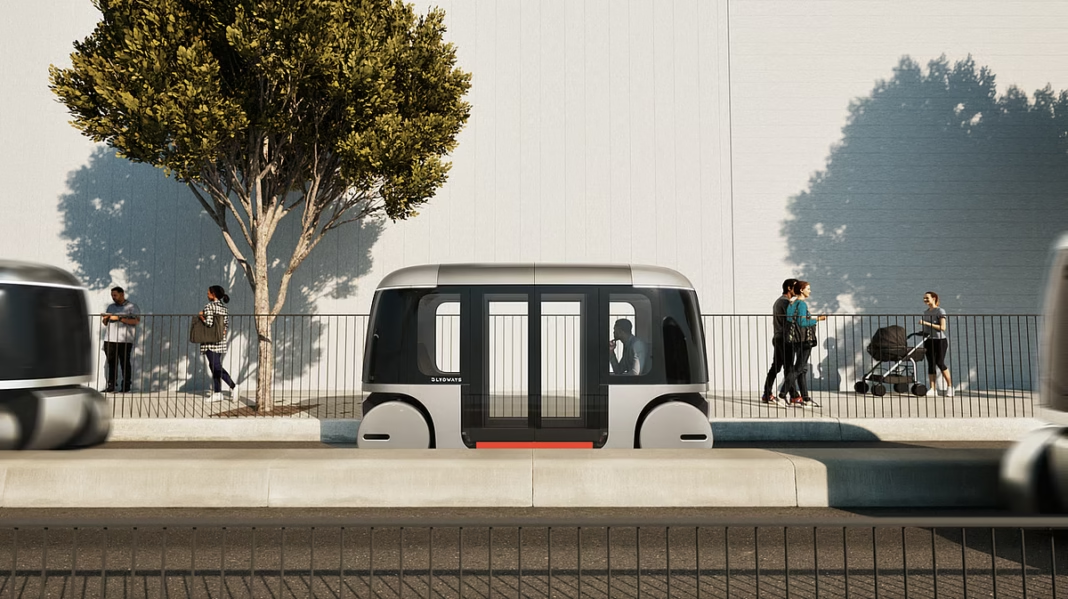
Dubai Driverless Pods could offer commuters a new way to travel between Metro stations and their final destinations. The Roads and Transport Authority (RTA) is studying routes for an automated electric transport system. The proposed network could connect residential communities, business districts, and popular attractions across the emirate. Moreover, the project aims to make public transport more convenient by simplifying the final part of each journey.
The initiative forms part of the Dubai Glydways project, which uses compact, driverless electric vehicles. These pods would operate along dedicated guideways rather than competing with regular road traffic. As a result, passengers could enjoy direct journeys without relying entirely on taxis or private cars. Furthermore, the system could improve connections between existing public transport services and destinations beyond walking distance.
On Sunday, October 11, the RTA launched a four-week trial of the automated transport system at Bluewaters. The trial will help officials assess the technology and its potential role within Dubai’s wider transport network. In addition, the authority will examine safety, reliability, and opportunities to connect the pods with existing public transport services.
One major objective involves addressing the first- and last-mile challenge. This term describes the journey between a public transport stop and a passenger’s starting point or final destination. For example, commuters could leave a Metro train and board a driverless pod for a direct ride home. Similarly, visitors could use the service to reach attractions without arranging separate transportation.
The RTA is examining several locations for possible routes. These include a proposed 2.8-kilometre connection between National Paints Metro Station and Bluewaters. Officials are also studying potential services in Jumeirah Village Circle, Dubai Festival City, and Business Bay. Mohammed Bin Rashid City also features among the areas under consideration.
However, these locations remain part of the planning process rather than a confirmed operating network. The ongoing trial will help the authority evaluate the system before considering wider implementation. Therefore, the final routes and expansion plans will depend on the findings and future decisions.
Unlike conventional buses, Glydways aims to provide direct journeys between selected points. Its small electric vehicles would travel along dedicated guideways, potentially reducing their exposure to road congestion. Moreover, the infrastructure could operate at ground level or on elevated structures. This flexibility could help the RTA introduce the system in densely populated areas with limited road space.
RTA Director General and Chairman Mattar Al Tayer said the Bluewaters trial would help assess integration opportunities. He highlighted the importance of reliable journeys and stronger connections with the existing public transport network. Consequently, the authority hopes to understand how automated pods could support everyday travel across Dubai.
The project could also benefit neighbourhoods with narrow streets and heavy traffic. In such areas, conventional transport infrastructure may face space and accessibility challenges. Smaller vehicles and dedicated guideways could provide another option for short urban journeys. Nevertheless, the trial must establish how effectively the system operates under real conditions.
Meanwhile, Dubai is exploring ways to connect Glydways with parking facilities. In April, parking operator Parkin announced a partnership with Glydways to develop selected sites as mobility hubs. Under this concept, motorists could park their vehicles before continuing their journeys in driverless electric pods.
The companies also outlined plans to connect their digital platforms. This integration could allow users to arrange parking and onward transportation through Parkin’s digital services. As a result, residents might eventually combine driving, parking, Metro travel, and automated pod journeys more easily.
Ultimately, Dubai Driverless Pods could support the emirate’s efforts to develop a more connected transport system. The technology offers a potential alternative for short journeys between public transport stations and nearby destinations. However, the trial results will help determine whether the concept can expand beyond its initial testing areas. If successful, the system could give residents and visitors another convenient option for travelling around Dubai.