



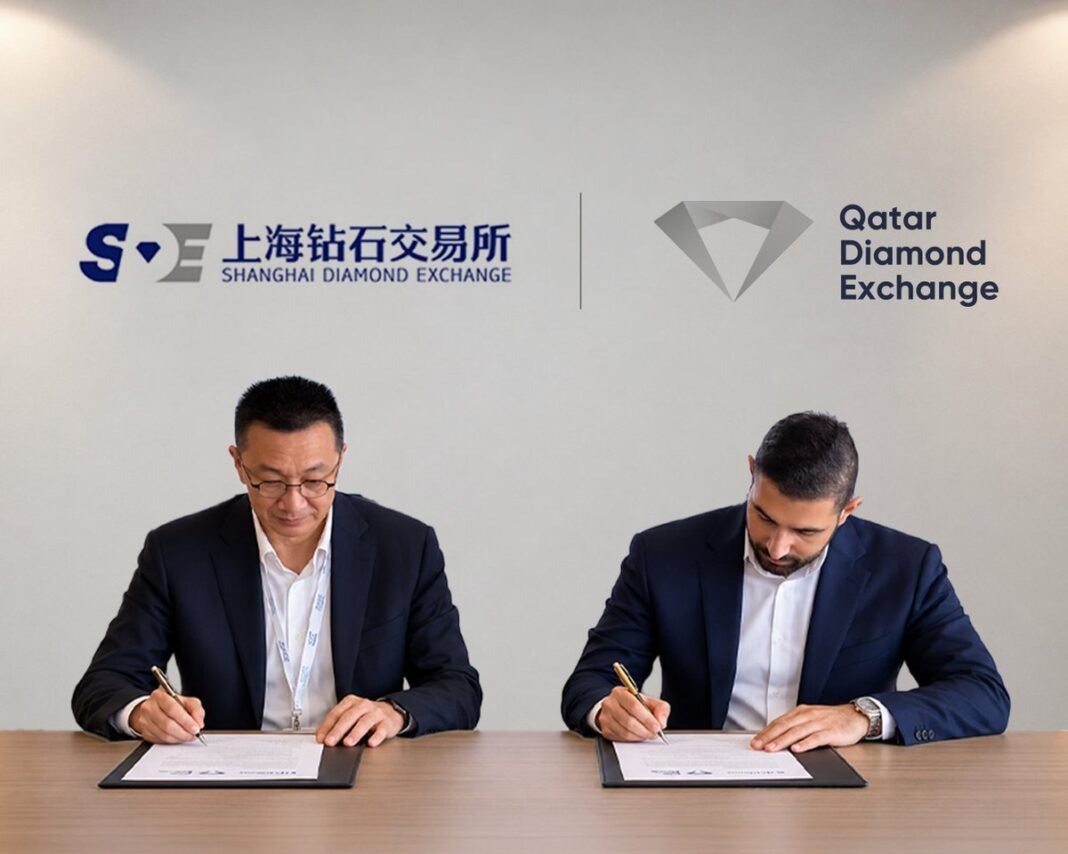
Qatar diamond trade is gaining new international links after the Qatar Diamond Exchange signed agreements with three Asian exchanges.
The agreements involve diamond exchanges in Singapore, Shanghai and Tokyo. They aim to strengthen commercial connections between Qatar and major Asian markets.
The Qatar Diamond Exchange signed the agreements during the 41st World Diamond Congress in Singapore. The partnerships create new opportunities for members of the participating exchanges.
The agreements focus on improving communication and encouraging stronger commercial relationships. They also aim to support direct introductions between businesses and industry members.
Furthermore, the partnerships will encourage reciprocal visits between the participating exchanges. Members can also take part in industry events hosted by each exchange.
These activities include tenders, auctions and diamond viewings. Therefore, members could gain greater access to business opportunities across several major Asian markets.
The agreements bring together Qatar with established diamond trading centres in Asia. Singapore, Shanghai and Tokyo each play important roles within the international diamond industry.
Qatar aims to use these relationships to strengthen its position within global diamond trading. The partnerships could also increase commercial activity between Doha and Asian markets.
The Qatar Diamond Exchange sees Asia as an important area for future growth. Stronger connections could create additional opportunities for traders, investors and industry professionals.
The agreements also focus on responsible practices and industry standards. Participants aim to support greater transparency across the natural diamond market.
Moreover, the partnerships seek to strengthen consumer confidence in natural diamonds. They also encourage participants to follow recognised international industry initiatives.
These initiatives include the World Diamond Council’s System of Warranties. The Responsible Jewellery Council also promotes standards relevant to responsible jewellery practices.
The participating exchanges believe stronger cooperation can improve trust within the diamond sector. They also expect knowledge sharing to support greater industry resilience.
Singapore’s diamond exchange views the agreement as an opportunity for members to develop new business relationships. It also expects greater cooperation to improve knowledge exchange.
The Shanghai partnership could strengthen connections between Chinese and Qatari businesses. It may also create new commercial opportunities within the wider global diamond market.
Meanwhile, the Tokyo agreement focuses on trust and transparency within international diamond trading. The partnership aims to encourage collaboration between members from both markets.
Together, the three agreements create a wider network for Qatar’s diamond sector. They could help businesses explore new markets and strengthen international relationships.
The Qatar Diamond Exchange began operations in July 2026. It operates from the Ras Bufontas Free Zone in Qatar.
The exchange provides a regulated platform for diamond trading and related services. It aims to connect Doha with international markets through a structured trading environment.
The exchange also supports Qatar’s broader economic diversification strategy. The diamond sector could contribute to developing new areas of international business activity.
Qatar National Vision 2030 places strong emphasis on economic diversification. International trade partnerships can support that objective by creating new commercial channels.
The new agreements also give Qatari businesses greater exposure to Asian markets. At the same time, Asian traders can explore opportunities through Qatar.
Asia remains an important region for the global diamond industry. Stronger links with Singapore, China and Japan could therefore benefit Qatar’s developing sector.
In addition, cooperation between exchanges can support industry knowledge and professional development. Regular events and reciprocal visits can help members exchange information.
The agreements may also encourage greater participation in auctions and tenders. Such activities could increase opportunities for traders operating across different markets.
Overall, the partnerships represent an early expansion of Qatar’s international diamond strategy. They connect the new Doha exchange with established Asian trading centres.
The Qatar diamond sector could gain stronger visibility through these relationships. Increased cooperation may also support greater trade and investment activity.
The agreements ultimately position Doha as an emerging connection point between Asian and international diamond markets. Future cooperation could further strengthen Qatar’s role in the global precious stones industry.